by Francois Dubet and Michel Wieviorka
Translated by David Roberts
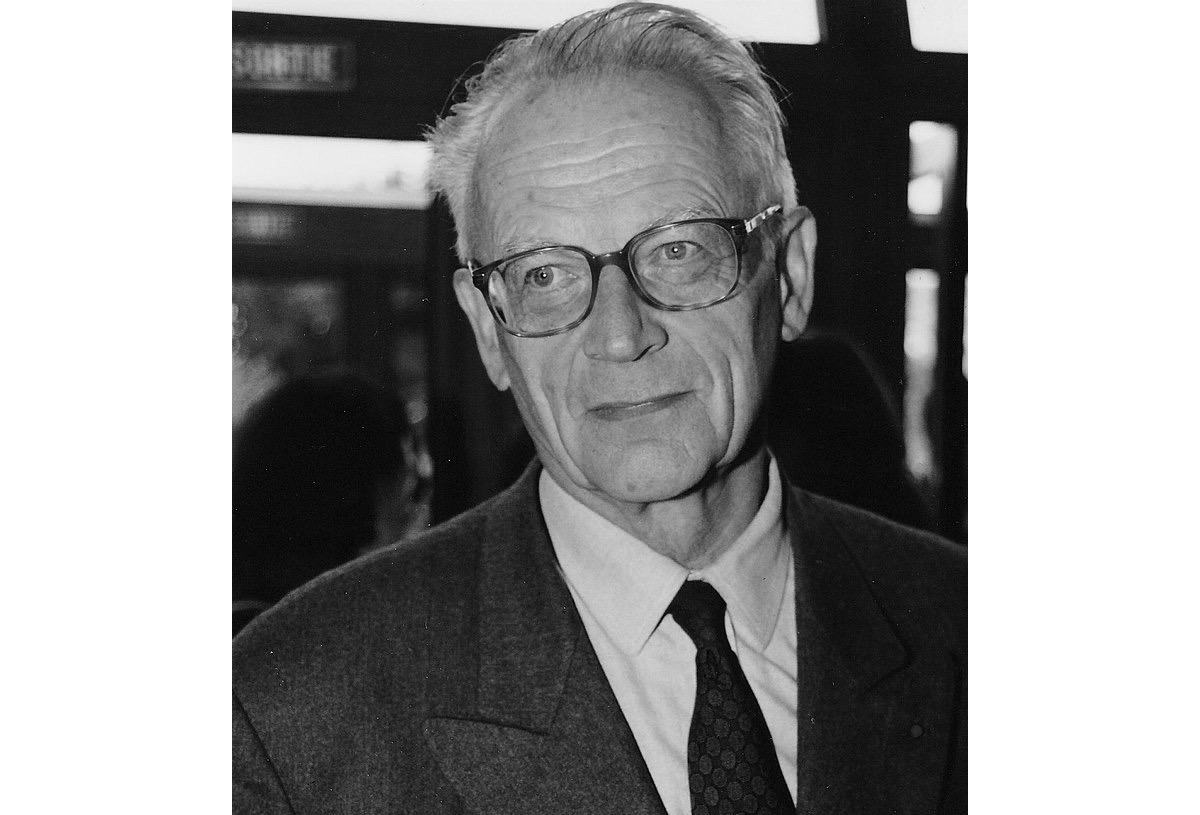
Alain Touraine died in Paris 9 June 2023. Thesis Eleven is proud to honour his memory with this homage co-authored by Francois Dubet and Michel Wieviorka. The essay was originally published in La Vie des idées and was translated into English for Thesis Eleven by David Roberts
Alain Touraine was a keen and supportive editorial advisor for the journal. We are proud to have published his writings, including the classic text: Is Sociology Still the Study of Society? as well as other essays: Can One Still On the Left?; Mutations of Latin America; Endgame; Social Movements: Special Area or Central Problem in Sociological Analysis?; and Democracy. A steady flow of engagements with Touraine’s ideas has appeared in Thesis Eleven’s pages over the years including an important review essay by Jeffrey Alexander and a special issue on his thought published after his visit to Australia in 1993. We hope that this tradition continues.
Homage to Touraine
There is not a single model of constructing an intellectual oeuvre, a single best way of constructing it over time to last. Some work with a central theory applied from the beginning to diverse objects, a theory that scarcely changes over the years – Emile Durkheim is an example.
With others the life work follows a trajectory where the theoretical core and the objects are transformed over the years, which does not exclude either coherence or the desire for continuity. Alain Touraine, who died 9 June 2023, belonged to this second category, as he has explained.
From Labour to Social Movements
Un désir d’histoire (Touraine, 1977) tells us how at Liberation a pupil of the Ecole normale (ENS) in Paris, destined to be a good student, became a sociologist. Rejecting the spirit of the khâgnes (the elite two year course at the Ecole normale for advanced entry to tertiary institutions) as out of touch with the times, he set off to study the agricultural reforms in Hungary before the Soviet curtain descended. He then worked in Valenciennes in the coal mines, just before he obtained the agrégation in history (entry examination for the public education system) for which he studied with his friend Jacques Le Goff – they shared a room at the ENS.
In the North, in the mining region, he read ‘with excitement’ the book of Georges Friedmann, Les Problèmes humains du machinisme industriel (1947). It revealed to him his vocation as a sociologist, his passion for ‘real life’ and for the workers. This ‘desire for history’ did not aim to study the past, the history that had already occurred, but to study history in the making here in ordinary life, in the social conflicts and in the imaginary of the actors. In the society of the 1950s history is at work in the labour that is transforming the world and engaging human creativity. The leading social actors, the subjects of history are constituted in and by their struggles in the workplace.
When Alain Touraine entered the CNRS (the French National Centre for Scientific Research) in 1950 Georges Friedmann entrusted him with a study of the evolution of working conditions at the Renault factories. His research became a classic. His account in his book and in articles is far more original than we can grasp today.
In effect, Touraine made his focus the formation of a class consciousness that could be reduced neither to a feeling of belonging to a community nor of exploitation, even less of a political adherence, as the Communist Party and a number of intellectuals proclaimed.
Class consciousness, as Touraine shows, is born of the encounter between the worker’s trade and skills and the organization of work which robs him of his autonomy. Fundamentally, it is the affirmation of the subject defending his capacity to be a subject against the forces which dominate him (Touraine, 1966).
A few years later Serge Mallet in his study of the ‘new working class’ saw himself as continuing this approach. At the present moment in 2023, in the context of and as a result of the protests against pension reform through a powerful mobilization by the combined trade unions, work has once again become the object of decisive debates in the name of autonomy and its recognition.
For Touraine, as for the workers he interviewed, class consciousness and the action into which it translates are not confined to the workshop; it involves a critique of the organization of work, which is informed by the totality of the values of industrial society. The party of labour, the social movement takes on a universal reach because it aims to control the historicity of industrial societies, the principal cultural orientations which underpin investment, the employment of technologies, science, rationality, etc.
For Touraine social movements stand opposed to the dominant class which claims to direct a historicity that by definition everyone shares. A little like in religious societies, where the critique of the Churches is conducted in the name of the true faith.
Post-Industrial Society
If Touraine had been the sociologist of industrial society, he also announced its decline. While leftism presented itself as the hypertrophied representative of class struggle, calling for the return of the vanguards against total domination, Touraine recognized in May 68 and in many other struggles of the time the actors of the movement towards to post-industrial society.
The May 68 movement combined the crisis in the university with the challenge to the very values of industrial societies. It operated along side of the workers movement with its different logic. Leftism, with which Touraine was often at odds and intellectually at a great distance, was calling for its part for unification of the struggles under the authority of the Communist Party against the horizon of revolution (Touraine, 1968).
The essential significance of the May 68 movement was thus cultural critique, as emphasized also by Edgar Morin, the life long friend, who with Claude Lefort and Cornelius Castoriadis spoke of the ‘cultural breach.’ It was the theme emphasized and recalled by the most conservative thinkers, who saw in the movement the dawn of a new moral decadence.
The student movement was not only that of youth against the old world; it was also a social movement in that it contested the subordination of knowledge to the service of technocracies. It was the fore runner of the new social movements.
Touraine published La Societé post-industrielle (Touraine )about the same time as Daniel Bell’s book with the same title – Bell to whom we owe the term, which Touraine always acknowledged. However, for the American sociologist ‘post-industrial society’ is a development of industrial society, whereas Touraine sees another type of society, which has broken with rather than prolonging its predecessor, a society in which culture is carried by consumption and by self-expression and where production is more and more technological and anonymous.
Touraine considered that in the new type of society, which he also called ‘programmed,’ the old bourgeoisies had been replaced by technocracy and by the greater and greater control of personal life that had called forth in response the emergence of ‘new social movements,’ oriented to the affirmation of identities and individual autonomy in the quest to recover control over their own lives.
This did not mean the disappearance of the workers movement or of socio-economic inequalities and the aspirations to socialism. Progressively. however, new actors were stepping onto the stage of history in the making: women, cultural minorities, ecological movements. Individuals themselves want to be the subjects of their own life.
A Sociology of Action
In the 1970s the intellectual space of sociology was organized around several main orientations. It was the high point of the structuralist modes of thought, often but not necessarily Marxist along with the Althusserian variant, which identified society as a system of domination based on ideological apparatuses which Touraine characterized as lunaire.
Well removed from this Marxism Pierre Bourdieu put forward his version of domination and consent according to which actors do and think what they have been determined to act and think, inviting us to think in terms of social reproduction whereas Touraine speaks of the ‘production of society.’ Michel Foucault in turn argued for an understanding of action close to the theories of domination, even of the death of the subject, a conception from which he progressively distanced himself with Le Souci de soi.
On the other hand Raymond Boudon and Michel Crozier analyse social life in contrasting fashion in terms of rational choice and the overall effect of these choices, while Raymond Aron in his treatment of war and international affairs uses strategic paradigms which derive from this type of approach. This is of course not even a summary presentation of this space, confined solely to French sociology, which could well occlude the truly international gamut of intellectual life in which Touraine’s thinking evolved. It is sufficient, however, to measure the singularity of Touraine’s own position (Touraine, 1965, 1973, 1984).
Touraine placed himself in the great tradition of historical analyses of modernity with his concept of historicity, defined as the articulation of a cultural model and of a mode of accumulation. Social life is the encounter, which is always conflictual in action, between cultural integration and conflicts around accumulation and the control of the cultural model. It is of necessity under strain, neither system nor market, and definable for Touraine neither in terms of functionalisms nor rational choice.
In what he calls the systems of historical action, he asks us to distinguish between the meaning of conducts that are based on social organization and its crises, on the institutionalization of practices, or on class conflicts and social movements involved in struggles over the control of historicity.
He also distinguishes between levels sociologically: from below to above, the level of conduct inscribed in social organization and everyday social control, the level of political conduct, the relations between the state and society, and at a higher level the social movements, which go beyond ordinary conduct and political actions with the goal of promoting interests and of stabilizing conflicts in what we think of as the democratic game.
To be a Subject
In order to understand social life one must study the actions, the consciousness of the actors, and their everyday experience. The actors ‘produce’ what we call society but there is a tragic dimension: there can never be a reconciliation between the actor and the system, neither by means of domination nor the power of socialization, even less by means of the harmony of interests. The history of societies is that of the succession of the systems of historical action and of their necessary destruction.
In his Critique de la modernité (Touraine, 1992) he shows how behind the triumph of reason modernity has always been stymied by nations, by the market, subjectively by identities and by internal divisions, instituting an irreconcilable distance between ‘us’ and ‘them,’ even more between ‘me’ and ‘I,’ or between morality and ethics. Thus democratic systems can never completely institutionalize social movements. The actor is never one with the system.
Modernity has produced the individual subject. But Touraine is worried because it seems to be threatened today by the power of the market, by narcissism, by the growth of identities and by the decline of the democratic universalism, which is the necessary condition of the formation of the individual and of the collective subject.
In this crisis of democracy Touraine wants us to make a sociology liberated from the very idea of a society conceived as the embodiment of a national culture, of a sovereign state and of a national economy (Touraine, 2005). Here too he stands somewhat apart from the dominant sociological culture in France, where, to employ an expression dear to Ulrich Beck, a ‘methodological nationalism’ rules, which approaches problems only within the framework of the nation state.
With the globalization of culture and of exchanges, this framework is no longer valid; it is nothing but nostalgia, in the best case conservative, in the worst case reactionary. Touraine invites his readers to defend their capacity to be subjects in a world where the possibility of living together is more than ever a challenge and a necessity.
Sociological Intervention
Touraine loved ‘grand theories’ and historical panoramas, so one might think that he was more of a theorist than a practitioner. However, he always undertook investigations and tested his ideas against the facts.
In 1976, after we had completed our doctoral thesis, he invited us to join him in a programme of ‘sociological interventions’ dedicated to the new social movements. It was a question of discovering to what degree social struggles were social movements challenging a model of historicity and of social domination rather than simply actions induced by crisis or by the promotion of common interests.
Starting from the postulate that the actors were intelligent and capable of knowing what they are doing and aware of the constraints of the research project, Touraine applied for the first time his new method of ‘sociological intervention.’ In order to optimize the reflexivity of the actors as well as that of the researchers, we set up groups of activists, who were confronted with interested interrogators – opponents, supporters, witnesses – and also undertook discussions among themselves.
These first encounters aimed to undo ideologies and assumptions, to transform certainties into problems, to lay bare the heterogeneity of the struggles. After a dozen or so meetings, the investigators submitted their analyses to the members of the groups, who engaged with them, accepting or rejecting their findings and finally working together with the sociologists to produce an analysis of their action.
Not only was this method difficult and demanding, it was contrary to the best established professional approaches, where sociologists registered opinions, without testing them against facts and opposed opinions, in order to interpret them according to a self-attributed monopoly of meaning, as if it were self-evident that social actors do nor know what they are doing and that it is ‘society’ that speaks and acts through them.
From Occitania to Poland
We undertook together and with other researchers, sociological interventions with – not just ‘on’ – the student movement, the Occitan movement in south western France, the anti-nuclear movement, the workers movement and finally Solidarnosc in Poland in 1981. Every self-respecting method must expose its hypotheses to the possibility of falsification. ‘Sociological intervention’ has sometimes been suspected of being a technique of manipulation by means of which the investigators confirm across the board their hypotheses on social movements.
In fact, in the greater part of our enquiries, our most optimistic hypotheses were not validated or only very partially. The student movement remained dominated by the university crisis and by an extreme left rhetoric. The Occitan movement, trying to balance between the defence of the language and the nationalist temptation and burdened by social issues coming essentially from the small viticulturalists, preferred to disappear rather than descend into violence. The anti-nuclear movement of the late 70s did not succeed in transforming its opposition to nuclear power into a political force and into proposals for alternative forms of development; it was torn between pure prophecy and the technical critique of technology. As for Solidarnosc, for which we so enthused, we uncovered the first signs of a split between the workers movement, the struggle for democracy and populist temptations – a nationalist dynamic which emerged, alas, thirty years later.
The method of sociological intervention demonstrated its productivity, including for the study of struggles and experiences far removed from the new social movements: racism, anti-semitism, terrorism, suburban youth gangs, school experience, cancer, etc.
That it has not been taken up as much as we would have liked is doubtless due to its extreme difficulty. It demands of the actors the acceptance of several dozen hours of involvement and the lengthy mobilization of groups of researchers; it require the setting up of several intervention groups in several locations. A single location and a single researcher are not sufficient and the current organization of research hardly encourages such long and demanding engagements.
Nevertheless, it is also capable of being adapted to more modest resources than those of a sociological laboratory, as Daniel Jacquin has shown in his thesis on the struggles at the LIP factory in France.
Research in Latin America
In 1956 Touraine set off to create a research centre in Chile, where he was soon joined by Edgar Morin and Jean-Daniel Raynaud. He married Adriana there and in a certain sense he never came back. He devoted several of his books to dependent societies, to populism, to politics in Latin America, which made him an extremely influential sociologist in this part of the world, a ‘maestro,’ sometimes even an icon (Touraine, 1988).
He considered the South American societies to be dependent and dysfunctionally divided – due to the gulf between the national and the international market, the extreme cultural and social gap between the elites and the people, the national imaginary and indigenous cultures, and by the simultaneously central and fragile place of the middle classes. This lack of social articulation explains the weight of populism and the extreme autonomy of ideologies, the crushing role of politics, the violence of conflicts and the weakness of social movements. Touraine followed in Chile over many years the popular Unity party, the fall of Salvador Allende and the progressive emergence of the dictatorship of Pinochet. Latin America was not an exotic territory for him. It touched him directly. In Paris Touraine gave the impression of a rather reserved, even distant person; in Latin America, he became a ‘latino,’ easy going, close to people and to his colleagues. He experienced their tragedies in a very personal fashion.
Companion of the New Left
In the French tradition scholars often become intellectuals intervening in the public sphere. Touraine was faithful to this model. He was close to Michel Rocard and to Edmond Maire, he saw in the ‘New Left’ the political operator of the new social movements and of the social and cultural changes that he wanted to observe. Touraine is what we call a social democrat, committed as much to equality as to liberty. He took the part of the students at Nanterre and of Daniel Cohn-Bendit, with whom he has remained friends, just as he defended the feminist movements, the struggles against racism, Solidarnosc, the Zapatistas, etc. But as regards engagement, his position has always been his own, often uncomfortable and sometimes uncomprehended.
Man of the Left, with a good knowledge of the world of workers and trade unions, Touraine was more than refractory to the standard discourse of the political Left on capitalism, social classes, the state and democracy. If he voted for Francois Mitterand without soul searching in 1981, he held strong reservations about the mix of radical rhetoric and dubious practices which characterized the Left at the time. In the same fashion he supported the positions of the CFDT (the French Democratic Confederation of Labour) against the majority on the left during the 1995 strikes, which was not a popular choice.
When one examines his choice of positions, it is clear that he was both engaged and distant. Engaged for a cause in the public sphere, and distant at the same time because he had the greatest difficulty in identifying with the ideology of the cause: supportive of the student struggles, distant from their leftism; supportive of the workers struggles but chary of corporatism; supportive of the right to be one’s self but clear about the risks of communitarian outcomes.
Moreover, he was perfectly aware that by themselves the ethic of convictions and the accompanying outrage did not add up to a political position, that the world would not disappear just because it is unjust or because we are angry.
Thanking Touraine
Although Touraine always regarded hope as a duty and thought that there is nothing worse than allowing oneself to succumb to nostalgia, we need to recognize that the nebula of the New Left is not in a good state and that anger and contempt are motivating populisms more than alternative programmes.
Touraine has left us at a moment when our old political categories seem to have abandoned us. We are going to miss his belief that we make history as much as we are subjected to it.
Like many scholars and renowned intellectuals Touraine was a mandarin in the period when laboratories and teams were organized around a ‘patron.’ Intellectual success depended on the one hand on the strength of ideas and publications but also on the other hand on strategies of power to build a school, to gain disciples, to control journals and book series, to construct networks of influence.
There was no doubt that Touraine possessed the authority of a patron. He never wanted, however, to get involved in a war of attrition and power in order to reinforce his authority through the mobilization of resources and networks. Perhaps he thought it was a waste of time and beneath his honour.
We had the good fortune of being his pupils and his friends without him ever demanding that we be disciples. For better or perhaps worse he left us free to become what we wanted to be. How can we not thank him?
References
Touraine A (1965) Sociologie de l’action. Paris: Seuil.
Touraine A (1966) La conscience ouvrière. Paris: Seuil.
Touraine A (1968) Le communisme utopique. Paris: Seuil.
Touraine A (1969) La Societé post-industrielle. Naissance d’une societé. Paris: Denoel.
Touraine A (1973) La Production de la societé. Paris: Seuil.
Touraine A (1977) Un désir d’histoire. Paris: Stock.
Touraine A (1984) Le retour de l‘acteur. Paris: Fayard.
Touraine A (1988) La parole et le sang. Paris: Odile Jacob.
Touraine A (1992) Critique de la modernité. Paris: Fayard.
Touraine A (2005) Un nouveau paradigme. Paris: Fayard.


 thesis eleven