Anthony Elliott, Making Sense of AI: Our Algorithmic World (Polity Press, 2022)
Anthony Elliott, Algorithmic Intimacy: The Digital Revolution in Personal Relationships (Polity Press, 2023)
Reviewed by Dariusz Brzeziński (Institute of Philosophy and Sociology of the Polish Academy of Sciences)
(This is a prepublication version of this review. You can find the published version in Thesis Eleven Journal, on the T11 Sage website)
In his famous book Legislators and Interpreters: On Modernity, Postmodernity and Intellectuals, Zygmunt Bauman (1987) juxtaposed two positions ascribed to and held by intellectuals. In one of them, which he illustrated with the figure of the “legislator,” the intellectuals’ function was to design visions of a perfectly ordered world and – in collaboration with those in power – to strive to implement them. By contrast, the role of the “interpreter” was to help to make sense of complex, pluralistic, and ambiguous reality and, at the same time, to lay the foundations for dialogue about its further development and the changes needed. Towards the end of the 20th century, Bauman argued that the shift from the legislator role to the interpreter role was part of the revolution associated with the advent of postmodernity. I believe that interpreters are also indispensable in the current conjuncture, marked by the ever-increasing importance of algorithms and artificial intelligence, which significantly change all dimensions of individual and social life. Anthony Elliott is one of the most distinguished “interpreters” of this condition, which he has called “algorithmic modernity” (2019, 2022, 2023).
Elliott, Professor of Sociology and Executive Director of the Hawke EU Jean Monnet Centre of Excellence and Network at the University of South Australia, is a globally renowned social theorist. In his numerous books translated into 17 languages, he has explored issues such as critical theory, psychoanalytic theory, the culture of individualism, social mobility, and globalization, to name a handful of his major thematic concerns. For the last few years, Elliott has also been involved in research projects on the role and relevance of cutting-edge technological advancements in areas such as the future of employment, elderly care, and autonomous cars. This field of expertise is reflected in his publications, which have recently focused on theorizing the social and cultural consequences of the development of artificial intelligence. In his first book on this issue, The Culture of AI: Everyday Life and the Digital Revolution (2019), Elliott elucidated how the world of our everyday lives was being transformed by new technological developments, whether virtual assistants, apps for ordering transport services, or streaming services offering their recommendations. Elliott continued this analysis in his following books: Making Sense of AI: Our Algorithmic World (2022) and Algorithmic Intimacy: The Digital Revolution in Personal Relationship (2023).
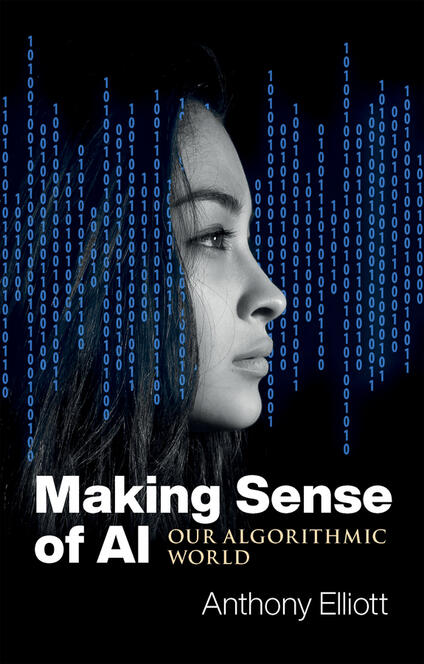
In the preface to Making Sense of AI, Elliott (2022: vii) states that his aim is to show that the digital revolution “also involves the systematic phenomenon of advanced automation across modern institutions, which is profoundly impacting contemporary societies in many significant ways.” The book begins with an introductory chapter on the origins of artificial intelligence and the challenges inherent in defining this phenomenon. Elliott then goes on to discuss two opposing perspectives on the development of artificial intelligence: one represented by “sceptics,” who do not consider this to be a revolutionary change, and the other, characteristic of “transformationalists,” who are convinced that an entirely new conjuncture is currently emerging. Recognizing both views as simplistic, Elliott seeks to steer his theorizations between Scylla and Charybdis. He does this by demonstrating the diverse risks and opportunities caused by algorithms and artificial intelligence.
In the next chapter, Elliott presents an analysis of the development of artificial intelligence across the world. He examines the level of the implementation of algorithm-based solutions in various countries (the US, China, the EU, the United Arab Emirates, etc.). This comparative analysis is followed by a discussion of the issues most frequently raised in today’s examinations of digital developments, namely: the future of work, social inequality, and surveillance. Elliott points to the increased efficiency of the algorithm-based organization of production, but criticizes overly optimistic assumptions about the fourth industrial revolution. He also stresses what may help women and men to cope with the challenges at hand. He claims:
Empowerment in the context of high-tech, automated societies cannot be limited to the demands for more skills, more retraining and more education; empowerment must instead encompass the development of genuine capabilities, capacities and resources at the level of individuals to make decisions, and influence outcomes, about the place of work in our lives, and our lives in these times.
2022: 116
A very similar mode of analysis is applied by Elliott in his reflections on social inequality and surveillance. First, he comprehensively examines the social and cultural consequences of AI in these areas, and subsequently, insists on the need to engage in a dialogue on the development of brand-new strategies capable of responding to the existing challenges. Notably, the descriptive and critical modes of discourse are neatly balanced in Elliott’s argument.
The concluding chapter examines various scenarios for the development of artificial intelligence, in the context of the recent civilization challenges (the COVID-19 pandemic and the climate crisis) and more general visions of the future of technology (“networked artificial life” and “technological singularity”). Elliott stresses that while the future is unprecedented, the social sciences should reveal the scale of the challenges posed by the development of artificial intelligence and encourage a debate about the ethics of algorithmic modernity. He insists that:
If the social sciences are to adequately engage with our increasingly automated world, they must broach key ethical questions of trust in artificial agents that can have far-reaching consequences in time and in space. From this angle, there is everything to play for regarding the big questions of ethical engagement with our algorithmic world – both now and in the future.
Elliot, 2022: 196
In his next book, Algorithmic Intimacy (2023), Elliott explores the ways in which the contemporary digital revolution affects individual lives and personal relationships. In this context, he addresses some of the key themes of social theory, including agency, identity, and the nature of social relations. Elliott argues in the first two chapters (“What is Algorithmic Intimacy?” and “Togetherness Transformed”) that, when infiltrated by artificial intelligence, intimacy accrues entirely new dimensions. Firstly, rather than arising as a result of emotional involvement, intimacy is engineered by technology. Secondly, algorithmic intimacy is characterized by obscurity, as the way the algorithms work is in general unknown to the users. Thirdly, communication mediated by artificial intelligence is reduced to probability-based solutions, which is why it is intrinsically superficial. Fourthly, algorithmic modernity has made it possible to be engaged in multiple conversations and intimacies simultaneously, which makes them very different from traditional interpersonal relations. Elliott emphasizes that, besides offering opportunities, the characteristic features of algorithmic modernity also produce serious risks. He explains:
A key part of my argument, then, is that people in the age of predictive algorithms make their lives up partly through excluding themselves from their innermost emotions and personal lives. In conditions of advanced algorithmic technologies, women and men can become excluded from the very thing they have most sought to protect and promote – namely, themselves.
Elliott, 2023: 49
Thus, Elliott’s analyses represent critical thought. At the same time, however, the image of algorithmic intimacy he draws is very far from being one-sidedly dystopian. He theorizes this phenomenon in all its complexity and multifaceted nature.

In the three subsequent chapters of the book, Elliott analyzes three different dimensions of algorithmic modernity: relationship tech, therapy tech, and friendship tech. The reader is introduced to a world of apps that serve either to establish relationships with other entities (human and digital alike) or to enhance psychological well-being. A few examples are worth mentioning. Elliott problematizes, among other issues, the ever more frequent use of modern algorithm-based technological solutions to arrange love and sexual relationships. He also analyses applications designed to provide therapeutic (though by no means psychoanalytic) support to users. Thereby, he illuminates how virtual entities enter into friendship – or friendship-like – relationships with users of specific apps. In order to explain the increasing popularity of these technological solutions, Elliott marshals a number of social theories and concepts, including the theory of consumer society (Bauman, 2007), the vision of the instrumentalization of forms of knowledge (Habermas, 1987 [1968]), and the idea of “cultural cooling” (Hochschild, 2003)[1]. While he acknowledges them as excellent tools for interpreting many contemporary socio-cultural transformations, he also emphasizes the urgency to re-visit social theory so that it is able to follow the transformations of algorithmic intimacy.
In the final chapter, Elliott presents three versions of algorithmic intimacy. “Conventional” intimacy concerns the organization of personal and professional relations. “Cohesive” intimacy is related to consensus, agreement, and cooperation among people, and promotes the development of human bonds. “Individualized” intimacy revolves around creativity, imagination, and invention, and fosters self-reflection. Elliott constructs this typology as a useful heuristic tool for a comprehensive analysis of the role of the technological revolution in people’s individual and interpersonal lives, as well as a starting point for the further study of algorithmic intimacy.
Making Sense of AI and Algorithmic Intimacy investigate the challenges that both contemporary societies and social theory must face today. In line with Bauman’s figure of the interpreter, Elliott both provides a comprehensive analysis of the structural, institutional, and interpersonal dimensions of the contemporary digital revolution and calls for adopting a reflexive attitude towards them all. His works aim to evoke the “sociological imagination” (Mills, 1959) and question the relevance of algorithms and artificial intelligence in today’s world. Elliott also encourages explorations of new political, social, and cultural strategies. For example, in the introduction to Algorithmic Intimacy, he argues that: “intimate relationships today are threatened not by the digital revolution as such but by the orientation of various life-strategies lived in accordance with automated machine intelligence” (Elliott, 2023: viii). Both of Elliott’s books chart innovative paths that he believes social theory should follow in the age of the digital revolution. This does not mean that he does not appreciate the insights and contributions of classical and contemporary social theories. On the contrary, he repeatedly refers to the theoretical work of intellectuals such as Georg Simmel, Anthony Giddens, Ulrich Beck, Zygmunt Bauman, and Jürgen Habermas. However, Elliott also makes it clear that the spread of artificial intelligence requires new critical and theoretical frameworks. His own theoretical frame is extremely valuable in this respect.
When, in the late 1990s, the Polish philosopher Adam Chmielewski asked Zygmunt Bauman how he defined his intellectual work, Bauman answered by invoking an example offered by the psychologist Gustav Ichheiser. To illustrate differences in cognitive perspectives, Ichheiser offered a metaphor of a room with three different doors, each of them having a switch that turned on the light of a different color. Three people entering that room through the three different doors each would have different beliefs about the color of the walls of that room, Ichheiser concluded. Revisiting this metaphor, Bauman said: “I try to combine the experiences of all these three people; I try to enter the same room each time through a different door. This room is my current society” (Bauman and Chmielewski, 1995: 19). In my view, these words perfectly capture Anthony Elliott’s books on the social and cultural consequences of the development of artificial intelligence. In each of them, he enters this matter through a different door, and his analyses form a comprehensive, multidimensional picture of the contemporary digital revolution. Thus, Elliott can be described as an excellent interpreter of algorithmic modernity.
References
Bauman Z (1987) Legislators and Interpreters: On Modernity, Postmodernity and Intellectuals. Cambridge: Polity Press.
Bauman Z and Chmielewski A (1995) ‘Postmodernizm bez złudzeń’ [‘Postmodernity without Illusions’], Odra 1: 19–29.
Bauman Z (2007) Consuming Life. Cambridge: Polity Press.
Elliott A (2019) The Culture of AI: Everyday Life and the Digital Revolution. Routledge: London.
Elliott A (2022) Making Sense of AI: Our Algorithmic World. Cambridge: Polity Press.
Elliott A (2023) Algorithmic Intimacy: The Digital Revolution in Personal Relationships. Cambridge: Polity Press.
Habermas J (1987 [1968]) Knowledge and Human Interests. Cambridge: Polity Press.
Hochschild AR (2003) The Commercialization of Intimate Life: Notes from Home and Work. Berkeley, CA: University of California Press.
Mills CR (1959) Sociological Imagination. New York: Oxford University Press.
[1] Elliott also points out that while some of these apps had been introduced some years ago, they gained particular popularity due to the reduction in interpersonal human contact during the COVID-19 pandemic.


 thesis eleven