by Darren Jorgensen (University of Western Australia)
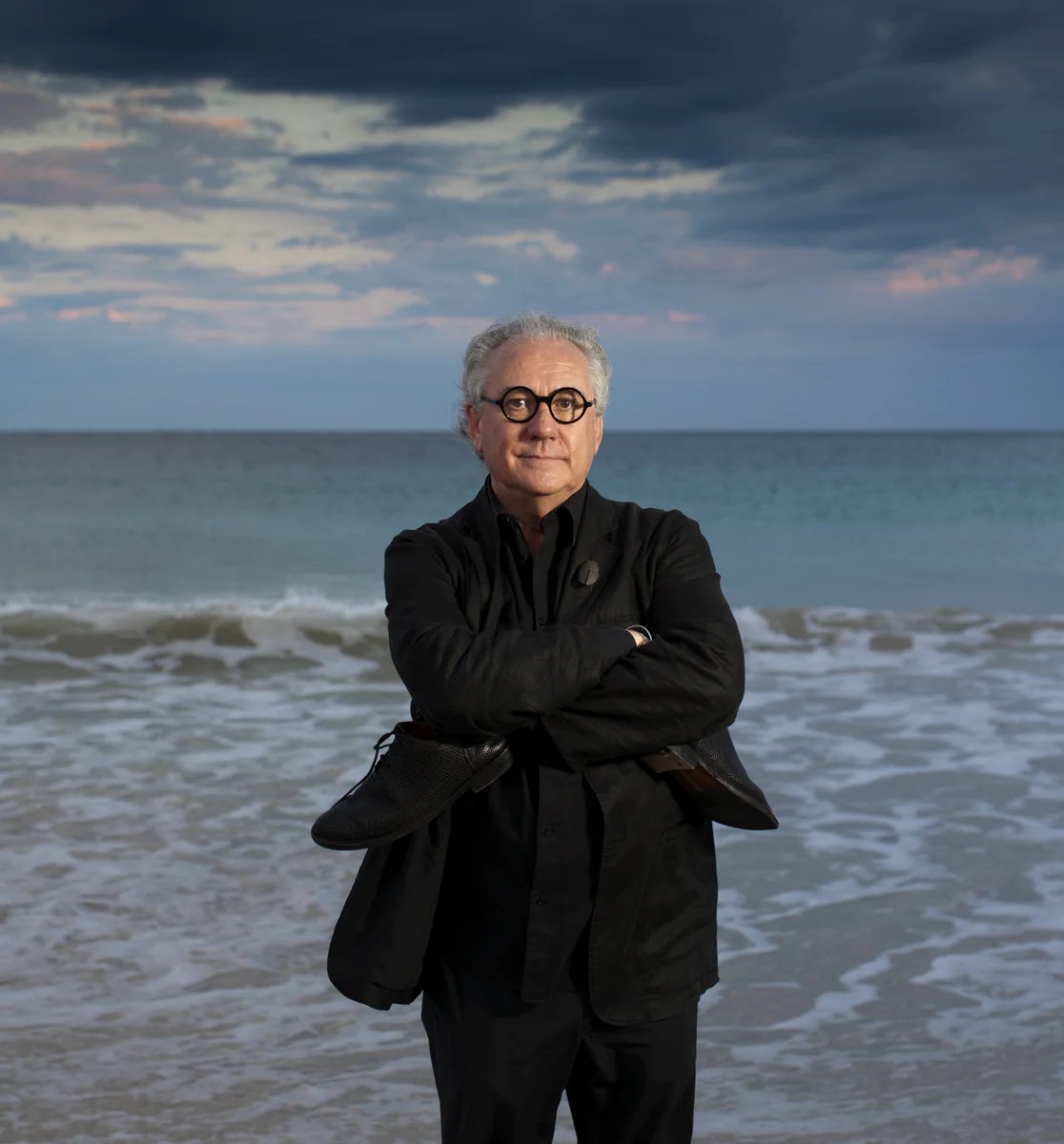
It was devastating to hear of Ted Snell’s death for those of us who were touched by his unflinching support of the visual arts. Snell pursued a selfless career sitting on national arts boards, curating shows and managing galleries while always and endlessly advocating for art and ideas. As a champion of art and artists, Snell’s work resembled the New York critic Jerry Saltz’s mantra that there is always room for art, whether good or bad, and that the more art, the more shows, the better it is for the world (@jerrysaltz). As a prolific writer Snell developed a series of arguments around why art, artists, art education, art installers and art prizes matter, and in particular why they matter to the nation (Snell 2009; Snell 2015b; Snell 2018; Snell 2020; Snell 2021a). It is to Snell’s various defences of the visual arts I want to turn here to attempt something of a discursive rather than a professional obituary. For while most of us encountered Ted as an organiser and behind the scenes influencer, he was also unafraid of putting his name to adversarial and critical use, making arguments to serve the needs of artists left outside of the national conversation. This, I hope, is a way of paying tribute to his provocations for us to think, and think again, about what it means to live in Australia, and more specifically on its far coast.
Snell’s classic, and often repeated argument was that West Australian artists were being left out of the national story (Snell 2014a; Snell 2014b; Snell 2014c; Snell 2015a; Snell 2017). Targeting curators, writers and ABC television presenters, he made the point that this neglect extended ‘to an embarrassingly large number of books and curated exhibitions produced over the last century that have egregiously used the prefix “Australian”’ (2015: 122). Snell returned to this ‘tyranny of myopia’ to make more substantial points about the way artists are easily forgotten and left behind (Snell 2014c). He was more than aware that the point about West Australian artists was to some degree spurious, as exceptions to the generalisation are not hard to find. Responding to the theme of a 2014 Perth symposium on ‘The Undiscovered: A National Symposium on Western Australian Art,’ organised by Vanessa Russ, and to Snell’s introductory paper (Snell 2014c), Ian McLean argued that the exceptions are Aboriginal artists, who have made Western Australia a very visible presence on gallery walls in Melbourne and Sydney. Aboriginal artists from the far north of the state, and in the desert communities of Balgo, Kiwirrikurra and Punmu, have turned the tables on West Australia’s invisibility (McLean 2014).
Snell’s argument about West Australian artists can be understood both as a literal plea for powerbrokers in Melbourne and Sydney to notice his community in Perth, but to also make more substantive points about how artists function when they are unsupported by arts infrastructure or a wider culture (Snell 2014c). The West Australian artist is a stand in for artists more broadly, and especially for artists in Australia whose achievements pass largely unnoticed by the greater population. With minimal arts infrastructure, and distant from the thriving art capital of Melbourne, Perth artists are symptomatic of artists working in country towns and suburbs throughout the country, where they are forced to develop their own, radically inclined Artist Run Initiatives or artist run galleries, or to seek success in Asia and Europe (Snell in Bevis 2014; Snell 2014a; Snell 2014b). These artists also develop responses to their own regions, and flesh out the complex of a national picture of the visual arts. In Western Australia, the harsh local ecology is very different to the well-watered, rolling hills and plains of the south-east, and brings about different modes of art practice. Snell was, to borrow an album title from Perth band The Triffids, Born Sandy Devotional (1986) to this particular way of seeing the continent, from a city that is alienated from its distant capitals (Snell 2021b).
The sense that West Australians are all outsiders drove some of Snell’s most original exhibition projects. This extends from a series of shows he ran to support younger curators called Here&Now, showcasing disabled, Muslim and queer artists among others, to exhibitions and publications focussing on outsider artists (Snell 2013; Snell 2015; Snell 2020c). These outsiders included the Ngaanyatjarra painter Mary McLean and her collaborator Nalda Searles, as well as the visionary Stan Hopewell and a blockbuster show of Ross Seaton’s paintings. Seaton’s humpbacked, ragged figure was a familiar sight as he walked along the roads of Perth. Snell’s discovery that he also had an arts practice was a revelation for the city, as he brought Seaton’s beautifully coloured abstractions and portraits on brick, board and canvas to a disused warehouse in Fremantle (Walking Man). Snell’s writings reflect this curatorial and directorial practice that supported those whose work would not otherwise been seen in reified gallery spaces.
Snell’s writing did not pass through the artworld without some controversy. Kelly Fliedner, then running the Perth arts journal Semaphore, took Snell to task for defending murderers and rapists after one of his essays defended the statues of West Australian pioneers that populate the inner city (Snell 2020a). Such figures were being taken down overseas at the time, enflaming the ‘statue wars’ that were then raging in newspapers and online around the world. Snell compared the removal of statues to the blowing up and burning of Buddhas and books, arguing that it was a way of erasing public memory. In turn, Fliedner accused Snell of an act of ‘race solidarity’ (2020), of confusing history for racism, and art for historical memory.
A second moment of dissent from Snell’s unwavering support for artists among the younger generation was during his tenure as The Australian’s local arts critic, when he argued that an experimental Perth Institute of Contemporary Art exhibition was like a research and development laboratory for industry (Snell 2009). The argument was a desperate one, made as arts organisations were scrambling for new ways of justifying arts funding after the sector had been hit by decades of ideological conflict and impoverishment. The artists responsible for Chronox (2009), Lachlan Conn and Michael Prior, were however affronted by the idea, seeing themselves more as psychedelic anarchists, their glowing installation of spheres and triangles about transcending capitalism rather than serving it.
Such moments allow us to focus on the way in which Snell’s professional roles as advocate and super-bureaucrat working on artists’ behalf brought him to try out different intellectual positions. In this he was something of a Leninist, a pragmatist working through different visions of artists playing a role in a nation that largely ignores them. The Perth artist was a figure for the alienation of artists from the cosmopolitan centres to which they look for their sense of self, whether these centres be Melbourne and Sydney, or London and Taipei (Snell 2020). “We want to find ways to work with people,” he writes on behalf of his far flung state, “How do we work with the Australia Council to get more equitable funding? How do we work with the ABC to ensure there is coverage? How do we work with curators in the eastern States to make sure that they think of WA?” (Snell in Bevis 2014) Such questions stand for all the artists he worked on behalf of, from those who worked completely outside the arts system, to those seeking a way into it. Ted’s support of artists will be missed deeply here in Perth, while his argumentative and tireless advocacy, his absolute faith in artists, remains the model of an engaged intellectual, both consistent and contradictory as he sought out a place for the visual arts for Australia.
Author Biography
Darren Jorgensen lectures in the School of Design at the University of Western Australia. His most recent exhibition was Beijing Realism, which he co-curated with Tami Xiang at Goolugatup Heathcote as part of the 2023 Perth Festival. His most recent book is Clyma Est Mort (Bloomsbury’s 33 1/3 series, 2023).
References
Bevis, Stephen (2014) ‘Artist Assert State Rights’ The West Australian, 15 October, 2014.
Fliedner, Kelly (2020) ‘No Peace in the Statue Wars until there is Peace in the Justice System’ Semaphore, 19 June, online at https://semaphoreart.net/No-peace-in-the-statue-wars
McLean, Ian (2014a) ‘Ian McLean at the 2014 Undiscovered Symposium’ public talk, 20 October, online at https://www.youtube.com/watch?v=ChMSJufs7Go
Snell, Ted (2009) ‘Shapes of the Future’ The Australian, 9 May, online at https://www.instagram.com/p/CBeZVRCDB52/?utm_source=ig_web_copy_link
Snell, Ted (2013) Stan Hopewell: Facing the Stars. Perth: UWA Publishing.
Snell, Ted (2014a) ‘Why are Western Australian Art and Artists Invisible?’ Arts Hub, 2 April, online at https://www.artshub.com.au/news/opinions-analysis/why-are-western-australian-art-and-artists-invisible-242925-2323141/
Snell, Ted (2014b) ‘Western Australian Art is Excluded from the National Conversation’ The Conversation, 17 October, online at https://theconversation.com/western-australian-art-is-excluded-from-the-national-conversation-32498
Snell, Ted (2014c) ‘The Tyranny of Myopia’ Artsource Magazine,October 2014, online at https://www.artsource.net.au/Magazine/Articles/The-Tyranny-of-Myopia
Snell, Ted (2015a) ‘Shifting Focus: A Comprehensive, Unbiased History’ Griffith Review 47: 122-130.
Snell, Ted (2015b) ‘Staking a Claim: A Rationale for Local Art Museums’ The Conversation,25 June, online at https://theconversation.com/staking-a-claim-a-rationale-for-local-art-museums-41678
Snell, Ted (2017) ‘Rose Skinner: the Firebrand Perth Dealer Neglected by a New Art History’ The Conversation, 8 February, online at https://theconversation.com/rose-skinner-the-firebrand-perth-dealer-neglected-by-a-new-art-history-72583
Snell, Ted (2018) ‘Why an Education in Visual Arts is the Key to Arming Students for the Future’ The Conversation,27 September, https://theconversation.com/why-an-education-in-visual-arts-is-the-key-to-arming-students-for-the-future-103844
Snell, Ted (2020a) ‘Can we have peace in the Statue Wars?’ The West Australian, 16 June, online at https://www.instagram.com/p/CBeZVRCDB52/?utm_source=ig_web_copy_link
Snell, Ted (2020b) ‘Mirror and Lens: Art in the Time of Conavirus’ Victoria College of the Arts Art Forum talk, 24 September, online at https://www.youtube.com/watch?v=YftWOI5ToRA&t=205s
Snell, Ted (2020c) Ross Seaton: Walking Man. Perth: Lawrence Wilson Art Gallery.
Snell, Ted (2021a) ‘A Forest of Hooks and Nails is a Joyous Exhibition about the Art of Hanging Art’ The Conversation, 25 February, online at https://theconversation.com/a-forest-of-hooks-and-nails-is-a-joyous-exhibition-about-the-art-of-hanging-art-155742,
Snell, Ted (2021b) ‘“A Singular Vision”: New Film Tells the Touching Story of Musician and Triffids Founder David McComb’ The Conversation, 2 September, online at https://theconversation.com/a-singular-vision-new-film-tells-the-touching-story-of-musician-and-triffids-founder-david-mccomb-166758
Walking Man (2022), directed by Luna Laure, featuring Ross Seaton and Ted Snell, ABC Television program, broadcast 10 August.


 thesis eleven