Reviewed by Jessie Dong (Yale University)
(This is a prepublication version of this review essay. You can find the published version in Thesis Eleven Journal, on the T11 Sage website)
Introduction
The discipline of sociology, it might be argued, is primarily concerned with uncovering how and why human suffering persists. Of course, few sociologists would use such terminology; instead, they bracket ‘suffering’ under ‘inequality’, ‘discrimination’, ‘dissatisfaction’, or other less inflammatory terms. The term ‘suffering’ more often describes our innermost experiences, or a condition of total adversity. Sociologists tend to pay greater attention to the latter, privileging the investigation of public life over the realm of intimacy. Intimate life, after all, seems best addressed by psychologists, philosophers, and artists. But sociology still has much to offer: It provides systematic tools for bridging private and public realms to understand their interrelation. It can address why we suffer in our intimate relationships by virtue of the societal conditions we live in, and not just the particularities of our situation.
In her 2012 book, Why Love Hurts (2012), Eva Illouz opens with precisely this concern, characterizing sociology as primarily concerned with ‘collective suffering’ rather than ‘psychic suffering’. But, argues Illouz, ‘if sociology is to remain relevant to modern societies, it must imperatively explore the emotions that reflect the vulnerability of the self in conditions of late modernity, a vulnerability that is at once institutional and emotional’ (2012: 15). Illouz presents a research agenda that has sustained a long and impressive career, spanning dozens of publications, thirteen books, and numerous major awards. This paper aims to summarize and assess her corpus, primarily in the form of interrogating her conceptualization of ‘late modernity’ and its implications on romantic love. What precisely does Illouz mean by ‘late modernity’? For starters, it is the modernity of industrialized Western nations, which is reflected in her data sample and references. Illouz often equates ‘modernity’ with the advent of consumer capitalism, with all its accompanying moral consequences. Also implicit in her conception of modernity is a Weberian vision of rationalized society (Illouz, 1991). Here we examine how this conception of modernity manifests in her corpus, addressing both its theoretical affordances and drawbacks.
But first, some details of her life. Eva Illouz was born in Fez, Morocco but received the bulk of her education in France. She received a BA in sociology, communication, and literature at Paris Nanterre University, a MA in communication from the Hebrew University, and a PhD in communications and cultural studies at the Annenberg School for Communication of the University of Pennsylvania in 1991. Her earliest publications reveal her interest in the relationship among romantic love, capitalism, and therapeutic culture. Her first major book, Consuming the Romantic Utopia: Love and the Cultural Contradictions of Capitalism (1997), traces the impact of consumer culture on cultural representations and practices of romantic love. It also received an Honorable Mention for the Best Book Award at the American Sociological Association, Emotions Section. In 2007, she published Cold Intimacies: The Making of Emotional Capitalism, which originated from papers presented as the Adorno Lectures in Frankfurt. In many ways the book provides a synthesis of her most provocative arguments on the culture of romantic love, which, as the title suggests, is permeated by capitalist logics of rationality and individualism. In Why Love Hurts: A Sociological Explanation (2012), Illouz elaborates on the advent of love in modernity and its accompanying pathologies for romantic union. Her most recent book, The End of Love: A Sociology of Negative Relations (2019), contains her most trenchant critique of modern love, suggesting that it has fostered tendencies to retreat from intimacy altogether.
An adjacent topic frequently explored by Illouz is ‘therapeutic culture’, discussed at length in one of her first publications, Oprah Winfrey and the Glamour of Misery: An Essay on Popular Culture (2003). The book takes on the cultural enterprise of Oprah with both appreciative and critical lenses, examining how it reflects what she calls the “glamourization of suffering” in popular culture. This book would win the Best Book Award at the American Sociological Association, Sociology of Culture section. Following Oprah, in Saving the Modern Soul: Therapy, Emotions and the Culture of Self-Help (2008), Illouz illustrates the pitfalls of what she diagnoses an excessively rationalized therapeutic culture. While her substantive focus in these books lies in ‘therapeutic culture’, its implications resound in the emotional modalities that structure romantic experience.
There is no scholar in the sociology of emotions who has sustained such a coherent and argumentatively forceful research agenda. Illouz’s corpus masterfully integrates critical theory into the realm of intimacy, addressing not only the material effects of capitalism, but also the imbrication of capitalism into emotional logics and practices. At times, her concern with capitalism is overapplied in the form of metaphorical linkages between an economic system driven by self-interest and real romantic actors navigating a ‘deregulated’ dating market. But so too does Illouz demonstrate her sociological mastery at elaborating on the capitalist metaphor, using her subjects’ testimonies to reveal complex modes of romantic reasoning and sentiment that indeed demonstrate the difficulties of finding and sustaining romantic love.
The structure of this paper aims to first clarify Illouz’s contributions to the literature and then provides critical evaluation and alternatives. Part I offers a theoretical reconstruction of the major concepts that span her corpus. This will involve illustration of theoretical constructs and underlying theoretical influences, which include Marxist axioms about commodification, critical-Weberian theories of modernity, Bourdieusian theories of culture as capital, and Swidler’s toolkit theory of culture.
Part II mirrors Part I but places each theoretical concept under critical inspection. Here, I reveal how the theoretical assumptions described in Part I limit her understanding of empirical conditions and suggest alternative interpretations. The overarching theme in this critical section takes issue with Illouz’s claims of implementing ‘immanent critique’ a method she associates with Michael Walzer (1987). Walzer famously developed a hermeneutic alternative to abstract-philosophical and Marxist forms of social criticism, believing that each social sphere should be evaluated on its own terms via an ‘internalized’ interpretation of the ideals it had set for itself –not from preconceived ideas important from the outside. Immanent critique involves observing real actors’ desires and values and placing under critical inspection the mechanisms that prevent their fulfillment. By emphasizing the immanence of her critique, Illouz wishes to assure us that her despairing evaluation of modern romance derives from the actual ‘internal’ conditions and experiences of romantic actors – not from the application of some abstract ideal ‘external’ to the intimate sphere: for example, from a pre-existing commitment to the idea that the economics of capitalism destroy the possibility for authentic love. In this paper, I will show that, while Illouz accomplishes many things, one of them is not internal critique. The core of the discrepancy lies in her application of theoretical constructs embedded in post-Marxist cultural criticism.[i] At the end of the day, the core of Illouz’s scholarship lies in the potency with which she diagnoses, elaborates, and critiques the residues of capitalism and rationality in romantic culture. This paper will illustrate the brilliance of Illouz’s contributions to the cultural sociology of romantic love, while also making clear the empirical limitations that accompany her theoretical ambitions. In Part III, I point to alternative approaches of studying romance that might complement Illouz’s contributions.
Part I: The Illouzian Vision of Romance
I: The Complexity of Modern Love: Capitalism, Free Choice, and Individualization
Illouz’s diagnosis of modern love rests on an overriding concern with the dissolution of tradition. In the vacuum of dying rituals emerge increasingly complex modes of courtship. The portrait Illouz paints would not be unfamiliar to viewers of contemporary romantic comedies such as Sex and the City, where men and – particularly women – face a seemingly endless number of trials and tribulations in the quest for ‘finding love’. As I demonstrate below, in each of her books Illouz tackles a different facet of modernization in romantic love.
In Consuming the Romantic Utopia (1997), Illouz focuses on the collision between capitalism and romantic love. In a world where women are no longer ‘called’, but instead ‘date’, capitalism fills the void of tradition. Dating takes place in the consumerist sphere of leisure – for example, eating out, going to the movies, and getaway retreats – a result of what Illouz calls ‘the commodification of romance’. So too is the act of consumption tied to romantic imagery – as illustrated in advertisements for jewelry, makeup, chocolate, and other luxury goods – a phenomenon she labels the ‘romanticization of commodities’. These phenomena constitute a ‘utopia’ of desire, liminality, and transcendence – but, like all commodities, this ‘utopia’ remains insatiable.
While Consuming the Romantic Utopia addresses the modern advent of ‘dating’, Cold Intimacies (2007) takes on an even more recent phenomenon: internet dating. The capitalist metaphor is extended, with online dating approximating a ‘market’ featuring dynamics of abundant choice, scarcity, and competition. It also instills a mode of romantic experience akin to that of a picky consumer; rather than facilitating mystery, idealization, and wonder, it generates cognitive modes of comparison and evaluation.
In Why Love Hurts (2012), Illouz takes a step back from romantic practices and examines romantic subjectivities in more general terms. As suggested by the title of the book, Illouz questions why so many modern individuals – particularly women – find the experience of romantic love so fraught with pain. Illouz demonstrates that we live in a state of emotional freedom, where one can conceivably choose whomever one wishes to love. Contrary to intuition, freedom of choice does not guarantee happiness, but rather creates confusion, unattended desire, and conflicted feelings. Freedom facilitates ‘commitment-phobia’, a ‘disorganized will’, and the emotional state of ‘ambivalence.’ This condition is further amplified by the modern imperative for self-realization, which conflicts directly with the self-sacrificing premise of loving commitment. As such, for Illouz modern love is too free, generating both desire and fear, unbridled affection and withdrawal.
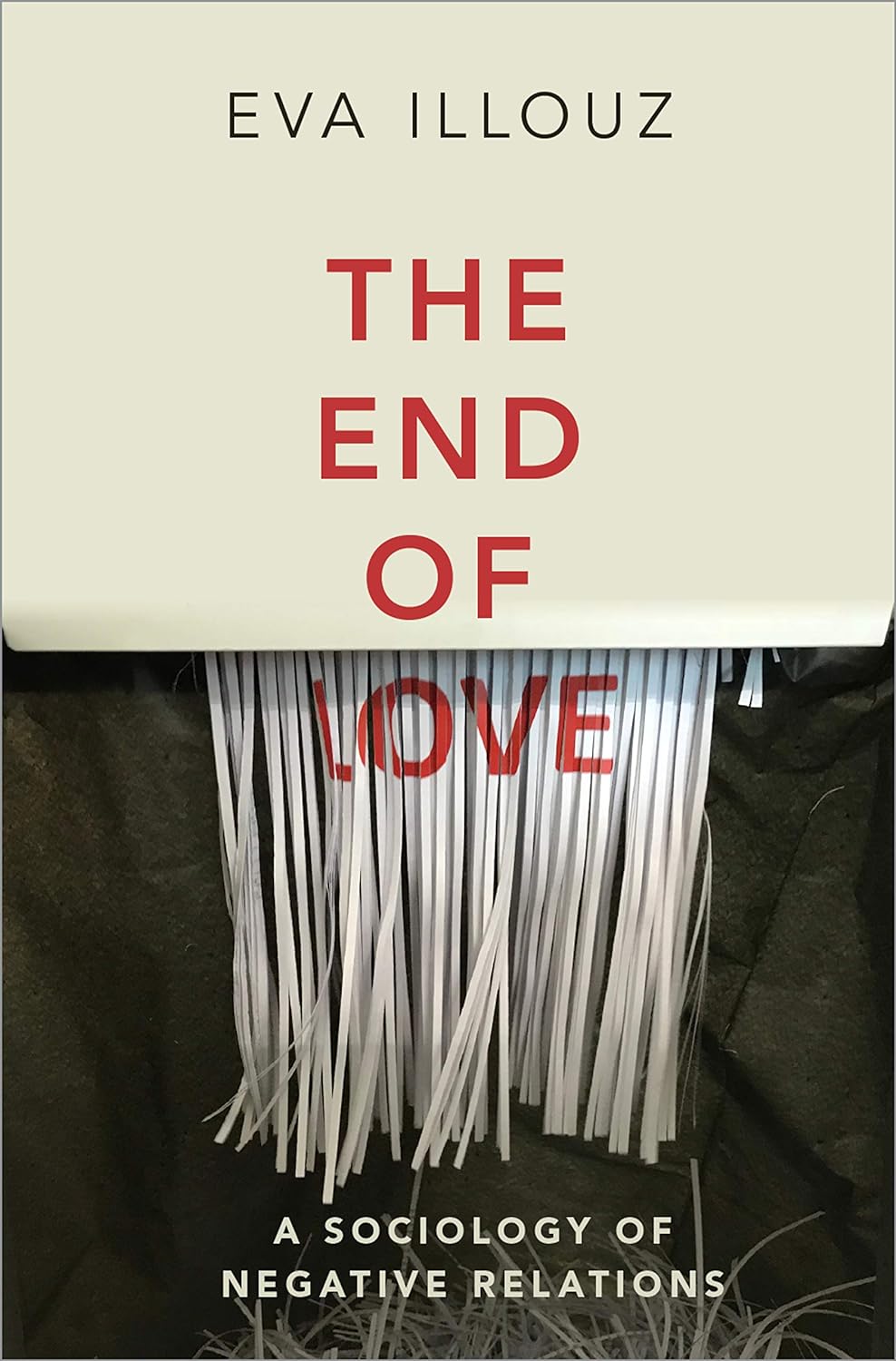
Finally, in The End of Love (2019), Illouz issues her most trenchant problematization of freedom, illustrating the unintended consequence of facilitating precisely the opposite of what it sought to achieve: ‘unloving’, or ‘negative sociality’. Negative sociality occurs when ‘the subject does not want relationships or is unable to form them because of the structure of his or her desire’ (Illouz, 2019: 93). This echoes ‘the disorganized will’ explored in Why Love Hurts, but takes the concept further; no longer is the will merely disorganized, but wholly disinclined. This is because the right to choose extends beyond the domain of romantic interest; it includes also the right to refuse for the sake of preserving self-dignity, autonomy, and personal happiness. The End of Love portrays a somewhat dystopian picture of contemporary romance, where the absence of ritual and traditional obligation has led to the breakdown of passion and loving commitment. Illouz’s concerns belie more generally a critique of neoliberal individualism, or what some have called ‘new individualism’ (Elliott, 2013). She traces logics of consumerism in courtship practices and reveals their nefarious outcome: the ‘end of love’ itself. The neoliberal individual is self-enterprising and rejects any obstacle to personal flourishing. The most burdensome obstacle? What one might perceive as inevitably risky, unfulfilling relationships.
II: Modern Subjectivities: The Therapeutic Self
In the previous section, I illustrated the ramifications of complex structures in modern courtship. But also essential to Illouz’s conception of modernity is a certain mode of subjectivity that manifests in all areas of social life – not just romance. The mode of subjectivity I am referring to can be broadly characterized as ‘the therapeutic self’ – of which Illouz is highly critical for facilitating inauthentic modes of emotional performance and reflexivity. In many ways this mode of subjectivity can also be understood as a consequence of free choice, individualization, and claims toward autonomy.
Before relaying her critique of therapeutic culture, it is helpful to understand the theoretical origins of the concept. Illouz uses a Swidlerian ‘toolkit’ theory of culture (Swidler, 2001) to explain the rise and prevalence of the therapeutic ethos in modernity. In other words, therapeutic discourse and rationale became cultural ‘tools’ with which individuals could navigate emerging emotional difficulties in modernity. It is perhaps the pragmatist origins of therapeutic culture that explains why Illouz is so quick to criticize – after all, any cultural movement originating from modernization processes could not be anything but disenchanting.
Her use of toolkit theory is demonstrated in Saving the Modern Soul (2008), where she argues that Freudian ideas thrived in contexts where familial relations and sexuality became areas of contention. Modern individuals deployed the ‘tools’ of Freudian thought, making sense of their lives through the prism of pathology, psyche, and sexual health. While the origins of the therapeutic self lie in Freudian psychology, it thrives as a particular mode of self-interrogation that relies on pathologizing diagnostics in service of self-improvement. This can be seen in ‘self-help’ culture, which exists not only in private therapeutic practice but also in public performances. One is reminded of the countless number of self-help guides, gurus, and spiritual-cum-religious trends that have proliferated in the past few decades. Illouz specifically explores the performance of self-help culture in The Glamor of Misery (Illouz, 2003). She illustrates the performative mastery of The Oprah Show, whose topical interests range in seriousness from weight loss journeys to surviving domestic abuse. Struggles with weight are understood as personal battles with emotional and traumatic baggage. Domestic abuse is understood as a surmountable trauma – once tackled, a resource for strength.
As suggested by the eponymous title of her study of Oprah, Illouz takes issue with therapeutic culture for promoting the glamorization of suffering. Illouz argues that healing and redemption is inevitably imbricated in a narrative of suffering; in order to heal, one must relive traumas and identify as a suffering self. Further, the process of recounting and (re)living suffering obscures one’s moral imagination, such that the perpetrator of wrongdoing is exonerated.[ii] As such, The Oprah Show presents a rationale where all suffering can be understood as a first step toward healing and growth, a narrative that promotes the idiom ‘what doesn’t kill me makes me stronger’ (Illouz, 2008: 183). But matters of justice or reparations is often omitted from the process of self-healing.
Illouz’s problematization of the therapeutic ethos does not stop at concerns with valorizing suffering. Instead, she identifies a pernicious mode of introspection that echoes Weber’s greatest concern: rationalization. To understand Illouz’s critique, it is necessary to first explicate Illouz’s model of therapeutic cognition. The first step to therapeutic thinking is the ontologization of emotions, a process whereby emotions are detached from visceral experience such that they are rendered objects of observation and analysis (Illouz, 2007: 33). Once decontextualized from their moment of eruption, emotions become objects that can be assessed from a cool, level-headed position. Once ontologized, emotions are then rationalized in an instrumental way: one goes from merely understanding emotions to mobilizing these newfound understandings in order to make important relationship decisions. Because these emotions are so far-removed from their initial context, Illouz characterizes this process of rationalization as inauthentic and unnatural (Illouz, 2008: 148).
After having achieved cognitive recognition of one’s emotions, the next step is to communicate them to relevant audiences, a process she calls ‘communicative rationality’. Again, Illouz frames communicative rationality as inauthentic, used more for instrumental than expressive ends. In Saving the Modern Soul, Illouz demonstrates the proliferation of communicative rationality in corporate settings, where employees need to competently display their emotional well-being in a manner similar to Arlie Hochschild’s conception of ‘emotional labor’ (Hochschild, 2003). Employees need to present emotional competence – which actually involves the withholding of true emotions – not disclosure of authentic feelings (Illouz, 2008: 103). In the context of personal relationships, the goal of communicative rationality is to instrumentally convey one’s feelings in hope of improving relationship issues. Implicit in the act of communication is a means-end mode of action, rather than an authentic attempt to deepen bonds.
IV: Modern Subjectivities: Ambivalence
In the sociology of romantic love, a recurring theme is the identification of two opposing models of love: one modern – therapeutic, scientific, rationalized—and the other premodern – mythical, passionate, traditional, and irrational (Belleau et al., 2020; Piazzesi, 2022; Swidler, 2001). Scholars identify these two models to conceptualize cultural change in the advent of ‘modern’ love. They also recognize the endurance of premodern love in modernity and try to explain the two models’ coexistence. How does Illouz characterize the interaction between modern and premodern love? Illouz reads ambivalence in the coexistence of these contradictory models – a state of equivocation about premodern love’s tenability.
In Consuming the Romantic Utopia, Illouz broaches the surface of this tension by testing whether iconic romantic representations – often embedded in consumer experiences – are understood as authentic forms of romantic love. She finds that middle and upper-middle class informants only acknowledge these representations as stereotypes – not real representations of love. They instead attribute authenticity to experiences offered not by consumer activities, but habitual moments of tenderness and closeness. There is a ‘crisis of representation’, where people both identify iconic stereotypes as the ‘most romantic’, but also distance themselves from these idealistic representations as cliched, false, or illusory (Illouz, 1997: 176). A candlelit dinner at a fancy restaurant is immediately recognized as ‘romantic’—but highly cliched. ‘Real love’ is more closely associated with the familiarity of sharing a home cooked meal. Contradictorily, the allure of the romantic utopia makes it more powerful than modern love. But so too does it create ambivalent feelings about its viability and authenticity.
In Why Love Hurts, Illouz builds upon her discussion of love’s ‘crisis of representation’. Rather than looking merely at representations, she elucidates the mechanisms of eroticism and measures it against the therapeutic mode of managing relationships. She finds that there are fundamental, irreconcilable differences between the two. Eroticism thrives on inequality between the sexes, for it provides a salient cultural code that ‘thickens’ the qualitative experience of romance. This is antithetical to the political project of gender equality. Eroticism is a form of waste – depense, connoting both spending and wasting – that involves self-abandonment and irrationality. This contradicts rational logics that aim to maximize relationship satisfaction. Eroticism also runs contrary to scientific explanations that reduce romantic experience to products of biology, hormones, and evolutionary instinct. When modern individuals straddle these two experiences – one calling for erotic self-abandonment, the other rational partner selection – a condition of uncertainty arises (Illouz, 2012: 190). For example, male ‘chivalry’ might be highly desired by heterosexual women, but egalitarian logics impede the natural flow of attraction.

In addition to uncertainty, irony emerges as a salient structure of feeling and further delegitimates premodern romance (Illouz, 2012: 195). Dismissed as false and illusory by the therapeutic model of romance, individuals can only approach premodern models in ironic terms. This means that they are aware of the cultural meaning of romantic cliches, but they are unable to attribute them with authentic meaning. Despite the prevalence of romantic comedies, period dramas, and paperback romances, Illouz suggests that people consume them merely as ‘guilty pleasures’. Moreover, individuals become increasingly disappointed by their inability to achieve picture-perfect outcomes. The confrontation between ‘reality’ and ‘fiction’ generates feelings of resignation and disappointment (Illouz, 2012: 215).
The general condition that uncertainty and irony create is emotional ambivalence. Ambivalence is a state of deflated emotions, second-guessing, and insecurity. One is no longer permitted to ‘feel’ whatever they wish; they must instead be wary of ‘coming on too strongly’ or belying ‘outdated’ romantic beliefs. This is where therapeutic models of love can be helpful; they can serve as clearcut guides for relationship conduct. One can evaluate potential partners according to therapeutic ideals of egalitarianism, mutual satisfaction, and individual maximization of self-actualization. For Illouz, therapeutic modes of romance entail an aporia of passion – a prerequisite for romantic love. If there is no room for affection and passion in modern love, asks Illouz, what exactly is left?
V: Classed and Gendered Experiences of Romantic Love
When it comes to conveying gendered and classed differences in romantic experience, Illouz again deploys a critical lens. It is women, not men, and the working class, not upper middle class, who suffer more in romance.
Let us start with gender. According to Illouz, the heart of romantic inequality in heterosexual relationships lies in gendered sources of self-worth. For men and women, the sources of self-worth differ: men’s self-worth is attained through autonomy, whereas women’s self-worth is located in the domain of care (Illouz, 2019: 206). So while women crave intimacy and stable relationships, their desires remain unmeetable because their male counterparts are given the moral prerogative to practice romantic freedom. Illouz portrays a scenario where men are entitled a life of endless bachelorhood, while women are constantly in search of a man who might finally ‘settle down’.
Women are also victims of ‘scopic capitalism’ (Illouz, 2019: 98). Scopic capitalism constitutes a network of institutions, including the porn industry, social media, and the sugar daddy industry. Although feminism brought about the sexual liberation of women’s bodies, it was unable to elevate the social status of female sexuality. Scopic capitalism continues to objectify and devalue women, such that female sexuality remains policed or delegitimized. As such, men and women are unequal actors in a ‘sexual field’, echoing Bourdieu – men are rewarded for sexual capital while women’s sexual capital holds an ambivalent status.
When it comes to class, Illouz employs a Bourdieusian framework of cultural capital to explain class disparities. She frames the ‘therapeutic ethos’ as a form of cultural capital obtainable primarily by middle and upper-middle classes. In Saving the Modern Soul, Illouz describes how ‘emotional’ and ‘linguistic competence’ is learned in corporate settings –not in working class occupations (Illouz, 2008: 231). This is because corporate settings require their employees to exhibit control of emotions through linguistic fluency. The linguistic fluency obtained in the workplace is transferred to the intimate sphere, in which couples ‘communicate’ and hold sustained ‘intimate’ conversations. For working class couples, it is the women who long for ‘talk’, perhaps due to their exposure to mass media representations of communicative intimacy. However, their male partners are unable to reciprocate, given their lack of energy after long working hours and lower linguistic competence (Illouz, 1997: 238).
Part II: A Critical Evaluation of Illouz
Criticisms levelled against Illouz have touched upon inadequate engagement with race (Hunt, 2006; Jacobs, 2005; Lucal, 1998) sexuality (Clavero, 2015; Denby, 2022; Klesse, 2014; Lucal, 1998), and a rather limited sample consisting of primarily upper-middle class heterosexual men and women (Tartari, 2014). Others point to insufficient feminist analysis (Gottfried, 1998; Gunnarsson, 2014), inaccurate engagements with the uptake of Freud in popular culture (Simonds, 2009), confusion in the relationship between culture and structure (Payton, 2009), and a limited understanding of working class culture (Coltrane, 1998; Spurlock, 1998; White, 1999).
My concern, however, rests more in the theoretical constructs Illouz frequently deploys and their coherence with empirical reality. The core of Illouz’s empirical adequacies is an insufficiently ‘immanent’ critique. Rather than deriving ‘internally’ from romantic actors’ experiences, Illouz’s critique originates in critical theories about modernity. That is, it is not so much an assessment of romantic experiences themselves, but the application of critical theories about the modernity in which these romantic experiences are situated that constitute her critique. In the following sections, I will start by unpicking Illouz’s version of immanent critique. Then, I will show how these critical insights on modernity limit her analysis of modern subjectivities, romantic experiences, and gendered and classed experiences of love.
I: ‘Immanent critique’ draws from a critique of modernity
As we have seen in Part I, Illouz characterizes romantic love in modernity as a process of de-traditionalization and complexification. But rather than convey, for example, positive developments in modern love, such as the capacity to choose one’s romantic partner freely and without ordinances from family, state, or religion (Giddens, 1992), Illouz interprets only its negative ramifications: freedom gives way to libertarian impulses, and excessive choice encourages logics of commodification. Put simply, there is a certain one-sidedness to Illouz’s characterization of ‘modernity’. Illouz argues that these issues with modern love constitute ‘immanent critique’, but as I will show below, these critical insights are far from internal to it.[iii]
Illouz expresses her project of immanent critique in several texts. In The Glamour of Misery, she points to the importance of immanent critique in assessing popular culture. While ‘pure critique’ might constitute something along the lines of conservative evaluation, where art is evaluated according to the extent of its compatibility with orthodox values, ‘impure critique’ or ‘immanent critique’ argues that art must be evaluated on its own qualifications for success. This criterion of sphere-specific critique is important for any critical theorist wishing to go beyond mere political commentary. She writes,
I suggest that there is no continuity or transparency between social spheres. This means that we cannot know a priori how symbols and values will ‘behave’ in the social, political, and economic spheres…. Thus my point is emphatically not to dispose of critique, but rather to engage in a critique that does not become the ‘counting of ways’ in which culture promotes (or fails to promote) a given political agenda.
Illouz, 2003: 211–212
To further clarify her endeavour, Illouz references Michael Walzer’s conceptualization of differentiated spheres of justice, in which each social sphere contains specified moral ‘goods’ (Illouz, 2008: 224). Justice in the sphere of economics might look like monetary equality, while justice in the political sphere might look like equal representation. This begs the question: what constitutes a ‘good’ in the sphere of romance and intimacy? Essentially, this is the central question around which Illouz bases her ‘immanent critique’. But even more essential to the project of reconstructing the parameters of justice in the intimate sphere is that these values must be situated in the concerns of real-life actors. In Cold Intimacies, Illouz writes, ‘I suggest that we ought to develop criteria of evaluation that are as much as possible internal to the traditions, criteria and meanings of the object we analyze’ (Illouz, 2007: 95).
Let us recap the two main interrelated features of immanent critique, as defined by Illouz and her predecessors: First, immanent critique must not involve the imposition of evaluative criteria external to social sphere of interest. Second, the evaluative criteria must emerge from the desires, hopes, and meanings of actual people living inside of the sphere in question.
The problem with Illouz’s immanent critique is that it approaches both criteria but fails to avoid the pitfalls of intersphere pollution. Illouz accomplishes one core goal of immanent critique – identifying principles of justice specific to romantic love. But in setting out a sociological explanation for why romance has yet to be achieved, she fails to avoid intersphere pollution, applying preexisting critiques of modernity to the romantic subjectivities of her participants.
In identifying ‘moral goods’ of concern, Illouz brings forth a few different concepts. In Cold Intimacies, she isolates the problem of ‘disappointment’ as an inevitable outcome of undergoing the hyperrationalized selection process inherent to online dating. This is totally antithetical to the core ‘good’ of romance – an experience of imagination, fantasy, and all-encompassing enrapture with the romantic object (Illouz, 2007: 95–107). To identify ‘disappointment’ as an area of critique is well and good, but implicit in her analysis is precisely the sort of intersphere pollution she hoped to avoid. In fact, she explicitly elaborates a mode of external critique:
In a way, it is as if the designers of Internet dating sites had read and applied, to the letter, the diagnosis of doom and gloom by critical theorists…. Rationalization, instrumentalization, total administration, reification, fetishization, commodification, and Heideggeian “enframing” seem to leap out of the data I had gathered.
Illouz, 2007: 91
And yet, Illouz argues that these comments do not constitute her immanent critique, but are rather descriptive observations. It is unclear why her forgoing analysis of doom and gloom is suddenly irrelevant to her own critique of romantic disappointment. She seems to draw a spurious line between description and critique. Further, the definition of romance from which she identifies internal contradictions in subjective experience might be questioned altogether. In fact, her definition of romance – containing mystery, idealization, and fantasy – maps quite neatly onto Weberian conceptions of premodern ‘enchantment’. In other words, her ideal-typical definition of ‘romance’ is based in an anti-modern premise to begin with. It is no wonder that romance has become so tarnished: it is defined in terms of critical theories of modernity, a point other critics have identified (Nehring, 2013; Pugh, 2008; Thompson, 2010).
II: A Tenuous Critique of the Therapeutic Self
In Part I, I recounted Illouz’s critical conception of the ‘therapeutic self’, a mode of subjectivity inclined toward rationalizing emotions. While Illouz primarily discusses the therapeutic self in Saving the Modern Soul, echoes of her critique can be found throughout her commentary on modern love. It is, after all, therapeutic culture that has influenced our conception of ‘healthy relationships’ (Swidler, 2001). But so too does therapeutic culture permeate the degree to which we balance personal claims to autonomy, dignity, and self-realization with interpersonal obligations. These are the various modalities through which modern subjects ‘rationalize’ emotions. Let us examine how this conception of therapeutic emotionality takes theoretical shape.
Illouz makes a number of somewhat tenuous claims about the ontological nature of emotional experience. The problem with emotional rationalization, Illouz argues, is that it is antithetical to the highly insubstantial, fluid, and circumstantial nature of emotions. Illouz claims that emotional intuition is a more powerful and authentic means of drawing insight on one’s relationship. She supports this argument with the claim that we all have some form of stored cultural know-how that facilitates smoother interactions (Illouz, 2008: 206). Illouz also draws from findings from cognitive psychology which demonstrate that ‘thin slicing’ – or snap judgments based in intuition – are more effective than belaboured introspection. But she cites a study that demonstrates the utility of thin slicing in the trivial context of jam tasting and choosing university courses, not assessing one’s feelings about one’s relationships (Illouz, 2008: 209). The extent to which Illouz applies findings from psychological research at times feel distanced from her attempts at an otherwise rich cultural sociology.
While Illouz tries to provide a scientific argument for the inherent fluidity of emotions, the broader argument behind Illouz’s distrust of the therapeutic self is actually an aversion to ‘modern rationality’, which facilitates precisely the sort of reflexive analyses involved in therapeutic assessment. Oftentimes, this assessment takes the form of prioritizing one’s personal freedom and autonomy – with which she takes issue. She expresses this sentiment very clearly in the conclusion of The End of Love:
In order to generate social solidarity, what Honneth usefully calls social freedom, freedom needs rituals. Rituals create a common emotional focus that does not require introspection or the permanent self-generation and self-monitoring of desires…. Sexuality and love are now the terrain par excellence to reproduce consumer capitalism and hone the skills of self-reliance and autonomy demanded and practiced everywhere.
Illouz, 2019: 228–229
Indeed, Illouz admits that she does not call for a ‘return to family values, to community, or to a reduction of freedom’ (Illouz, 2019: 229). At the same time, Illouz’s moral stance obscures the very important fact that because modern subjects are afforded the freedom to participate in relationships on their own terms – and not the dictates of church, state, or tradition – they are afforded access to ‘real love’. This is in line with Giddens’ (1992) concept of the ‘pure relationship’, in which individuals are endowed the freedom to remain in relationships on their own terms. The process of ontologizing and rationalizing emotions enables individuals to leave – or stay – in relationships after sufficient reflexivity. And these processes of reflexivity need not be tied so neatly to the consumerist mindset.
Another issue with rationalizing emotions is that it renders them into ‘commensurable items’ subject to cost-benefit analysis. This cost-benefit analysis is possible because the discourse of therapy renders all emotions valid, ‘neutral’– and therefore indisputable. Illouz warns that this creates a condition where emotional needs can be ‘negotiated’ (Illouz, 2007: 35). She presents relationships as ‘deals’ between individuals trying to maximize their self-worth and happiness. But she takes the economics metaphor too far and again relies on theoretical constructs of emotional reflexivity, to the point of discrediting her informants’ testimonies.
Let us look at an example. After providing two quotations of informants who filed for divorce after feeling like they were not ‘seen’ by their partners, Illouz expresses her skepticism:
Both Evelyne and Helena display a clear emotional ontology, a perception of and an orientation to emotional needs, such as “being seen” in a specific way, being understood and having their self validated. Such needs, it should be sure, are located in the recesses of one’s subjectivity, are variable, and cannot be easily accessed by others. They can only be responded to after an elaborate work of verbalization and negotiation. These needs proceed [from] an ethics of care and thus have the imperious character of moral claims.
Illouz, 2019: 214–215, my italics
Illouz discredits her informants’ testimonies for being iterations of what she identifies as therapeutic cliches. She chooses to interpret the cult of individualism rather than deeply understand her informants’ emotional dissatisfaction. It is not clear what precisely led these women to feel “unseen”, and there is little recognition of the validity of these emotions. Again, Illouz bases her critique of the therapeutic self on criticisms of modernity – not the actual or indicated experiences of participants.
III: Romantic Ambivalence as Predicated Upon Modern Disenchantment
In Part I, I discussed how Illouz characterized the interaction between modern and premodern cultural ideas about love as fraught with ambivalence. However, again Illouz derives this conclusion from the premise of anti-modernity theories. Let us recap the genesis of Illouz’s theoretical argument. In Why Love Hurts, she first engages with Weber’s concept of ‘disenchantment’, writing, ‘modernity is defined by its ambivalence toward its legitimating cultural core, by a sense of dread of the powers it may unleash’ (Illouz, 2012: 158). How does modernity deal with these ‘ambivalent’ attitudes? It is again ‘rationality’ that steps in to tame the mythical, mysterious, and intangible thickets of love. Illouz is not so reductive as to say that all possibilities of enchantment have disappeared, but she does attribute great significance to this claim:
Rationality is an institutionalized cultural force of its own which has come to restructure emotional life within: that is, it has changed the basic cultural scripts through which emotions are understood and negotiated. While romantic love remains a uniquely strong emotional and cultural hold on our desires and fantasies, the cultural scripts and tools available to fashion it have become increasingly at odds with and are even undermining the sphere of the erotic (Illouz, 2012: 159).
From this premise, Illouz frames scientific understandings of romantic attraction, egalitarianism in partnership, and modern dating practices as the ‘modern’ reaction. But she has less to say about how people actually experience these paradigms – or to what extent they do.
Indeed, Illouz conducts impressive cultural sociological work in delineating ideal-typical models of ‘enchanted love’, which she defines as ‘engaging and mobilizing the totality of the self’ (Illouz, 2012: 162), versus its rationalized counterpart, whereby ‘love becomes the object of endless investigation, self-knowledge, and self-scrutiny’ (Illouz, 2012: 163). And she provides very compelling accounts of the cultural movements that have ushered in romantic disenchantment: the political emancipation of women – and by extension, chivalry and feminine mystique – the emergence of technologies of choice, and the rationalization of partner selection (Illouz, 2012: 170–184). But what remains absent is a plethora of voices – and not just a few quotations here and there – to verify her theoretical formulations.
Illouz also – critically – ties ambivalence in romance to the modern project of self-realization and autonomy. So the argument goes that we have lost sight of our moral obligations to others – even those closest to us – in an attempt at achieving maximum autonomy. We see here a clear example of identifying internal contradictions à la ‘immanent critique’; in a context of uninhibited freedom, one is theoretically afforded the capacity to love whomever, but with this freedom one actually becomes fixated on self-liberation.
Indeed, at times her interpretation of informants’ testimonies of romantic ambivalence appears dubious. For instance, she quotes Elsa, a woman who shared that she felt ‘insecure’ that a man she had been dating for a few months was not as enthusiastic about the relationship as she was (Illouz, 2019: 163–164). Elsa ‘made a few remarks’ to the man, to which he responded with ‘resentment’. Elsa communicated her dissatisfaction and asked that he change his behaviour. He responded defensively, and Elsa decided to break things off, because she realized, ‘if a relationship makes me defensive and anxious, then however great the guy may be, I won’t pursue it.’ Elsa also shares that this was a course of action that she settled on after going to therapy. Illouz interprets Elsa’s ‘insecurity’ as a response to conditions of uncertainty about the other’s intentions. Insecurity in a relationship manifests low self-worth, and in an effort to regain self-worth, the easiest strategy is to exit the relationship. Illouz argues that this is particularly prevalent in therapeutic reflection, ‘whose chief purpose is to enhance self-valuation’. Overall, Illouz presents a dynamic akin to a zero-sum game, the prize being the maintenance of self-worth. However insightful, this interpretation seems to derive more from the application of Illouz’s own repertoire of concepts than a hermeneutic engagement with Elsa’s testimony. We do not know the qualitative dimensions of Elsa’s insecurity; they might be more tied to feelings of abandonment, rejection, or indignation than uncertainty. Following from that, Elsa’s decision to end the relationship may not necessarily be tied to desires for retrieving self-worth. Elsa herself stated that she did not wish to feel ‘defensive and anxious’ and that she ‘[doesn’t] stay in relationships where [she doesn’t] feel good.’ This sounds more like an attempt at regaining emotional well-being – not dignity. One might also question Illouz’s concern with ‘self-worth’ altogether. It is only because Illouz has defined ‘self-worth’ as a facet of individualistic narcissism, shaped by commodified and rationalized visions of the self, that it is an object of critique to begin with. Self-worth, after all, need not be antithetical to the flourishing of meaningful – even ‘healthy’ – relationships.
V: Gender Trouble
According to Illouz, heterosexual women suffer more than men in romantic relationships. They suffer more because men are granted freedom in the dating ‘market’, while female sexuality has an ambiguous status – it is both celebrated and contested. But implicit in Illouz’s analysis is actually a critical interpretation of ‘post-feminism’ (Gill, 2016; McRobbie, 2004). In ‘post-feminism’, the political struggles of previous generations have been surpassed, and in its stead emerges an apolitical sensibility of ‘female empowerment’. For critics of post-feminism, female empowerment is a shallow, meaningless position that obscures persisting inequalities. Consistent with this view, Illouz positions the blatant liberation of women’s bodies in the media as ‘scopic capitalism’. In scopic capitalism, women are not ‘empowered’, but rather reduced to sexual bodies. Rather than elevating the position of women, scopic capitalism devalues female sexuality as a product to be consumed. Illouz also reveals her skepticism toward post-feminism in her critique of the valorization of ‘autonomy’. This concern is consistent with post-feminist issues with neoliberal modes of feminism, which favour independence and choice over female solidarity.
But as commentators have argued, post-feminism entails a ‘double entanglement’ (McRobbie, 2004), or complex engagement with past, present, and anti-feminist positions (Gill, 2016). The very same condition of ‘scopic capitalism’ that Illouz identifies can still have liberating effects. It instead seems as if Illouz has recapitulated one side of the Madonna debates in cultural studies, reading repression rather than subversion in women’s sexuality (Schwichtenberg, 1993). She also offers a one-dimensional account of female sexuality altogether, ignoring developments in the culture of consent and empirical trends that suggest increased sexual inactivity among young adults (Ueda et al., 2020). Indeed, Illouz primarily frames ‘consent’ in negative terms, critiquing it as a logic that permits romantic actors to ‘ghost’, or insensitively ‘exit’ relationships (Illouz, 2019: 168). Nowhere does she consider the culture of consent as a veritable sign of respect for women and their sexual rights, nor does she consider that decreased sexual activity might be a sign that ‘sexual capital’ is not as important as she makes it out to be.
As for Illouz’s critique of women’s relative obsession with matters of romance, it is as if she ignored the advances of second wave feminism, again perhaps owing to her condemnatory attitude toward neoliberal aspirations toward ‘autonomy’. To any ‘modern’ woman, the concept that women necessarily prioritize their romantic relationships over projects of self-realization would appear highly suspect. Granted, the phenomenon of women reverting to more traditional familial and romantic trajectories has been studied elsewhere (Aarseth, 2021; Vaadal and Ravn, 2021), but nowhere do these studies assume that women’s self-worth is bound up with traditionalism. Instead, it is indeed perhaps the idiom of ‘choice’ that enables women to ‘choose tradition’ – and willingly so (Carter and Duncan, 2018).
Also implicit in Illouz’s critique is the sense that men do not suffer in romance. But empirical evidence shows that women have higher standards in mate selection than men. This is seen in the common phenomenon of ‘hypergamy’, in which women tend to ‘marry upward’ with men who have higher educational and social statuses (Esteve et al., 2012). This is even seen among the working class; women either seek upward mobility or choose to remain single rather than compromise their financial position (Pugh, 2015). The ‘scopic capitalism’ that Illouz describes also seems to have just as compromising – if not more – of an effect on men, particularly on online dating platforms. In the United States, men made up approximately 75% of Tinder users, while women made up only 25% in 2021. If dating apps facilitate the harsh, binary assessment of attractiveness that Illouz criticizes, then it is predominantly men – not just women – who are also subject to an objectifying gaze. A study by Waling et al. (2022) for example found that men are conflicted in their selection of profile photos on dating apps, being pulled by conflicting imperatives of presenting idealized male bodies while also performing authentic selves.
As per above, Illouz also paints a limiting portrait of class dynamics in romance. Her main comment on working class relationships is that women are more likely to experience ‘communication’ difficulties. This is because, Illouz argues, the paradigm for relationship success and happiness is based in therapeutic practices of ‘communicative rationality’. Because working class folks are less equipped with ‘linguistic competence’, they are more likely to suffer from relationship difficulties. But Illouz does little to empirically qualify this claim, which is made especially dubious given that she herself is a skeptic of prioritizing communication over ‘authentic’ modes of intimacy, which rely less on discursive competence and more on intuitive feeling. It is more likely that Illouz integrated this assessment of working-class relationships so as to strengthen her critique of therapeutic culture. Implicit in her assessment of class is undue faithfulness to a mode of Bourdieusian critique, where culture can be understood as a form of ‘capital’ that buys – in this case – romantic success.
Part III: Alternative Approaches to the Sociology of Romantic Love
Throughout this review, I have hoped to unpick Illouz’s conceptualization of romantic love as predicated upon a critical, or negative conception of modernity. This theoretical agenda has affinities with critical theoretical work on intimacy, which laments some fusion of capitalism-hedonism-rationalization for alienating what should be uninhibited eros (Elliott, 2023; Hochschild, 2003; Kipnis, 2003; Lasch, 1979). It is also consistent with theoretical framings of romantic love that demarcate premodern and modern ideals, and claim the overwhelming prevalence of the latter (Swidler, 2001). In this concluding section, I aim to provide alternative modes of investigation for the sociological study of romance. First, I will provide an example of ‘immanent critique’ that avoids the pitfalls of critiquing ‘modernity’ en masse. Then, I will propose more ‘agnostic’ research agendas that aim for the elucidation of empirical complexity, rather than social critique.
What might an immanent critique of romantic love look like? For a critique to remain ‘internal’, it would have to locate contradictions between ideal and real conditions of romance specific to actors’ testimonies and experiences. In other words, it would analyze testimonies of romantic dissatisfaction as areas of potential critique, but then locate the source of dissatisfaction in actors’ actual lives. This is different from originating critique from the pitfalls of modern society.
Pugh’s (2015) study of ‘insecurity’ in the intimate sphere is a good example of immanent critique. Pugh levels critique at a pervading sentiment of relationship insecurity, but does not merely attribute the cause of such insecurity to some overarching phenomenon like ‘capitalism’. Instead, she locates the specific origins of insecurity in informants’ testimonies and finds that material conditions of job insecurity reverberate into their personal lives. By bridging her findings to empirical origins, Pugh is able to isolate different manifestations of (in)security among varied class positions. It is not merely a logic of capitalism that has theoretically colonized the intimate sphere, but actual material conditions of precarity as a result of capitalism that create sentiments of insecurity both within and outside of the workplace.
But there are other ways of conducting a sociological study of romantic love. While immanent critique serves as a form of ‘social critique’, a non-critical, more agnostic route would aim to reveal complexities in empirical conditions. It might aim at providing a typology of romantic experience or elucidating cultural logics of romantic feeling. This mode of investigation acknowledges the complexities of modern love but starts from a position that asks not ‘what is wrong with the culture of romantic love?’, but rather ‘what is the culture of romantic love?’.
The non-critical literature on romantic love shows that critics are perhaps overexaggerated in their fears of modern disenchantment. Starting from the same typology of premodern and modern love, it demonstrates that the former has not been extinguished, but rather integrated into a coherent repertoire of meaning. Gross (2005) provides theoretical rationale for the continued significance of ‘traditional romance’. By distinguishing between ‘regulative’ and ‘meaning-constitutive’ traditions, Gross proposes that the ‘deregulation’ of romance in modernity should not be overstated. The obligations of monogamous heterosexual marriage no longer bind individuals – but this does not mean that the accompanying sentiments, desires, and aspirations of (premodern) ‘romance’ have gone away. What critical approaches fails to account for is the endurance of ‘meaningful-constitutive traditions’, which lie in values, ideals, and narratives that are passed on through intergenerational influence, social influence, and cultural power. Indeed, many people ‘choose tradition’, for both pragmatic and ‘romantic’ reasons (Carter and Duncan, 2018).
Of course, this does not mean that premodern and modern love are integrated seamlessly. Cultural change involves processes of reconciling conflicting cultural ideas, and configuring them into something new. This is where close hermeneutic analysis of cultural testimonies comes in. For Piasezzi and Belleau (Belleau et al., 2020; Piazzesi, 2022), this reconfiguration takes form in what they call an ‘integrated semantics’ between ‘romantic love’ (premodern love) and ‘partnership’ (modern love). This integrated semantics demonstrates how some premodern love ideals endure but coexist with modern concerns. For instance, the ‘romantic semantic’ of love as the ‘greatest happiness in human life’ and the ‘partnership semantic’ of ‘Love must support the partners’ self-realization. Love is one priority among others’ can be ‘integrated’ into a semantic of ‘love’s idealization as a source of perfect happiness combined with skepticism with regards to the possibility of such perfection’ (Piazzesi, 2022: 95). This ‘integrated semantics’ demonstrates the possibility of capturing cultural endurance despite change into newfound meaning structures. It does, however, remain on the pessimistic side, for it shows ‘integration’ via mechanisms of fractious collision rather than harmonious synthesis. In a less pessimistic attempt at theorizing the synthesis of premodern and modern love, the very sentiments attached to premodern and modern models of love can be investigated (Dong, 2023). The cultural ideals of both models might be interpreted in ‘ironic’ terms – that is, intuitively understood but dismissed as untrue—, such that their one could favour either model’s legitimacy – not necessarily that of modern love. For instance, the premodern code ‘love is everlasting’ might be interpreted ironically as foolish and naïve. But its modern counterpart, ‘love is temporary and requires hard work’ can also be interpreted ironically as indicative of an inauthentic relationship. Premodern codes remain objects of aspiration, suggesting that they are not merely subject to ironic relegation.
All that being said, there is much to be gained in reading Eva Illouz’s impressive oeuvre. The strength of her scholarship lies in dissecting the myriad ways that romantic practices and subjectivities confront one of the defining characteristics of modern society: capitalism and its attendant logics, modes of evaluation, and technological affordances. While reading Illouz, it is not difficult to nod along, for it is one’s greatest heartbreaks and romantic frustrations that resonate with her theoretical provocations. The scholarship of Eva Illouz presents an important perspective on the state of romance in contemporary Western societies, for it reveals the pitfalls of an excessively “modern” sensibility. Illouz has not only identified important empirical areas of investigation, but very important theoretical and ethical questions for the sociology of romantic love. By highlighting the significance of capitalism on relationship practices and subjectivities, she opens up discussion on the ethics of integrating market logics into interpersonal relationships. By theoretically developing hermeneutic struggles in (post)modern culture, she paves the way for further discussions of meaning-making in modern love. Finally, her elaborations on gender and class experience in romance go beyond banal statistical descriptions, illustrating the possibility for rich theorization of cultural differences in emotional experience. At the end of the day, Illouz belies a longing for some return to tradition, or at the very least, a celebration of uninhibited feeling. The extent to which we are as “modern”, as she suggests, is up for debate. But her concerns hold validity as telling diagnoses of a society that could do with a little more romance.
Notes
[i] In an interview (Russia, 2019), Illouz recounted that, early in her career, she shied away from critical theory, arguing that paradigms like hegemony-resistance models in media reception studies were reductive. Accordingly, Illouz’s first book on love reveals a relatively non-normative stance; in Consuming the Romantic Utopia, she illustrated how capitalism actually provided premodern liminal experiences in the form of consumerist leisure activities. In the relationship between capitalism and love, Illouz told a story of paradox, not colonization (a la Habermas and his theory of system-lifeworld). However, Illouz then revealed how she underwent renewed inspiration from ‘first generation’ Frankfurt School theories after rereading The Dialectic of Enlightenment. As such, Cold Intimacies completely removed the possibility that premodern romance might endure. It was instead logics of commodification that have infiltrated romantic practices.
[ii] However, this claim is disputable when one considers the equally powerful ‘victim narrative’ that often precedes that of healing: it is not so much that the perpetrator that is exonerated as the victim’s suffering is validated.
[iii] It is important to note that Illouz does not use the term ‘immanent critique’ to describe the scholarly intentions of all of her publications, notably in Consuming the Romantic Utopia, Why Love Hurts, and The End of Love. At the same time, the goals of immanent critique are still very much relevant to the sociological study of romantic love
Author Bio
Jessie Dong is a PhD candidate in Sociology at Yale University and Junior Fellow at the Center for Cultural Sociology. Her work broadly looks at cultural structures, structures of feelings, and performance. She has published work on the performative powers of cinema and the meaning structure of romantic love.
Acknowledgements
As always, I must acknowledge the intellectual and moral support of my main advisors at Yale, Jeff Alexander and Phil Smith. I also thank Peter Beilharz, whose expertise, patience, and guidance elevated this paper to its current form. And of course, this paper would not have been possible without the brilliant scholarship of Eva Illouz herself, whose contributions to the sociology of romantic love remain a constant source of inspiration for my own work and personal reflections on the topic.
References
Aarseth H (2021) Against the grain? The craving for domestic femininity in a gender-egalitarian welfare state. European Journal of Women’s Studies 28(2): 229–243.
Belleau H, Piazzesi C and Seery A (2020) Conjugal Love from a Sociological Perspective: Theorizing from Observed Practices. Canadian Journal of Sociology 45(1): 23–46.
Carter J and Duncan S (2018) Reinventing Couples: Tradition, Agency, and Bricolage. Palgrave Macmillan Studies in Family and Intimate Life. London: Palgrave Macmillan UK.
Clavero S (2015) Book Review: Why Love Hurts: A Sociological Explanation. Feminist Review 110(1): e4–e5.
Coltrane S (1998) ‘Consuming the Romantic Utopia: Love and the Cultural Contradictions of Capitalism’ by Eva Illouz (Book Review). The American Journal of Sociology 104(1): 242.
Denby A (2022) Book Reviews: Eva Illouz, The End of Love: A Sociology of Negative Relations. Journal of Consumer Culture 23(1): 244–248.
Dong J (2023) How does mythic love endure in modernity? Exploring romantic love’s cultural structure and structure of feeling. Emotions and Society Epub ahead of print: 1–22.
Elliott A (2013) The Theory of New Individualism. In: Subjectivity in the Twenty-First Century: Psychological, Sociological, and Political Perspectives. Cambridge University Press.
Elliott A (2023) Algorithmic Intimacy: The Digital Revolution in Intimate Relationships. Cambridge, UK: Polity.
Esteve A, García-Román J and Permanyer I (2012) The Gender-Gap Reversal in Education and Its Effect on Union Formation: The End of Hypergamy? Population and Development Review 38(3): 535–546.
Giddens A (1992) The Transformation of Intimacy: Sexuality, Love, and Eroticism in Modern Societies. Stanford, CA: Stanford University Press.
Gill R (2016) Post-postfeminism?: new feminist visibilities in postfeminist times. Feminist Media Studies 16(4). Routledge: 610–630.
Gottfried H (1998) Consuming the Romantic Utopia: Love and the Cultural Contradictions of Capitalism. By Eva Illouz (Book Review). Social Forces 77(1): 375.
Gross N (2005) The Detraditionalization of Intimacy Reconsidered. Sociological Theory 23(3): 286–311.
Gunnarsson L (2014) Book Reviews: Why Love Hurts: A Sociological Explanation. Journal of Critical Realism 13(1): 102–105.
Hochschild A (2003) The Commercialization of Intimate Life: Notes from Home and Work. Berkeley, CA: University of California Press.
Hunt DM (2006) Oprah Winfrey and the Glamour of Misery: An Essay on Popular Culture. Contemporary Sociology 35(1): 44–45.
Illouz E (1991) Reason within passion: Love in women’s magazines. Critical Studies in Mass Communication 8(3): 231–248.
Illouz E (1997) Consuming the Romantic Utopia: Love and the Cultural Contradictions of Capitalism. Berkeley: University of California Press.
Illouz E (2003) Oprah Winfrey and the Glamour of Misery: An Essay on Popular Culture. New York: Columbia University Press.
Illouz E (2007) Cold Intimacies: The Making of Emotional Capitalism. Cambridge, UK: Polity Press.
Illouz E (2008) Saving the Modern Soul: Therapy, Emotions, and the Culture of Self-Help. Berkeley: University of California Press.
Illouz E (2012) Why Love Hurts: A Sociological Explanation. Cambridge, UK: Polity Press.
Illouz E (2019) The End of Love: A Sociology of Negative Relations. New York: Oxford University Press.
Jacobs S (2005) Oprah Winfrey and the glamour of misery: an essay on popular culture. Journal of the Royal Anthropological Institute 11(2): 375.
Kipnis L (2003) Against Love: A Polemic. New York: Pantheon.
Klesse C (2014) Why Love Hurts: A Sociological Explanation – By Eva Illouz. The Sociological Review 62(1): 224.
Lasch C (1979) The Culture of Narcissism: American Life in an Age of Diminishing Expectations. New York: W.W. Norton.
Lucal B (1998) Consuming the Romantic Utopia: Love and the Cultural Contradictions of Capitalism by Eva Illouz (Book Review). Gender & Society 12(4): 478.
McRobbie A (2004) Post‐feminism and popular culture. Feminist Media Studies 4(3): 255–264.
Nehring D (2013) Book Review: Eva Illouz, Why Love Hurts: A Sociological Explanation. Sociology 47(6): 1233–1234.
Payton A (2009) Book Reviews: Saving the Modern Soul: Therapy, Emotions, and the Culture of Self-Help. Social Forces 88(2): 977–978.
Piazzesi C (2022) Towards a Sociological Understanding of Love: Insights from Research. Philosophy Kitchen – Rivista di filosofia contemporanea (16): 87–102.
Pugh AJ (2008) Book Review: Eva Illouz, Cold Intimacies: The Making of Emotional Capitalism. Journal of Consumer Culture 8(1): 153–155.
Pugh AJ (2015) The Tumbleweed Society: Working and Caring in an Age of Insecurity. New York, NY: Oxford University Press.
Russia E (2019) What is Critique?: A Conversation with Eva Illouz. Qui Parle 28(1): 167–179.
Schwichtenberg C (ed.) (1993) The Madonna Connection: Representational Politics, Subcultural Identities, And Cultural Theory. Boulder: Westview Press.
Simonds W (2009) Saving the Modern Soul: Therapy, Emotions, and the Culture of Self-Help. Contemporary Sociology 38(1): 27.
Spurlock JC (1998) Consuming the Romantic Utopia: Love and the Cultural Contradictions of Capitalism. By Eva Illouz (Book Review). Journal of Social History 32(1): 207.
Swidler A (2001) Talk of Love: How Culture Matters. Chicago: The University of Chicago Press.
Tartari M (2014) Book Review: Eva Illouz, Why Love Hurts. International Sociology 29(2): 174–177.
Thompson CJ (2010) Book review: Eva Illouz, Saving the Modern Soul: Therapy, Emotions, and the Culture of Self-Help. Berkeley, CA: University of California Press, 2008. 320 pp. ISBN 9780520253735 (pbk). Journal of Consumer Culture 10(1): 152–156.
Ueda P, Mercer CH, Ghaznavi C, et al. (2020) Trends in Frequency of Sexual Activity and Number of Sexual Partners Among Adults Aged 18 to 44 Years in the US, 2000-2018. JAMA Network Open 3(6): e203833.
Vaadal K and Ravn S (2021) ‘It Feels Like Life Is Narrowing’: Aspirational Lifestyles and Ambivalent Futures among Norwegian ‘Top Girls’. Sociology 55(6). SAGE Publications Ltd: 1135–1150.
Waling A, Kehlher M, Power J, et al. (2022) ‘I don’t think my torso is anything to write home about’: men’s reflexive production of ‘authentic’ photos for online dating platforms. Journal of Gender Studies 32(5). Routledge: 471–485.
Walzer M (1987) Interpretation and Social Criticism. Cambridge, MA: Harvard University Press.
White K (1999) Eva Illouz, Consuming the Romantic Utopia: Love and the Cultural Contradictions of Capitalism. Journal of American Studies 33(1): 107–108.


 thesis eleven