by Peter Beilharz (Sichuan University)
Transatlantic bluesman John Mayall died in California July 24 2024. He was ninety.
What’s the fuss? The record is well enough known. Mayall was a player, musical organiser, entrepreneur and publicist for blues music over six decades. He was champion of JB Lenoir, Sonny Boy Williamson 2, and Elmore James, all of whom he wrote songs for; the Kings, especially Albert and Freddie; Otis Rush and Spann. He was the platform provider for a bevy of brilliant guitar talent, Clapton, Green, Taylor, later Mandel, Trout etc. etc.
Mid sixties: this was the moment of the electric guitar. Harps good, pianos fine, but guitar cut it. You could get guitar edge from bands like Love and Count Five, maybe the Knickerbockers or the fuzz line in Satisfaction; a suggestion in Ticket to Ride, Jeff Beck with the Yardbirds. Locally, there was Lobby Loyde on that Fender Jaguar and Vox AC 30. Then this: The young Clapton, Les Paul and the smaller Marshall combo amp at 11. WTF? This was music that turned heads, and lives.
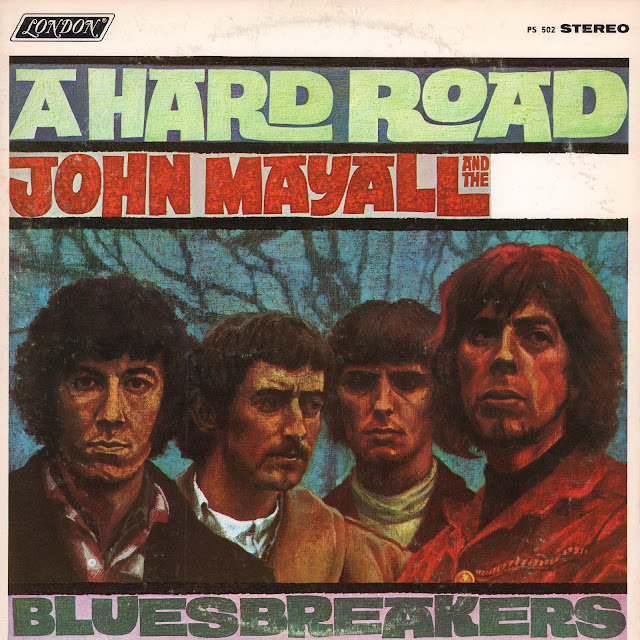
Mayall was a part of our lives, in the outer eastern suburbs of Melbourne. There was Beano, the 1966 Bluesbreakers album; Hard Road to follow with Greeny in 67; Crusade, with Taylor– one Freddie King instrumental a pop. And so much more. Beano changed my life; we all wanted to play like that. But my first vinyl encounter was with Hard Road, introduced to me by an older girl at my brother’s eighteenth birthday party, where my job was coat boy. Taken by her maturity, I ditched the Easybeats and became a Mayall crusader overnight.
Was he a distinguished muso? John Hammond Senior was reputed to have said of Robert Zimmerman, against the current of early indifference, ‘he can’t sing, can’t play guitar or harp much, but there is something original there.’
So there was Mayall, alone, and Mayall who organised together players who made musical magic.
There was Blues Alone, that incredibly ambitious solo album on which he played all instruments with a hand or two from drummer Keef Hartley; those early brilliant sparse duos with Clapton on Raw Blues, as in ‘Lonely Years’ and ‘Bernard Jenkins’; the astonishing suite Bare Wires in 1968. The superb matching of Taylor and Hiseman with Reeves and Heckstall-Smith; enter Colosseum. Blues from Laurel Canyon; USA Union, and many, many more. As for me, my personal interest drifted off into the seventies, as marxism took over from music. Last sighting I remember was Blue Mitchell and Freddie Robinson 1972 at the tin shed that was Melbourne’s Festival Hall; maybe later again in New York with Craig Calhoun. Subsequently mine are memories in aspic. His 70th birthday party in Manchester, losing edge, maybe but adding swing with Clapton but also Chris Barber, old school. Trombone!
Was Mayall best live? We now have the three basement, or club discs with Greeny and Fleetwood and Mac: Bluesbreakers Live in 1967, released by Forty Below. This is extraordinarily rough, sharp, powerful music per Mayall the organiser, and organist. The licence given to Greeny for ‘Greeny’, sweetest of his of all, and ‘The Supernatural’. Was Greeny better than Clapton? who cares? The tale is told I think by Glyn Johns, of arrival at the Decca studio to discover a gap on the carpet, Clapton’s amp gone. ‘Where’s Eric?’ Mayall: ‘He’s gone. It’s ok, I’ve found someone better’. But if for Clapton there was ‘Stormy Monday’ for Greeny there was ‘Looking Back’. Horns, employed sparingly; Greeny incredibly controlled and compressed, even down to the magic spell of the closing sheet of feedback. There was that EP with Butterfield. Way ahead. Drummers? Flint, Dunbar, Keef, Hiseman – jazz players all; bass: Andy Fraser. Jack Bruce. Later Larry Taylor. Those guys called Fleetwood, and Mac. None of any of this would have happened without Mayall.
What was the Mayall secret? Beano, the classic is not reproducible. As many claim to have been influenced by it as went to Woodstock. Beano is an impossibly good album, but also open to democratic potential. We all began trying to play like that.
The Secret? he was a teacher, enthusiast, activist, multi-instrumentalist, archivist, historian, enabler, a bandplayer in a world of heroes. BB King acknowledged Mayall way back, saying that he would still be sweeping floors were it not for John Mayall.
As Clapton puts it, in his moving farewell, 2.38 on Youtube, he was steadfast. Mayall made things happen. He was a backstage shaker who also shared frontstage, one who enabled others especially to shine.
Perhaps he was the best of musical curators, to grasp at the buzzword of today. Or maybe, in our terms, he was a brilliant performer, an editor who combined tradition and respect, imagination and innovation. Back to the stereo: he is still driving sideways.


 thesis eleven