Issue 183, August 2024
From Theory to Practice: Leveraging feminist approaches to care at a time of crisis
Guest editors: Megan Warin, Chris Beasley and Sophie Chao
Introduction
Leveraging feminist approaches to care
Megan Warin, Chris Beasley and Sophie Chao
The work of thinking about, with, and through care is not the prerogative of any single discipline or positionality, as this Special Issue vividly illustrates. Rather, its wide-ranging and enduring force as empirical reality, conceptual approach and political disposition are best grappled with through a multidisciplinary lens, bringing into meaningful conversation and careful comparison different subjects, sites and scales of care. In the process, care emerges as a contested terrain, an object of debate and difference, as well as an ongoing central dimension to life as lived across the realms of the individual to the collective and the institutional. It is thus our hope that the offerings in this Special Issue invite further attention to care’s role in shaping social and political life, in Australia and beyond, and for humans and non-humans. We intend for this Issue to stimulate the kinds of coalitional thinking and acting that care demands of scholars across fields and also across differently situated communities of ‘we’.
Articles
What’s care go to do with it? Feminism and the uncertain radical potential of care
Christine Beasley and Pam Papadelos
Feminist uses of the term ‘care’ actively contribute to ongoing debates about the kind of world we currently live in, as against the one we want to inhabit in the future – a contribution directed towards effecting positive change in the world. Unsurprisingly, the various ways feminists employ the term ‘care’ entail benefits and problems, as well as being the subject of intense debate. This paper aims to summarise and critically assess the main conceptual frameworks and associated debates within feminist perspectives on care. Analyses of care as labour, first- and second-generation feminist ‘ethics of care’, postmodern/poststructuralist and posthuman/new materialist uptakes and, finally, notions of ‘radical care’ are considered. In short, the paper explores the radical potential of care; specifically in feminist terms – that is, what is its potential for advancing progressive social change?
Apprehending digital hostility and online abuse: Feminist care ethics in/and digital ecologies
Rob Cover
The experience of digital platforms in the 2020s is often marked by a lack of ethical care: increasing rates of online abuse, trolling and adversarial speech in many cases lead to harmful outcomes including suicidality. Underlying the ineffectiveness of extant regulation and platform policy has been a significant focus on users as individuals rather than as participants in a digital ecology with ethical responsibilities for the care of the other. Addressing these harms calls for cultural change in how we perceive interactive communication, digital use, bodies and subjectivity. This paper asks what a feminist approach might contribute to the framing of improved online communication and the detoxification of the digital ecology. Drawing on recent work on non-violence by Judith Butler and approaches to ecologies and infrastructure by Lauren Berlant, the paper proposes an ethics of mutual care in communication, recognising communication and interactivity and online sociality as an a priori factor of liveable human lives.
Injecting care and negotiating pleasures with weight loss pharmaceuticals
Megan Warin, Andrea Bombak and Bailey George
The recent rise of injectable ‘wonder drugs’ for weight loss has been rapid and unregulated (so rapid that it has resulted in a worldwide shortage of Ozempic). We analyse the commercialisation of these drugs, and the political manoeuvres companies engage in to leverage and manufacture the gendered capitalism of ‘care’. Marketing relies heavily on situating ‘obesity’ as a chronic disease influenced by genes or other aspects of biology, working therefore to supposedly mitigate the blame and shame of the taken-for-granted aetiology of ‘obesity’, overwhelmingly understood as excess food intake and insufficient activity. Armed with this evidence, women are told to ‘stand up against weight care judgement’ and to engage in ‘shame free’ care. Pharmaceutical interventions are at the ready to inject this weekly dose of care, producing freedom through neoliberal pleasure but, ironically, in doing so, sacrificing the pleasure of food and non-conditional self-acceptance as vital forms of self-care.
Institutions and their failure to care: Bureaucracy and the practice of emotion
Katie Barclay and Vivienne Moore
Any study of radical care needs to pay attention to the institution as a place of care. Yet, institutions have been more readily associated with failures of care than successes. We undertake close reading of the Ockenden Review of maternity services in a National Health Service hospital trust in England, concerning a large number of families that received inadequate care during pregnancy and birth, including investigations of adverse outcomes such as deaths of babies and mothers. We argue that to enable better care in the institution requires a close attention to its institutional nature, particularly its scale, bureaucratic mode and functions, and the professional identities that work within it, and the ways they shape the practice of emotion.
Under pressure: Care, capacity and organ donation
Tanya Zivkovic
In this paper, I seek to theorise the concept of pressure in relation to families’ experiences of organ donation during COVID-19. Drawing on Australia-based fieldwork, I follow circuitries of pressure in and beyond interiorities of bodies, biographies and infrastructures of care to ask what happens when pressure builds to such an extent that there is no capacity left in bodies and in institutions. Pressure concentrates in some spaces and bodies more than others revealing uneven flows and restrictions to care. But how might a theorisation of pressure enable care to be imagined otherwise – to circulate differently? Extending recent care scholarship, I explore alternative versions of care enacted by families and clinicians involved in organ donation. This is an expansive and capacious care, which may offer potential to diffuse the force of pressure through radical interdependence.
Care ethics and contemporary art: Imagining and practising care
Jacqueline Millner
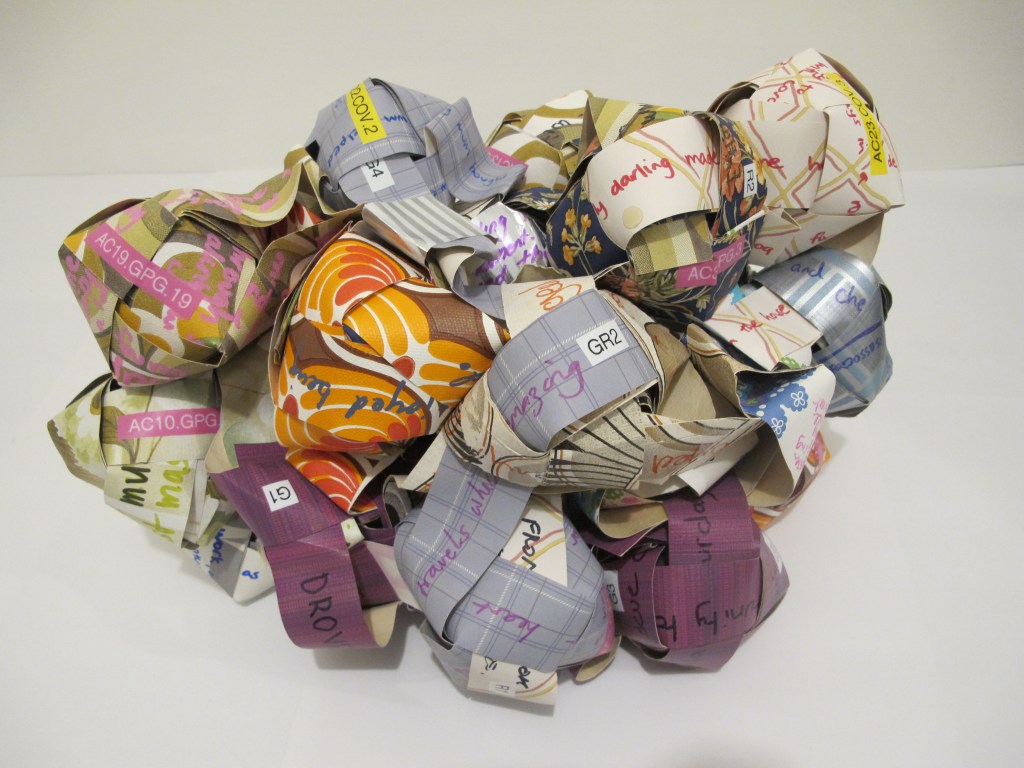
Feminist care ethics has for some time guided contemporary artists and curators in their search for sustaining and sustainable practices in the current neoliberal backwash and climate crisis. With a focus on current Australian art in the context of recent care ethics scholarship, this article considers what contemporary art – in its processes as well as aesthetic outcomes – can offer in imagining and practising care for the human and more-than-human world. The article focuses on a series of exhibitions that comprised a key exploratory methodology of The Care Project: Feminism and art in neoliberal times (La Trobe University, 2019–2022). The exhibitions featured the work of regionally based artists. This accent on creative practices emerging from the experience of living in regional communities that are often on the frontline of climate change and social inequality offers unique perspectives on care ethics in practice.
The dynamics of peer-to-peer care: Peers as radical care practitioners
JaneMaree Maher, Danielle Abbott and Tanya Zivkovic
Hi‘ilei Julia Kawehipuaakahaopulani Hobart and Tamara Kneese (2020) define radical care as ‘as a set of vital but underappreciated strategies for enduring precarious worlds’ (16). Yet they sound a note of caution when they argue that ‘because radical care is inseparable from systemic inequality and power structures, it can be used to coerce subjects into new forms of surveillance and unpaid labor’ (16). This article explores scaffolded peer-to-peer programmes as a form of radical care. In these programmes and approaches people are connected in non-hierarchical structures of mutual support and care that locate lived experience, rather than solely professional accreditation, as powerful, inclusive and collaborative expertise. The often implicit and traditional hierarchies of care are challenged in this structuring; we argue that the dynamic and horizontal structure of peer care practices can subvert and ultimately enrich circulating discourses of self-care, commodified care and the neoliberal devolution of responsibility for health and well-being to individuals.
Book reviews
Book review: Cruel care: A history of children at our borders
Katie Barclay
Book review: The Fragility of Concern for Others. Adorno and the Ethics of Care
Howard Prosser


 thesis eleven