by Eric Ferris
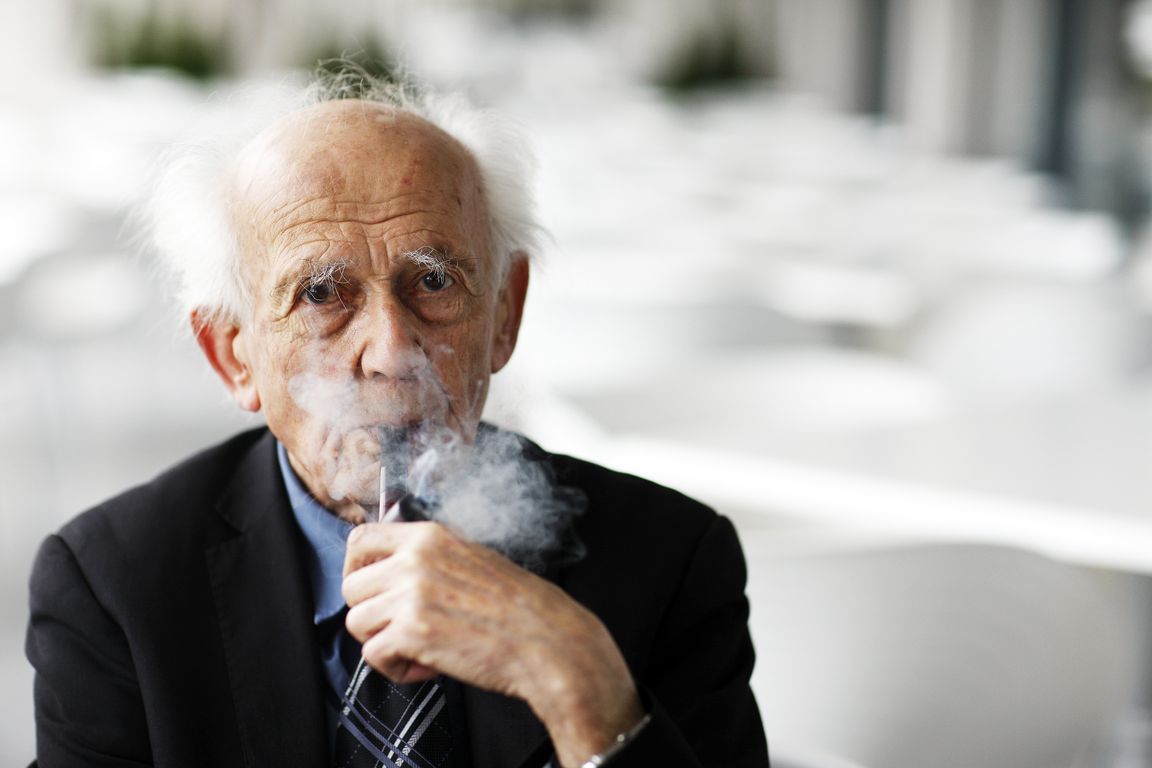
The 4th International Conference on Marxist Critical Theory In Eastern Europe: In Memory of Zygmunt Bauman, Sichuan University, China.
If ever there was need of evidence that Zygmunt Bauman was one of the most important interpreters of modernity throughout the second half of the twentieth and first quarter of the twenty-first centuries, we would need look no further than The 4th International Conference on Marxist Critical Theory In Eastern Europe, a conference held in his memory. The conference, previously honoring Agnes Heller and George Markus, was part of an ongoing, larger Chinese federal research project on aesthetics which, in part, is a canopy for critical theory and has to date resulted in serious scholarship on Eastern European Marxist thinkers by Chinese intellectuals. Co-sponsored by Thesis Eleven, The Research Center for Marxist Theory of Literature in the College of Literature and Journalism at Sichuan University in Chengdu, China, and the Marxist Aesthetics Committee of the Chinese Association of Aesthetics, the four-day conference, running November 15-18, 2024 at Sichuan University not only reflected Bauman’s global influence, it was also an example of how his influence continues to grow. In many ways it also echoed Bauman’s work and how he worked: It was a meeting of minds, a space of sharing, learning, and dialogue, where ideas were challenged, and challenges were to become the inspiration for new ideas. It was also a venue keen to imagine Bauman’s work differently, in different contexts, to different ends, to provoke more and deeper questions. To be sure, it honored Bauman’s near unparalleled legacy but did so by privileging exchange rather than reifying its honoree.
The conference, or experience associated with it, at least for visiting “Westerners,” began a few days prior to its formal start. Conference hosts, rightfully proud of both their city and university, were all too happy to share their spaces, their “culture,” and their company. After a bit of down time post arrival to help guests acclimatize to their respective time-zone changes, they were treated to a walking tour of Sichuan university, including its green spaces, its striking blend of modern and traditional architecture, and various other nuances that made it unique and special – special in the eyes of those guiding the tour, but also mesmerizing for those in tow. Another day, another tour: this time to an expansive panda park, lush with bamboo, to see the nationally prized creatures, followed by a trip to a market and a temple, both architecturally fascinating in their own rights while being portals showcasing different aspects of the city. Yet another outing, this time to the university museum, highlighting facets of Chinese history but also national pride. And then another, this time a subway ride to a shopping area that would not seem out of place in any modernized city, that is, of course, if one were to choose to ignore the traditional temple, among other traditional features, nested within the towering buildings. In sum, guests were guided through a sample of what might be characterized as Chinese modernity: high-rise buildings as residences and sources of commerce for the city’s near 26 million people, divided up by an infrastructure system that appeared chaotic to the foreign eye, yet that worked with surprising efficiency. It was a landscaped peppered with construction cranes implying more modernization to come, yet one complemented by the traditional – buildings, but also markets and small restaurants – and a proliferation of planned veins of green space, all pushing forward an image of modernity in balance. To be sure, all guests came with their own sets of expectations, as all visitors to new places would, yet these could not but be supplanted by Chengdu-as-guests-experienced-it, supplanted by this Chinese modernity, but also and more notably, by Chinese hospitality.
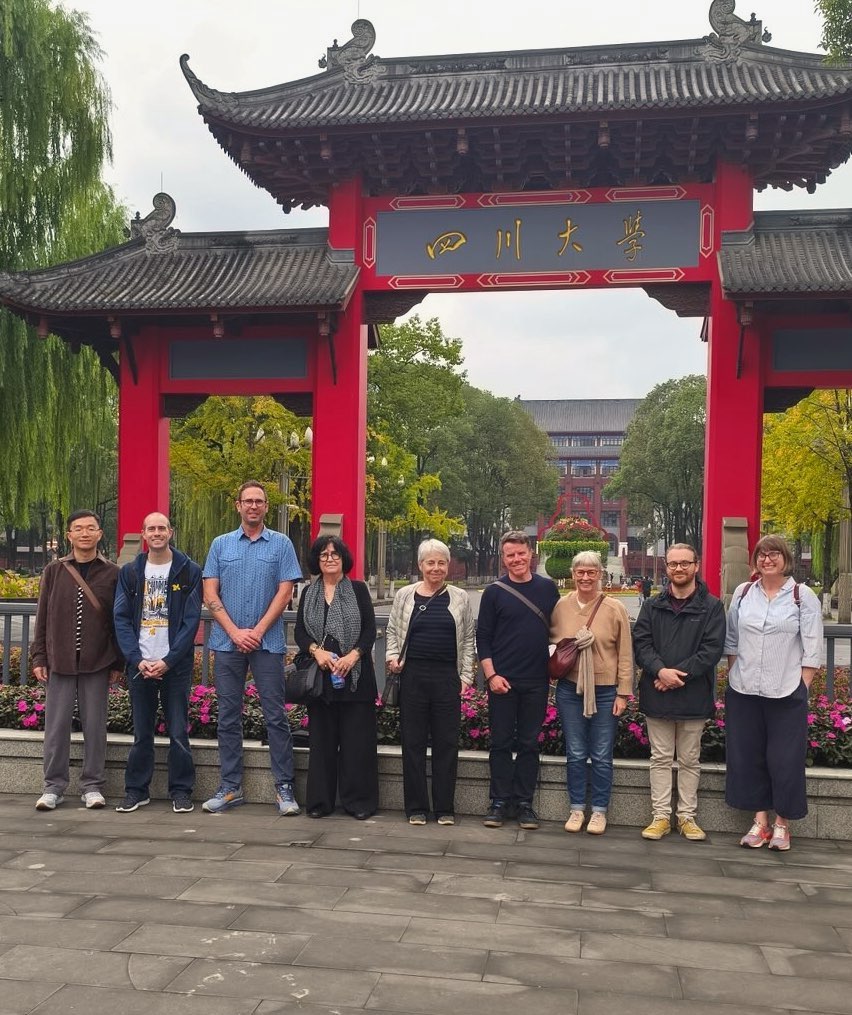
The lead-up, however, also included serious work. It was work that spoke to the ambitions of the conference and its stewards. This work sought to ensure that the seeds that were planted and tended to with each International Conference would continue to grow into something transformative. In its previous incarnations, great lengths were taken, particularly by Professors Fu Qilin and Peter Beilharz, to make sure that the conference was indeed international. This was reflected in the thinkers and works that were centralized and the list of guests that were invited to speak – a West visits East encounter – but also Chinese academics and students eager to bring their voices, their perspectives, and their interpretations of Eastern European Marxism into the mix, to share with visiting Westerns and one another. It was an interlocution that, although not explicitly stated, sought to add vibrancy to Western thinkers, their works, and their ideas by engaging with them through lenses shaped distinctly differently as a result of a different, and often occluded, geographical locale – China. It was also, in effect, a proclamation stating that the West does not hold a monopoly on Western thought; that the west cannot monopolize the “right” way to read and interpret “its own” thinkers; an important statement recognizing that plurality of voice leads to more vibrant and complete interpretations. To this end, in the spirit of previous conferences and foreshadowing the conference to come, the two, Peter and Fu, set up a meeting with Western guests seeking to solidify not just partnerships, but also relationships, ones not simply content to keep open the door cracked by the two, but to continue to wedge it further open. There in Sichuan University, a conversation between folks affiliated with the university, Thesis Eleven, The Bauman Institute at the University of Leeds, England, and various other academic institutions, brainstorming, imagining ways to keep the aforementioned educational and cultural traffic lanes open, to open more lanes, to build on a legacy not necessarily long in the making, but toiled over, valued and valuable nonetheless.
The conference itself was an exclamation point punctuating the previous days’ excursions. Xiangyu Hotel, the site of the conference, was a wonderful venue, one certainly capable of hosting an event of this scale. The conference was well organized, with a full program of intellectual engagements. Each day was divided into sessions an hour and a half in length. These sessions were comprised of presentations centering on Bauman, but also various other writers and theorists, all engaging with a host of disparate topics. Given how diverse both the topics that Bauman explored and the interlocutors he engaged with were, the conference program was certainly fit to bear his name, as it too was diverse. Each presentation was about fifteen minutes in length, and each session ended with a summarization by a pre-assigned session commentator. Summaries themselves were notable, as commentators not only listened intently, but teased out cross-presentation themes, tying together different topics, from, for example, Jameson’s theory of ‘Metacommentary’ to Bauman’s work on Strangers to Lefebvre’s Theory of Works of Art and the European Classical Art Tradition, with several other seemingly unrelated presentations sprinkled in and commentated on. It was creativity and understanding put on full display and certainly contributed to both deeper and divergent understandings. Tea Breaks and meals separated sessions and while these could have been pauses from deep engagement stemming from the equally deep presentations, these too were filled with conversations that grew out of curiosities inspired by presentations. The conference went off with painstaking detail in no small part because of the work of student (or former student) organizers who foresaw a coherent organization of operations and made such visions a reality – from picking guests up at the airport to helping them around the city to organizing the program, the breaks, and notably, translating both Chinese spoken presentations into English and English spoken presentations into Chinese, all while sharing their own presentations and insights – interacting with these young academics was among the many highlights. Perhaps for many a better traveled academic, this attention to detail, rather than being notable, would seem the norm. However, given the size, scope, and duration of not just the conference, but also the events leading up to it, the fact that problems, if they arose at all, were imperceivable, was monumental and spoke to both the pride and hard work that was put into the conference.
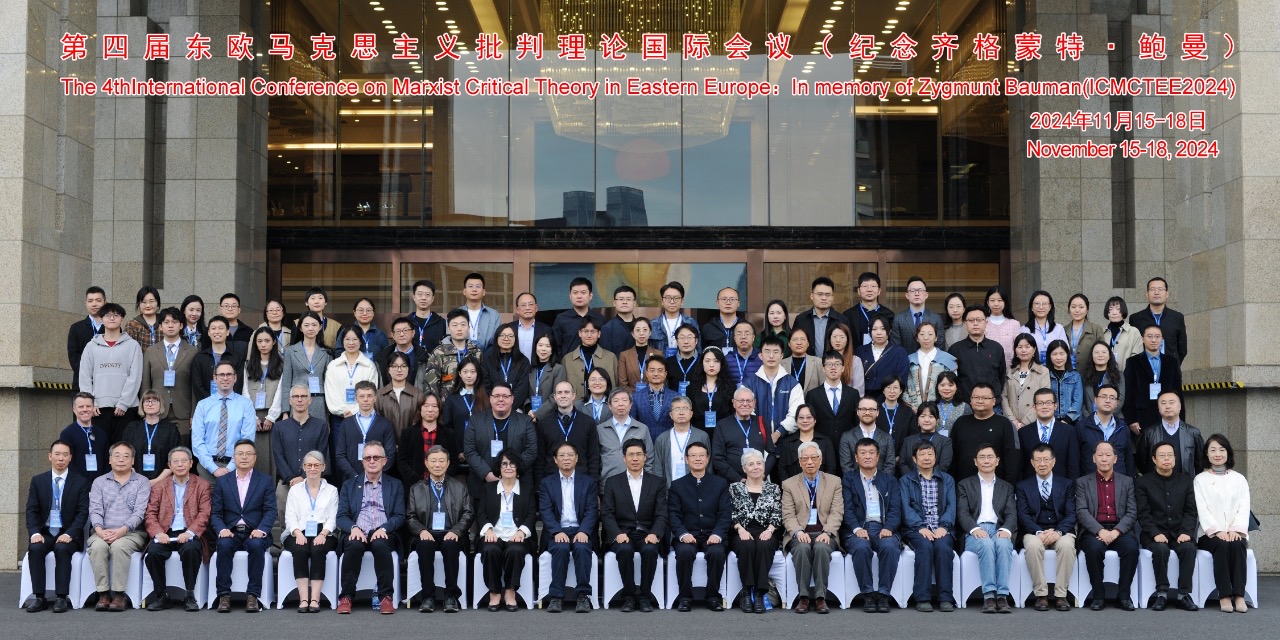
The conference started with an important celebratory event for Sichuan University: the unveiling of its own new journal: Critical Theory: Chengdu Review. This was a milestone for the hosts of the conference because it felt like a formalization or culmination of the work that had been going on with the previous three International Conferences. The journal is a format that would allow the important conversations taking place at the conferences to not only increase beyond their every-two-year frequency, but also to create a much larger, near boundless, more diverse space for such conversations to happen. If the conferences themselves, through their Chinese flavor on international scholarship, put China on the map, or interjected their academics into conversations surrounding Critical Theory and Aesthetics, the journal might be imagined as a means to more regularly contribute to such conversations or even steer them to incorporate Chinese perspectives.
As expected, Zygmunt Bauman, the conference’s namesake, was its central animating figure. Peter Beilharz, a longtime friend of Bauman, set the stage for the conference, while Anna Sfard, Bauman’s eldest daughter and representative of the family, shared her father with the crowd, spicing up recollections with wit, humor, but also seriousness, a captivating combination that any long-time reader of Bauman might find familiar, and that certainly might make any non- reader pick up one of his books. Sfard, having herself enjoyed the hospitality of the Chinese hosts, assured attendees that while Bauman never visited China, he would very much have enjoyed doing so. Jack Palmer, the current director of The Bauman Institute at The University of Leeds, an entity inspired by the legacy of Bauman and his wife Janina and dedicated to the promotion of teaching and research in social and critical theory, shared not only what the institute had done in the short time since their passing, but also hinted at planned work to come, an exciting and welcome prospect to be sure. Presentations from western scholars ranged from the personal (Janet Wolff’s presenting the book, The Photographs of Zygmunt Bauman (Beilharz & Wolff, 2023) and Mark Davis’s reflections in his presentation: “Knowing Zygmunt Bauman”), to exploring his works (Dariusz Brzezinski’s presentation of Bauman’s “Polish Period” of scholarship), to extensions of or excursions into them, be they engaging with Bauman’s work on morality, visibility/privacy, economics, culture, disability studies, liquid modernity, and utopia. It was an inspiring collection of presentations specifically written to share Bauman, the presenters’ understanding of and interactions with Bauman, to one another and to an open and receptive Chinese audience.
At the same time, Chinese academics shared their own extensive engagements with Bauman. While Bauman’s writings have not been available in China for nearly as long as they have been elsewhere (a fact explored by Beilharz and Qin, 2020), the presentations shared by these scholars demonstrated strong, unique engagements that, while not completely unimagined and unimaginable to outsiders, showcased a noteworthy Chinese inflection. There were, of course, familiar themes to any Bauman reader: strangers, community, critiques of consumerism, ethics, modernity, producer and consumer societies, and attention to, perhaps, his most well-known book, Modernity and the Holocaust (1989). At the same time, these were supplemented or augment by somewhat novel interests and inflections. For instance, and to no surprise given the conference’s sponsors, Bauman’s works served as a conduit for critical theory through aesthetics: literary, art, and film criticism, among others. There was also a sense of uniqueness in the ways that his work was interpreted: While they were in no way homogeneous, one could sense what might be described as a strong Eastern, or Chinese, inflection to these engagements. One might imagine that Bauman himself would appreciate that it was an event where his writings and ideas were not simply opened up to a group of hungry scholars, but that it was a venue through which these varied interpretations, given legs through his texts, were allowed, nay encouraged, to collide with those of others, coming together to raise new questions and to formulate different understandings. After all, Bauman may have authored the texts, but as he made clear, it is the task of readers to use what they read to engage their worlds differently, an engagement that comes ever more complete when put in conversation with those of others (Bauman, 1978).
While Bauman’s name was the headliner on the conference’s marquee, he was by no means the only animating act. Building on the momentum of its previous three iterations that centralized Eastern European Marxism, critical theory, and aesthetics, the conference presenters did a notable job of bringing others into the fray. Presentations spoke on Marx and Engels, of course, but also Adorno, Benjamin, Bakhtin, Habermas, Heidegger, Heller, Jameson, Lefebvre, Lukács, among others, and even some of the schools that “housed” such thinkers, such as the Frankfurt School or the Budapest School. Some presentations emphasized the importance of bringing Chinese perspectives to what might be described as Western thought and thinkers, to making these perspectives available to and respected by those outside of China, to reversing the privileging or monopolization of Western thought and Western thinkers by the West not so much by ignoring or replacing it, but by globalizing it. Presenters, and the conference in general, recognized the importance of, borrowing from a presentation title, “Eastern European Marxism from a Chinese Perspective,” or mapping Marxism today using Chinese-made coordinates. Yet such perspectives, such remapping, did not happen under an ethnocentric guise. There was no posturing or suggesting that Chinese coordinates would lead to more complete or factual truths. Instead, and true to how Bauman “practised” sociology, these perspectives seemed to point to a desire to complicate taken-for-granteds, a practice in critical theory out of which something different might emerge.
In retrospect, there are at least three notable takeaways. First, there felt like a distinct air of openness surrounding the conference. Guests, and particularly Western guests, did not feel that what they came to share was placed under overly skeptical scrutiny, nor did they leave feeling pressured to buy into different ideas uncritically and wholesale; instead, it was an environment that could only be described as open exchange. All participants appeared to be genuinely engaged with what they were sharing, and the crowd seemed eager to eat up information, filling themselves to digest later. In academia, egos, often in the form of protecting “areas of expertise” or the “correctness” of perspectives, clash, privileging speaking over listening. To be sure, there were aspects of the conference’s format that could have pushed this possibility into a reality: Presentations were delivered and, outside of downtime, there was little formal space for unmediated dialogue. While the criteria of a “merging of horizons” may not have been met, the conference opened a survey of horizons to be puzzled over, including the possibility that our Chinese friends indeed knew more than us (they have two systems of thought). This leaves a proliferation of messages in bottles, to borrow a metaphor that Bauman himself borrowed, to be mulled over and returned to at a later time (Bauman, Jacobsen, & Tester, 2014)).
Second, it worth noting the cultural traffic that was emblematic of the experience. From the start, be it the official start or the free time leading up to the conference, to its end, there was an atmosphere of sharing, sharing the city and university, sharing aspects of culture housed within these, to sharing ideas. In many ways and at many times sharing felt one directional, with the generous hosts disproportionately giving, with little to no expectation of reciprocity in return. Perhaps it was a sharing in anticipation of what hopefully would amount to some insights into Bauman’s life and works or, more personally, the forming of personal (alongside professional) ties. Perhaps this is the nature of traffic: disproportionate at times and in appearance, lopsided on the surface, but is it ever really? Such an assessment hinges on interactions having a transactional value. This basis, of course, is grounded in the marketization of relationships, a commodification that Bauman lamented. But there are also gift relations, alongside these. Instead, cultural traffic as experienced in Chengdu might be viewed as an end in itself, with its value, or, really, inability to be valuated, being what makes it uncommodifiable. For example, would assessments of one-sidedness melt away if importance was simply placed on participants seriously engaging with the ideas of one another, especially in the context of former Strangers becoming friends, the forming of new bonds that might, ideally, leave individuals changed in some shape or form, however that might be? Would simply coming together be the source of value? Or might the concept of value be moot in such noncommodifiable exchanges? Indeed, the value of cultural traffic is that those who engage in it leave changed, and in this case, changed in the sense that they left with spinning heads trying to make sense of the appearance of the newly unfamiliar, an unfamiliarity that can never be fully understood, yet an unfamiliar which defamiliarizes the already familiar. This is value in and of itself.
Finally, the conference felt true to how one might interpret Bauman’s work, how one might imagine that Bauman worked, how one might imagine that Bauman would have wanted people to engage with his work. On the one hand, Bauman leaned very heavily on interlocutors, and here was an instance in which all participants found new ones for themselves. Not only were there new faces to listen to and converse with, there were also new and novel ideas centering on other theorists to incorporate, ones that may have not been considered or deemed relatable previously. On the other hand, the space itself was a critical space, a space that Bauman occupied for decades. If Bauman’s sociology was one of interpreting the world so as to imagine it differently – to imagine it in ways that were more just, more equal, and more humane – then attempting to work as he did would first require individuals to put themselves in spaces where problematizing was the norm, not so much for the purposes of purchasing the new and novel wholesale, but using it as an optic to question the world as it appears. This is a notable position, especially if one takes seriously Bauman’s remark that it is not so much that individuals’ consciousnesses are false, but rather the world that they occupy. The task of the critical sociologist or critical theorist is to expose projections, helping others see that the world that appears so solid and durable, so “real,” could, in fact, be imagined and made differently (Bauman, 1978). And even if this was not the explicit or stated intention of the conference, it was an environment that could not but help work behind the scenes in those ways.
Above all else, the conference confirmed an important facet of Bauman’s work: There is no correct way, nor will there ever be a correct way, to read Bauman. His writings are far too layered and slippery to do so, and he would never want readers to accept what he interpreted simply because he said it. One might recollect that he remarked that freedom ends when one stops asking questions and accepts being spoon fed answers (Bauman, et al., 2014). In this sense, his sociology asks individuals to put themselves in positions to have questions come to mind, to question the world in general, searching for ways to make peace with the temporality and inconclusiveness of the way that one makes peace with answers, or lack thereof. This, for Bauman, was never a solo act, never a soliloquy. Instead, it was part of an ongoing conversation, one, to be sure, that begins internally within individuals, but that requires further characters: those that individuals read, those they speak and learn with, those who are familiar, but importantly, also those who are Strangers. The Stranger is, after all, the friend and interlocutor that individuals have not yet had the chance to meet.
Best wishes to all the wonderful “Strangers,” now friends, from Chengdu.
References
Bauman, Z. (1978). Hermeneutics and social science. Columbia University Press.
Bauman, Z. (1989). Modernity and the Holocaust. Cornell University Press.
Bauman, Z., Jacobsen, M-H., & Tester, K. (2014). What use is sociology?. Polity.
Beilharz, P, & Qin, J. (2020). Bauman in China. Thesis Eleven, 159 (1), 110-127.
Beilharz, P., & Wolff, J. (Eds.). (2023). The photographs of Zygmunt Bauman. Manchester University Press.
About the Author
Eric Ferris is a secondary school teacher from Michigan, USA. He is the author of The (Dis)Order of US Schooling: Zygmunt Bauman and Education for an Ambivalent World (2023).


 thesis eleven