Roots and rugs: a postcard from Mexico

by Alonso Casanueva Baptista

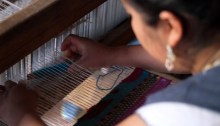
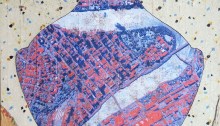
Each rug is crafted by a single artisan who works on the loom for weeks or months, eight hours a day, every day. Dalila seemed particularly happy about this fact, underscoring how her sense of autonomy and creativity in composing the theme, motifs, colour scheme… would make up the final creation, one that cannot be replicated. Whether the design follows traditional rule or adapts to a recent trend, it is the artisan who will pour their personal inspiration onto the loom.

Paths to Nowhere: An Interview with Raymond Geuss about Tracks in Chaos

by Howard Prosser

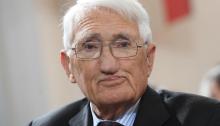
Raymond Geuss’ latest book, Tracks in Chaos: Philosophical Orientation and Political Reflection, published by Polity in 2026, provides the basis for the present interview. Bringing together a set of essays on philosophy, politics and social theory, the book returns to problems that have long animated Geuss’s work: orientation, critique, authority, morality and political judgement.
Brisbanity: David Malouf’s Topography of the Mind

by Peter Murphy

Malouf grew up in Brisbane and identified deeply with the city. In his collection of essays, The First Place (2014), Malouf paints a remarkable picture of Australia … He points to the distinct differences in topography between Australian cities, and he makes the interesting claim that the hilly features of Brisbane and its meandering river shape, in some elemental way, a distinctive manner of thinking about the world.

Essay: Everlasting Inscription (铭刻未央)

by Darren Jorgensen and Tami Xiang

Wang Qingsong’s monumental photography unveils the deep structures of Chinese history and society. The title of the first survey of Wang’s work in Australia, exhibited at the Cullity Gallery in the School of Design at the University of Western Australia, is Everlasting Inscription. It attempts to describe Wang’s resistance to the forgetting of Chinese history, while illuminating the structural legacies by which life in China assumes its collective shape.

Essay: The Art History and Contemporaneity of Terry Smith

by Darren Jorgensen

For five decades, Terry Smith has been a crucial part of conversations on both Australian and contemporary art. Since his 1974 essay, ‘The Provincialism Problem,’ through to a series of publications on global contemporary art, Smith has been both prolific and influential in the discipline of art history.

Article: Postcard from Serbia

by Alonso Casanueva Baptista

Awareness of the shifting landscape began on the second day of the conference. During the afternoon presentations, I heard the quick flight of fighter jets. Immediately, I got curious, but people around me seemed set on paying full mind to the research of their fellows. Outside the Faculty of Philosophy—the headquarters for the student protest movement—people walked languid, placidly up and down the streets of the city centre.

Article: Saving Australia for the Middle? The 2025 Federal Election

by Lloyd Cox

The 2025 Australian federal election will be remembered for both the scale of Labor’s victory and the implosion of the Liberal and National Party Coalition whose leader, Peter Dutton, lost his own seat. Together, they almost guarantee Labor at least another six years in power, while raising serious doubt about the long-term viability of an aging Liberal Party now at war with itself.

Article: War Has Made Our Social Order

by Siniša Malešević

War is not an exception that suddenly interrupts normal social life. Nearly every aspect of social life including the governance structures, social hierarchies, gender and sexual relations, religious identities, class dynamics, ethno-racial stratification, educational practices, heath systems or the administrativeand administrative apparatuses have all been molded by legacies of specific wars. Whether we like it or not, warfare has historically been and remains a norm that constantly shapes our social order.

Conference Report: In Memory of Zygmunt Bauman, Sichuan University 2024

by Eric Ferris

Previously honoring Agnes Heller and George Markus, the conference was part of an ongoing, larger Chinese federal research project on aesthetics which, in part, is a canopy for critical theory and has to date resulted in serious scholarship on Eastern European Marxist thinkers by Chinese intellectuals. Co-sponsored by Thesis Eleven, The Research Center for Marxist Theory of Literature in the College of Literature and Journalism at Sichuan University in Chengdu, China, and the Marxist Aesthetics Committee of the Chinese Association of Aesthetics, the conference not only reflected Bauman’s global influence, it was also an example of how his influence continues to grow.