by Howard Prosser
Few contemporary philosophers have been as consistently sceptical of the moralisation of political philosophy as Raymond Geuss. Across several decades his work, shaped by sustained engagement with thinkers such as Marx, Nietzsche, Weber and the Frankfurt School, has challenged the tendency of modern political theory to treat political questions primarily as moral ones. Instead, Geuss has emphasised the importance of historical understanding and attention to the ways power actually operates within social life.
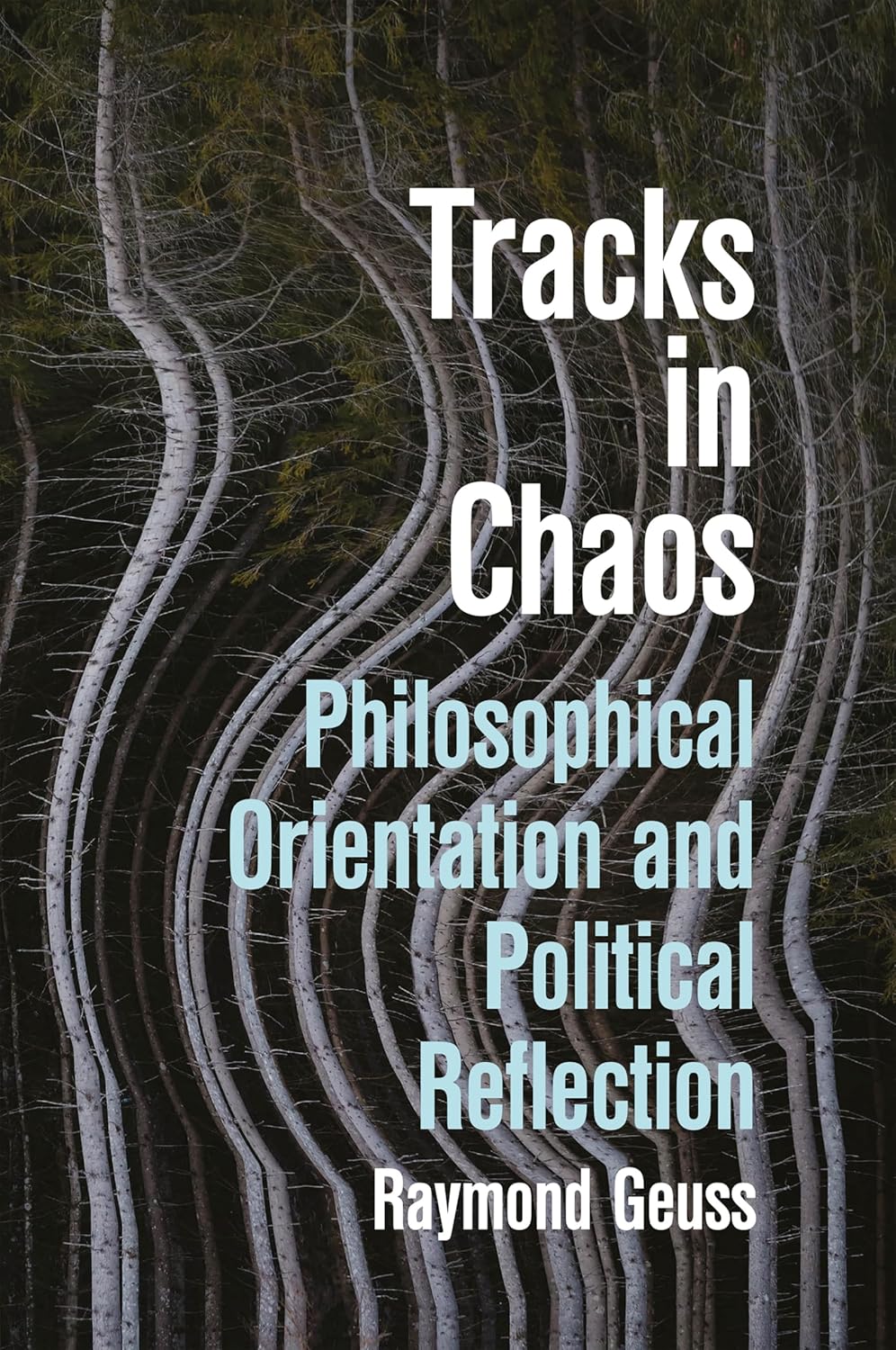
Geuss is Professor Emeritus of Philosophy at the University of Cambridge and has written for more than four decades across critical theory, political philosophy, and the history of philosophy. His latest book, Tracks in Chaos: Philosophical Orientation and Political Reflection, published by Polity in 2026, provides the basis for the present interview. Bringing together a set of essays on philosophy, politics and social theory, the book returns to problems that have long animated Geuss’s work: orientation, critique, authority, morality and political judgement.
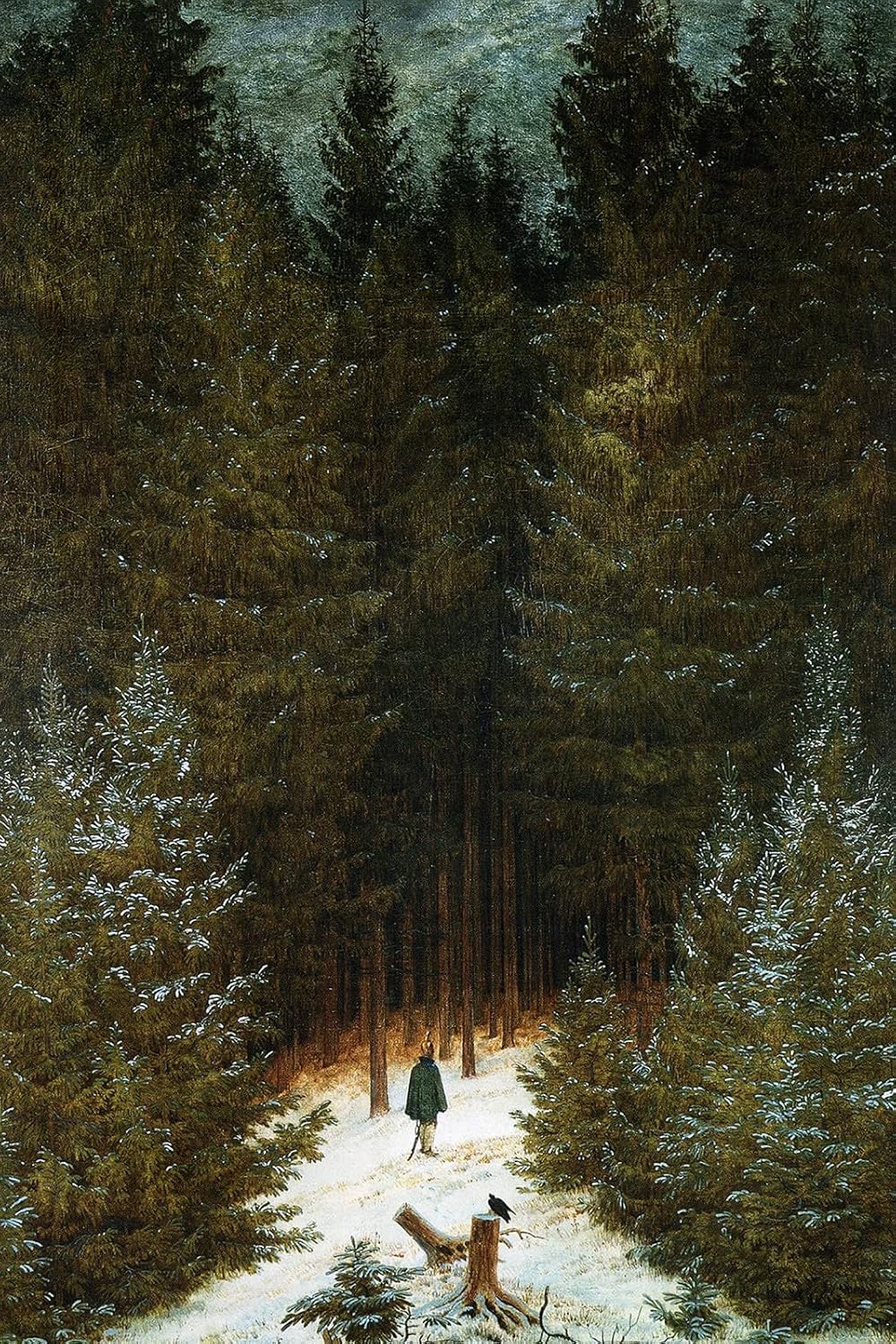
The title invokes Heidegger’s image of Holzwege: tracks through the woods that often lead nowhere, yet are cut through practical engagement with a landscape. This image frames the interview’s discussion of philosophy as an exploratory activity moving through historically situated problems rather than toward a final theoretical system. Conducted in May 2026, the interview discusses Tracks in Chaos, the changing role of critique, and the questions social theory may still need to ask about the present.
***
Howard Prosser: The title of your book alludes to Heidegger’s image of Holzwege – tracks cut by forest workers moving through the woods, paths that often lead nowhere beyond the work that produced them. It suggests purposeful engagement with a landscape, but without the promise of a final destination. What drew you to this image for Tracks in Chaos? Does it capture something about how philosophical thinking works today?
Raymond Geuss: There are several things I like about the metaphor of the Holzweg. The first is that it puts together three aspects of our situation in the world: we are dependent on nature for our continued existence, we live in societies, each of which has a culture, and our lives have an irreducibly historical dimension. First of all, the Holzweg designates a location: we are in a forest, or a woods, which is a natural configuration of the landscape. I take a “forest” to be an area that is not excessively cultivated and internally mapped in a detailed way: if it is groomed and mapped, it is a park or a garden, not a forest. So there is something unsurveyable, unpredictable and, at least potentially, dangerous about this situation.
Nevertheless, a path has been cut by someone; that is, there is limited evidence of some human intervention. A Holzweg is a social construct, to put it pretentiously, not something made by an individual, but by groups of workers. Finally, a given path will exist only in one very narrow window of time. The path cut this way in the forest now could well be overgrown and impassable next season, if it is not used, so it is a historically transient formation. Note, too, that if it is overused – if one deforests the whole area – obviously the path disappears, too. A person who is on the Holzweg is in the middle of a process of motion which has its own irreversible history.
The metaphor emphasises the ways in which philosophical activity is dependent and not fully under one’s own control, not initiatory and completely autonomous. Put differently, this image of philosophy is completely different from another one Heidegger uses when describing the activity of poets. He cites Hölderlin: “Was bleibt stiften die Dichter” [roughly: “It is poets who inaugurate and lay the foundation for that which has permanence”]. The philosopher does not make the Holzweg, and the Holzweg is not something that has permanence. The philosopher is on a path that someone else produced, and produced for purposes that may be orthogonal to any philosophical project – is the philosopher actually mainly interested in getting the wood down from the mountain efficiently? The philosopher may try to leave the path, but how far would anyone get with that? Crashing through the brush? In which direction?
Furthermore, on a Holzweg both our knowledge and our mobility – what we can know and what we can do – are extremely restricted. We can see a short distance ahead along the path and a short distance behind, if we turn around, and we can move relatively unimpeded straight ahead on the path or back where we came from, but not to either side. On the path we are surrounded by things we cannot see and places we cannot go.
Prosser: So the image is not only about movement, but also about constraint?
Geuss: Yes, but it is also indeterminate with respect to the purpose or goal of philosophy. We know that the path the philosopher is on is either one that leads to the next village, and has been trodden out gradually over the centuries by anonymous generations of peasants going from one village to another for a variety of reasons, or it is a Holzweg cleared relatively recently by a group of foresters for very specific utilitarian reasons, a path which leads nowhere and next season, or the season after that, will likely be overgrown and disappear. Most likely one is on the high road to Nowhere.
That is part of the image, but why is the philosopher on that path? Is he like one of the anonymous peasants, on his way to town or into the next village to buy fertilizer for his crops or sell a cow, or is he “taking a walk,” treating the process of walking the path as something he does, as one philosophical tradition would put it, “for its own sake”? What kind of walk is it? Like that of Büchner’s Lenz “through the mountains” in January? Or like that of the narrative “I” in Robert Walser’s “Der Spaziergang”? Or like Rousseau’s Rêveries d’un promeneur solitaire?
I’ve stated this in the first person for simplicity, but of course philosophy is always a collective enterprise. I used to think that two was the minimal number – someone who asks a question, or proposes something, and someone who tries to answer it, or objects to the proposal – but now I incline to think that three is the minimum: a proposer, a responder and a third who is an observer. Most Sokratic discussions are public, and even if only two people speak, the existence of spectators or auditors, “third” people, is important. Sokrates even suggests indirectly in the Apology (I would maintain) that the public nature of his interrogation is relevant to the indictment brought against him, because those whom he questioned while others were listening felt ashamed and humiliated in a way that would perhaps not have been the case had he conducted his dialectical investigation with them in private. The existence of a third party, especially one who is not directly involved, brings at least a kind of objectivity into play, which might otherwise be lacking. Heidegger, by the way, is not very clear about this, or maybe he changes his view. In early works, he seems still to construe philosophising as the activity of an individual, but one of his late works, Gelassenheit (1959), takes the form of a discussion between three participants who are taking a walk across fields (Feldweggespräch).
With that addition, Heidegger’s image of being on the Holzweg seems especially appropriate for our time. We find ourselves in a place that is unfamiliar and potentially dangerous – the forest – with limited visibility and mobility. We cut wood to support ourselves and create a clearing in which we can perhaps see what is going on, live and act, but trying to universalise that activity, cut more and more wood down to support more and more sophisticated forms of life and make more and more of the world immediately visible, will backfire by destroying the forest on which we depend, and, of course, also the Holzwege that used to lead into it, if not through it. We are following a track which was made by others who had completely different purposes from ours – woodcutters – a track which most likely leads nowhere. One might think of this as expressing in another way the phenomenon of “alienation.”
Anyone who thinks seriously about the ecological crisis will see that we are on the path to nowhere. In addition, I invite anyone who believes that our social and political institutions are structured to facilitate the pursuit of our own interests compatible with our values to reflect on the fact that it has been impossible for us to get any of our governments even verbally to condemn a genocide that is being carried out in Gaza before our eyes, and that is gleefully documented to the whole world by those committing it. In fact, the government of the country whose citizenship I hold, the UK, not only turns a blind eye to this, emitting not a peep of criticism, it supplied and continues to supply intelligence and technical support, bases in Cyprus to operate from and in-flight refuelling, to the perpetrators of the genocide, and threatens to incarcerate anyone who protests.
Prosser: That example brings the problem of orientation into a stark political register: what our societies can see, what they refuse to see, and what forms of judgement remain available to them. I want to stay with that problem, but approach it now through the Socratic demand to “give an account of yourself.” In “These interminable discussions that lead nowhere,” you return to the Socratic imperatives “know thyself” and “give an account of yourself.” Philosophy appears here less as doctrine than as a practice of interrogation. But interrogation also presupposes some standing to demand an account. In contemporary intellectual life, who – or what – still has that standing?
Geuss: I have always had a very deep suspicion of everyday language, the concepts “everyone uses,” and “what everyone knows.” Or, more exactly, I have always mistrusted them as ways of coming to understand what is really going on. My introduction to philosophy began when I started to read Heidegger in secondary school, strongly encouraged by one of my teachers, who had himself wanted to become a philosopher but was prevented by the political authorities in his home country, Hungary, in the 1950s. In Heidegger’s image of the Holzweg I thought I found an expression of my own mistrust of language. Language is part of the “path” – in Heidegger’s view one of the most important constituents of the “path” we are following through the forest of chaos, confusion and indeterminacy that surrounds us on all sides. However, that “path” – including the language we use – whatever else is true about it, is not set up to cater to our purposes, and certainly not set up to allow us to understand the situation we are in and what is going on around us.
As I read more Heidegger, I also internalised his view that our philosophical concepts were best seen as deeply calcified residues or leftovers of previous experience: as it were, scars from history left on our eyes, preventing us from interacting with the world freely. The history of these concepts was a history of decadence, of a falling away from something. It was not clear what that “something” was – Heidegger sometimes calls it “Being” – and in a way the whole of Heidegger’s work is an attempt to understand that “something,” an attempt the success of which different people will evaluate differently. Actually, Marcuse, who had written his second doctoral dissertation under Heidegger’s supervision, once told me in conversation that Heidegger had been looking for Being for over fifty years and had still, in his view, made no progress.
When I got a little older and began to read Marx and Adorno, I moved almost seamlessly from this Heideggerian view to the thought that our concepts, ideas and common-sense opinions were ideologically distorted. They were the grease a self-maintaining and self-reproducing social system secreted around itself to make its functioning smoother. Or rather, I didn’t “move” from one view, Heidegger, to another, Marx and Adorno, but came to see the two as complementary ways of approaching something like the same thing. One of the main tasks of philosophy, then, was precisely not to start from the concepts, opinions and theory-fragments that structure our everyday, and also much of our “scientific,” thinking, in order to clarify them analytically and then use them to understand our world. Rather, the main objective had to be to learn to “see through” them: to understand that they are fundamentally misleading, mystifying, distorting or downright “false.” They are so cognitively useless that using them as the building blocks of a theory virtually ensured not only that one would not understand anything of importance, but also that one would, by treating them seriously, with apparent respect and at great length, reinforce precisely the errors they embodied. “A fair day’s wage for a full day’s work”: start your theory from that, Marx thinks, and you have not only doomed yourself to get nowhere, but you have played into the hands of those who benefit most from the current economic system. Similarly, if you start from “How can we make the remuneration of work reflect what those who are remunerated deserve or merit?” Finally, I would add to the fun-fair collection of distorting mirrors: “We have intuitions about justice, which is the most important property a human society can have; how can we reflect on, refine and realise these intuitions?” and “If only we could realize the ideal conditions of discourse!”
If one takes this Heideggerian/Marxist tack, two issues arise. First, if we are swimming in confusion, error and illusion, and this is not an accident but something rooted in the very nature of our social practices and language, and if this affects everything we say and do, then how do we even begin to get out of this situation? Both Heidegger and various Marxists have complex theories about how this might, or might not, be possible. Heidegger, for instance, thought that he needed to invent basically a whole new language based not on Latin but on Germanic roots, and that he had to draw attention to some experiences that were particularly singular, upsetting and unassimilable to our usual forms of thought, like our own death.
Prosser: But if ordinary language is part of the problem, how can philosophy still communicate with others?
Geuss: That is the second issue. Even if ordinary language and everyday opinions are cognitively useless, and morally and politically less than useless, ordinary language is, in a sense, completely functional – it is in some sense completely in order, or at least it works sufficiently for us and it is all we have, if we wish to communicate. So even if I, or we, could free myself, or ourselves, from our usual ways of living, thinking and speaking, how do I then engage with others? The best I can do here is to propose that one needs to develop a kind of binary vision, seeing our social, intellectual, conceptual and linguistic world from two slightly different perspectives at once. If I am asked in court to “swear to God on the Bible” to tell the truth, I will simply do that without embarking on a lecture about why I think God does not exist, and if he, she or they did exist, they would be unlikely to communicate with humans in the book called “The Bible.” On the one hand, then, I actually think God does not exist; on the other, I realize that for traditionalists in my society, offering to swear to God on the Bible is a public ritual of committing oneself solemnly to tell the truth, a goal I am happy to try to pursue.
Something like this attitude can be exhibited in a wide variety of circumstances: even though I don’t believe in God, I may say “if that happens, God help us all” and there is nothing wrong with that. Equally, I may speak of a “natural right to education” if I am talking to a large audience, although I don’t actually think there are such things as “natural rights”; I may say that something is “undemocratic,” although I have no great confidence in the analytic clarity or cognitive usefulness of “democracy.” I may rail against the “undeserved wealth” of billionaires, although I actually do not think that “deserved/undeserved” has any clear application to wealth. This binary vision is part of my general attempt to resist a certain strand of thinking that gets one of its earliest formulations in Rousseau and remains influential at least to the time of Wagner. One might call this “Romanticism,” although it is only one particular variant of that complex historical movement. What I am resisting is a view that puts an almost limitless value on as full and wholehearted an identification of the subject as possible with linguistic expressions that the subject uses, the views and attitudes it holds, and the feelings it experiences. So the ideal was of a person completely at one with her feelings and expressing them in a linguistically fully transparent way. Since I don’t think this is a coherent idea at all, it is pointless to ask whether that would be a good ideal for humans to realise. There is no Urerlebnis and no Ursprache in which such experiences could be formulated. Any language is both a historically specific social practice, rooted in long-term non-discursive habits of interaction, and universally translatable, in one way or another, with greater or less effort and circumlocution. This is why I think that habitually writing and speaking in a language that is not one’s native idiom – ideally in more than one – is a good exercise in preventing oneself from being captured by the idiosyncrasies of a particular language. Monoglottal philosophy was possible in ancient Greece, but nowadays I think it is a defect of much English-language philosophy that it prides itself on its linguistic provincialism.
Prosser: Could you say a little more about what you mean by “authority” here? It seems important to distinguish philosophical authority from expertise, charisma and institutional authority.
Geuss: I have always been interested in doing away with the idea of a firm, univocal, well-defined notion of “authority” as a central way of organising society. This arose from my fascination with ancient Greek culture. In one of my books, Not Thinking like a Liberal (2022), chapters 3 and 4, I described the shock I felt when, as a 13- or 14-year-old boy, I discovered that the Greeks had no word for “authority” and indeed no concept of authority. This was no obstacle to the development of very complex social systems and a highly sophisticated culture.
In modern English, “authority” and its derivatives are used in at least three slightly different ways. There is the authority which is derivative on experience or expertise. Such experience is thought to give what you say and recommend a certain weight. I can hold and express whatever opinions I wish about, say, traffic patterns in Jakarta, a city I have never visited, but if you have actually lived in Jakarta for a long time or have made a concerted study of the city and its transportation network, then what you say will have a greater weight than what I say. You speak with a certain authority; I do not. To have authority of this kind is not to be infallible, because despite your experience you can still be wrong, but that is a separate issue. I should add, en passant, that we don’t usually speak of “authority” in cases where we take knowledge, if it exists, to be of the simply “yes or no” variety. I don’t speak of being an “authority” on arithmetic – you either know how to do arithmetical calculations correctly or you don’t – or an “authority” on the linguistic usage in your native tongue. I could, of course, be an authority in a language that is not my mother tongue, because, although I could be wrong about usage, and may occasionally make mistakes, my long experience makes my views about it less likely to be wrong than those of a person with only superficial exposure to the relevant linguistic practice. If I have authority based on experience or expertise about a certain area that is of interest to you – “epistemic authority” one might call it – then it is perhaps very foolish, or even “irrational,” for you completely to ignore what I say, especially advice I might specifically give you, but you do not stand under any obligation to take my advice, and I do not have any “right,” as some people might call it, to expect you to “obey” me. I cannot expect to order you about – tell you what restaurant you must patronise in a city I know well – on the grounds that I have experience and am an expert.
The second sense of “authority” is “natural authority,” and refers to a socio-psychological property. Certain people are, as we say, “born leaders”: they have a voice or a manner that commands respect or a natural flair which makes other people spontaneously want to follow them. Max Weber speaks of “charisma” as the property of attracting imitation, deference and cooperation, and refers to the fact that sometimes in primitive societies, for no reason anyone can see, some hunters simply have more luck and success than others, and so people voluntarily tag along with them when they go out to hunt. Sometimes natural authority is even more irrational than this, not even being based on inexplicable but visible success. Think of Trump, a six-times-bankrupt felon and convicted sex offender who seems to have a penchant for ruining everything he touches, yet he has a devoted following. Many forms of charisma had a rhetorical and theatrical aspect, and in certain historical contexts this kind of charisma can survive a string of actual failures or demonstrated acts of gross incompetence.
The third sense of “authority” is the one that the ancient Greeks seem not to have had. You have “authority” in this sense if I have an obligation to obey you, and you have a right to command me and expect me to do what you command. “Authority” in this sense is clearly distinct from authority in either of the previous two senses. It may be rash and irrational to go against the doctor’s advice because he is an expert, but the doctor has no right to command me. Similarly, the people who follow the charismatic leader who radiates authority do so in some sense voluntarily. This third sense of authority depends on a specifically modern collection of normative conceptions: rights, the moral “ought,” “obligation,” legitimacy, “warrant,” connected with a power to coerce. “Authority” in this modern sense is generally connected with a system of positions in society and certain formal procedures. Thus, a woman is considered to have authority as a judge or a member of the police by virtue of having been duly elected or appointed to the particular post in question, and we are all thought to have an obligation to obey her, an obligation that will be enforced, if necessary, by the police.
I should note that the distinction of different senses which a single word can have is not an instance of binary vision, but something altogether much more traditional.
Prosser: And where does that leave philosophy itself? Can it claim any standing once those different senses of authority have been separated out?
Geuss: Well, to start with the first sense of authority, it is no news that the whole notion of expertise has been and is increasingly being seriously devalued in the West. Michael Gove famously said apropos of Brexit that the public was fed up with experts. Of course, the experts, all of whom predicted that Brexit would be an economic catastrophe, turned out to be right. Nevertheless, anyone on the Left will have a certain sympathy with Gove’s remarks, although, of course, we will have very different ideas about who the fraudulent experts are. After all, much of what passes, or has passed, as “social science” in the West has been a toxic concoction of hot air, straightforward error, wilful wrongheadedness and sheer ideological drivel. On the other hand, “natural authority,” charismatic leadership, has been enjoying a period of flourishing.
The situation concerning the third sense of authority is complicated. A lot of the normative sources of legitimate political authority seem to have dried up in the West, or rather they have been reduced to a single one: the Rousseauean “general will,” usually called by the rather proto-fascist sounding name “will of the people,” as expressed in a single, simple majority vote of the whole body of citizens in a kind of one-off, winner-take-all plebiscite. There is no doubt but that Habermas, a philosopher obsessed with procedures and the rule of law, is a pretty useless guide to our present. Whatever scepticism Western populations have about the authority of “experts” is matched by their reservations about proceduralism, that is, the authority to command derived from the correct procedure. I say “reservation” rather than direct rejection because people like Trump, for instance, although they in fact have contempt for procedures and rules, as shown by their actions, still try to maintain a lip-service commitment to some form of legitimacy through procedures. Note that he does not say that it does not matter who won or lost the election in 2020; he tacitly endorses the procedural system by claiming that he actually did win, but was cheated. Despite all this, it is hard to see how philosophy can be self-validating or self-authorising: I should do as the philosophers say and reflect on my life… because they are the experts in reflecting on life?
Prosser: So philosophy cannot simply inherit the authority of expertise or procedure?
Geuss: No. My own view is that we simply have to get used to living in a world full of very different cognitive and normative claims, which could in consequence give rise to purported forms of authority. These sometimes overlap, sometimes are in tension with each other, and sometimes seem to be incommensurate. Living a human life means negotiating a way through this welter. If one wishes to use the term “authority,” one can do that, provided one remains clear about the relativity, context dependency and plurality of sources which nourish any particular configuration. In the case of this particular sense of “authority,” the third, I again apply my principle of binary vision.
As far as philosophy in particular is concerned, at the beginning of his Grundlinien zur Philosophie des Rechts (Suhrkamp 7.21), Hegel distinguishes between the way philosophy was practised in ancient Greece, as a “private art,” and modern philosophy, which has a “public existence which affects everyone.” This distinction was very vivid for Hegel because of his particular situation. Hegel, as a professor at the University of Berlin, was an official of the Prussian government. As he puts it, his text was ancillary material in support of the lectures which he held “as required by my official post” (meinem Amt gemäß). As a professor he was responsible for training Prussian civil servants and members of the clergy of the established church, and in this way what he taught really might affect everyone, because he was forming the elite that would run the country.
Giving government-supported, and hence in some sense endorsed, lectures gave Hegel undoubtedly some “authority” and put him, and his philosophical activity, in a completely different context from that of Sokrates, who wandered around the city buttonholing citizens and babbling to them about what an oracle had said about him. Sokrates was proposing to engage ordinary people in the practice of what was then a private art. Our situation in the contemporary world is different again because, unfortunately, most philosophy is institutionally located in universities, except in France, which retains a tradition of extra-academic thinking, although none of our universities now has the standing, and possesses the authority, which a professor at the University of Berlin enjoyed in the second and third decade of the nineteenth century.
So philosophy has whatever “natural” authority it can acquire through its association with charismatic individuals. The idea that philosophers have authority because they are experts or are especially experienced seems ridiculous because the content of philosophy is itself so indeterminate and up-for-grabs. That is, I can defer to your expert reading of a difficult passage in Thucydides because we both antecedently agree, in essentials, about what it is we are doing and looking for. We want a convincing reading that makes the passage comprehensible, and satisfies various other conditions; I can recognise that when I see it. Even more clearly, I can defer to you if you are a specialist surgeon because to some extent we antecedently agree about what the problem is and what would count as a solution. You do this operation and even I can see, within certain limits, whether the patient dies, is incapacitated or recovers. Nothing like that exists in the case of philosophy. If no one, not even philosophers, can agree on what questions philosophy should ask, what its subject matter is, and what counts as a good answer, how can anyone be an expert and what standing does experience have?
I think it is obvious that I do not believe that anyone has an obligation to engage in philosophy. So, in short, there are various reasons to philosophise, but I just don’t see any sense in which authority has any place in philosophy.
Prosser: That scepticism about authority also seems connected to your resistance to moralising forms of political judgement. Across several of the essays there is a resistance to treating political disagreement primarily as a moral dispute. Yet contemporary political discourse – both academic and public – often frames conflicts in strongly moral terms. What do you think tends to be obscured when politics is approached in this way?
Geuss: “Morality” is used in two senses. In the first sense, “morality” is used in a very general sense to refer to any more or less coherent set of evaluative judgments which is embedded in the institutions, way of life and practices of a certain group. This is a sheerly descriptive use of the term. However, there is a much more specific conception of morality which has been dominant in our societies, in which morality is based on an absolute Manichean dichotomy between Good and Evil, and an associated apparatus of a specifically moral “ought,” a moral obligation to obey, etc. We assume that in some sense this is the only kind of morality there is or could be.
This distinction between a very general and a quite specific sense of “morality” is one that Nietzsche makes, but it is not identical with the contrast he draws between so-called “master” and so-called “slave” morality. What I called above the very specific, purportedly “unique,” morality which has been dominant in western societies is a direct descendant of Nietzsche’s slave morality, but the “moral general” idea of morality includes as one, but only one, of its possible instances, Nietzsche’s master morality, but is wider than that. Apart from master and slave morality, as Nietzsche himself writes, there are “many possible other kinds of morality.”
Prosser: Is moralisation, then, the reduction of that plurality to a simple opposition between Good and Evil?
Geuss: Yes, though there is one further distinction to make here. I have tried to distinguish between “moralizing” and “making moral judgments.” By “moralizing” I mean replacing, when deciding how to act, consideration of all aspects of the context with a simple unreflective appeal to a dichotomous moral judgment. Moralization is a way of short-circuiting the decision process. The example I have in mind is Tony Blair’s decision to go to war with Iraq. Various very well-informed advisers, apparently, tried to talk to him in detail about the complexity of the situation in Iraq and the dangers of military intervention, sketching out for him, it seems, exactly what seems to have happened. He interrupted them and sent them packing, saying, “But Saddam is evil, isn’t he?” Our moral judgments do not arise, as those who engage in moralization seem to assume, out of nowhere so that the context in which they arose is irrelevant to assessing them, nor can we ignore their non-intended consequences, nor do moral judgments enforce themselves, nor, finally, does the correctness of a particular moral judgment guarantee the success of action undertaken under their guidance, in whatever sense of “success” one wishes to adopt.
In various essays in this collection, I try to explain why when I use the term “realism” I do not mean to exclude the relevance of any moral judgment from decision-making; this is not a form of Weberian Wertfreiheit. What I wish to downgrade radically is “moralization,” and what I preach is this: your own sacred moral intuitions are themselves the result of the operation of causal processes, mediated through a variety of human agencies, not truth announced to you by a Divine Voice. Do not ignore the facts of the world in trying to decide how to act. If, put this way, this seems to be something too trivial to be worth saying, I submit that, elementary as it is, it bears repeating.
Prosser: That warning against treating moral intuitions as if they arrived from a “Divine Voice” also bears on universalism. Universalism has been heavily criticised in recent decades for masking historically specific or even imperial assumptions. Interestingly, traditions of social and critical theory are often held responsible for this problem because of the universal claims they once made about emancipation or reason. Is that charge justified? And if universalism has become suspect, what resources – if any – remain within critical theory for thinking beyond particular identities and historical situations?
Geuss: There is, in my view, a big, an enormous, difference between what one might call “simple empirical generalisation” and “universalism.” No thinking of any kind is possible without some generalisation, so it would make no sense to be against that. But there is an important step between: “As far as we have been able to observe and imagine theoretically XYZ is always the case” and “Without any exception XYZ is and must certainly always be the case.” I have written in various places about the need to be suspicious of this philosophical “must be.” This is of great importance when it comes to political action. If we know beyond the shadow of a doubt, and thus can assume, that justice-as-fairness is always the most important virtue of any society, or if we know that the very structure of human speech universally mandates the commitment to certain principles, then this gives us a strong warrant to impose what we can deduce from these assumptions on others and gives us the illusion of having a fixed, reliable guide to action in our dealings with others that allows us to devalue the realities of the situation and the actual results of our actions.
Prosser: If universalism can become dangerous when it turns into a fixed guide to action, perhaps something similar can happen to critique when it hardens into a default intellectual posture. Critical theory once presented critique as a distinctive intellectual practice. Today, however, critique seems almost to have become the default posture across large parts of the humanities and social sciences – everything is already critical of something. When critique becomes so widespread, does it risk losing its force? What distinguishes serious critique from the routine forms of critical positioning that now dominate academic discourse?
Geuss: The proliferation of forms of pseudo-critique is an irritating phenomenon, but if one takes “critique” in its original sense, that is to mean “analysis,” it is an essential part of any form of intellectual activity. The problem with “analytic philosophy” is not that it is too keen on analysis, but that the analysis it undertakes is so often so limited and superficial that it ends up distorting rather than illuminating what it treats. One analyses a problem, or develops a critique, for a certain purpose, and no amount of deployment of the skills of dissection, formal manipulation, verbal dexterity will tell you what sort of questions you should be asking and what counts, finally, as “clarification.”
Prosser: That raises the larger question of what social theory should be asking about the present. Some of the most influential moments in social theory emerged from attempts to diagnose the distinctive features of a particular historical situation rather than from the construction of general theoretical frameworks. Looking at the present moment, are there aspects of contemporary social life that theory has not yet adequately grasped – or perhaps is not even asking the right questions about?
Geuss: The West is now visibly falling apart, materially, economically, politically and morally. The US, which was for a while the centre of the cultural construct which used to be called “The West,” is clearly at the moment rotating around itself in a self-reinforcing psychotic death-spiral. This seems to me too obvious to require comment.
The reasons for this are almost certainly many and various, and I don’t claim to understand them all, but some of the symptoms are visible even to the naked eye of someone who is not an expert. I have argued several times in print that Marx was not an egalitarian; neither am I. I do not find it at all objectionable that someone else has a house much bigger and much better appointed than mine, or can take more trips to interesting exotic places or can set a more lavish and tasteful table than I could ever manage. These differences in level of consumption do not seem to me important, provided everyone in the world has “enough.” I know that “enough” here requires interpretation and that there can be disagreement about it, but that should be the usual stuff of everyday politics, and is not theoretically a serious objection. Differences in level of consumption, though, even large differences, are something very different – qualitatively different, if you will – from a situation in which some individuals and corporations have so much wealth and power that they can literally live in a different world from everyone else, shape the conditions of life for the rest of us, and keep us in a state of subordination and powerlessness. I discuss this in my paper “Identification and Envy” in Reality and Its Dreams (2016). Consumption and control are two completely different things. There is a difference between a situation in which you have a bigger house than mine, and one in which you are able to buy lobbyists, politicians, mass media outlets and private armed guards, while ruining the environment for all of us with environmentally toxic projects. This accumulation of truly obscene amounts of wealth and power in the hands of a few is actively causing the radical reduction in the life-chances and quality of life of the vast majority.
Prosser: You draw a sharp distinction there between consumption and control. Is that distinction central to what social theory should be trying to understand now?
Geuss: Yes, though the logic of increasing concentration of wealth and power in the hands of a few is rooted in capitalism itself, it is hard to believe that the recent enormous increase in the rate at which this development has taken place is not in part a result of the financialisation of the economy, the rise of the private equity model, and the construction in the stock market of a phantasmagoric world that seems to have no relation to reality. The artificiality of this world is demonstrated by the fact that, whatever may have been true in the first few decades of capitalist development, now stock prices, GDP and other economic indicators of a country can rise, can even rise spectacularly, without any increase in the prosperity or wellbeing of the population. This, by the way, would seem to me also to be an indictment of the science of “economics,” as it is now practiced.
It seems hard to deny that the general quality of everyday life even in relatively rich countries has declined: the goods we buy at increasingly inflated prices are mostly just junk that breaks immediately or stops functioning. Service in post offices, supermarkets, shops, banks, rail stations and airports is a joke, and not a very amusing one at that. There is a concerted attempt to divert our attention from this phenomenon by offering us a never-ending flow of shiny new gadgets that we don’t need, the novelty apparently intended to cover up the uselessness. I think of ever new kinds of electronic gear, mobile phones, etc., as a prime instance of this.
Our economy seems intentionally set up to render the population passive, in particular to make them as dependent as possible on a technical apparatus over which they have no control and which is owned and operated by a handful of billionaires in such a way as to further their interests, one of which is to keep us passive and deskilled. “Just do as the GPS says, don’t try to orient yourself and find your own way.” I would submit that this is an image which has more general validity for many aspects of our situation. A concomitant of that is that all positive, spontaneous impulses and attempts freely to initiate action are stifled or diverted through a very narrow channel into forms of action which the powers-that-be find useful for realising their own agenda – the invention and marketing of new consumer goods and “financial services,” “creative” advertising, policing, the burgeoning “security industry.” Outside this magic circle the human psyche remains at best uncultivated and uncivilised, so that the drives, impulses and motives that succeed in finding expression do so in crude and brutal ways.
Prosser: That image of the GPS brings us back to the problem of orientation in Tracks in Chaos. Does “just do as the GPS says” suggest a loss of orientation built into the technical and economic systems of everyday life?
Geuss: Yes, and we are also facing a serious moral collapse of our societies – “moral” in the wider, less normative and more descriptive sense I distinguished earlier. I don’t mean that “before” all politicians, administrators, public figures and leaders of industry, commerce and banking exhibited exemplary behaviour, but now they don’t. We know that is false and are all sophisticated enough to resist the temptation to construct a Golden Age in our own past. Now, except for a small bunch of fantasists who are pursuing adolescent boys’ dreams about flying to Mars and pathological money-makers, people in our society are living through what they experience as a state of complete confusion and impotence: a lack of orientation – we really don’t know what to do – a lack of self-confidence, and a sense of powerlessness and incompetence, which even has a “moral,” in the narrower sense, dimension.
All our professed ethical norms and ideals have been shown to be at best an empty illusion and at worst something significantly more sinister, which we don’t know how to conceptualise and for which we perhaps do not yet have an appropriate name. Think, again, of Gaza. It is little wonder that we begin to think of our world in terms of concepts like “perversion.” Consider the way in which the imperative to combat anti-semitism has had its moral valency transformed from a demand of simple humanity into a partisan political weapon used to justify ethnic cleansing and genocide in Occupied Palestine and Lebanon and mass murder in Iran. One might also say that this is the realisation of the general view of society which one can find in Adorno, who wrote in the 1940s that nothing is harmless anymore because the society in which we live is such a highly organised and administered system that it can assimilate anything – including impulses to and acts of resistance – and turn them into props to its own self-reproduction and to its own other purposes.
People on the Left will be likely not to be as shocked by this moral, political and economic decay as others might be because we have always had a keen sense of the transitoriness of political and social arrangements, and of the contradictions on which apparent consensus rested. For people like me, the question was not: how terrible that no one knows what to do now, has lost confidence and moral orientation, but how could they for so long have thought that the world was basically in order, that they knew what they were doing and that they were leading desirable lives?
Prosser: That seems a fitting place to end: not with the recovery of orientation, but with the harder question of how the world could have appeared to be in order for so long. Thank you very much, Raymond, for your time, for your generous responses, and for your sustained work over the years. All the best with Tracks in Chaos.
Geuss: Well, thank you for taking the time to ask these thoughtful questions about it, Howard. It’s been a pleasure.


Peter Vale Senior Research Fellow Centre for the Advancement of Scholarship University of Pretoria SOUTH AFRICA and Visiting Professor of International Relations Federal University of Santa Maria BRAZIL
LikeLike