by Peter Murphy
Being Brisbane
David Malouf, the Australian novelist, poet, short-story writer, non-fiction essayist, and librettist, died on April 22, 2026, aged 92. He was born in 1934. My father was born in 1930. That places Malouf squarely in my father’s generation and a definitive generation ahead of me. That generational difference offers a good vantage point from which to test Malouf’s intriguing theory about the topography of the mind.
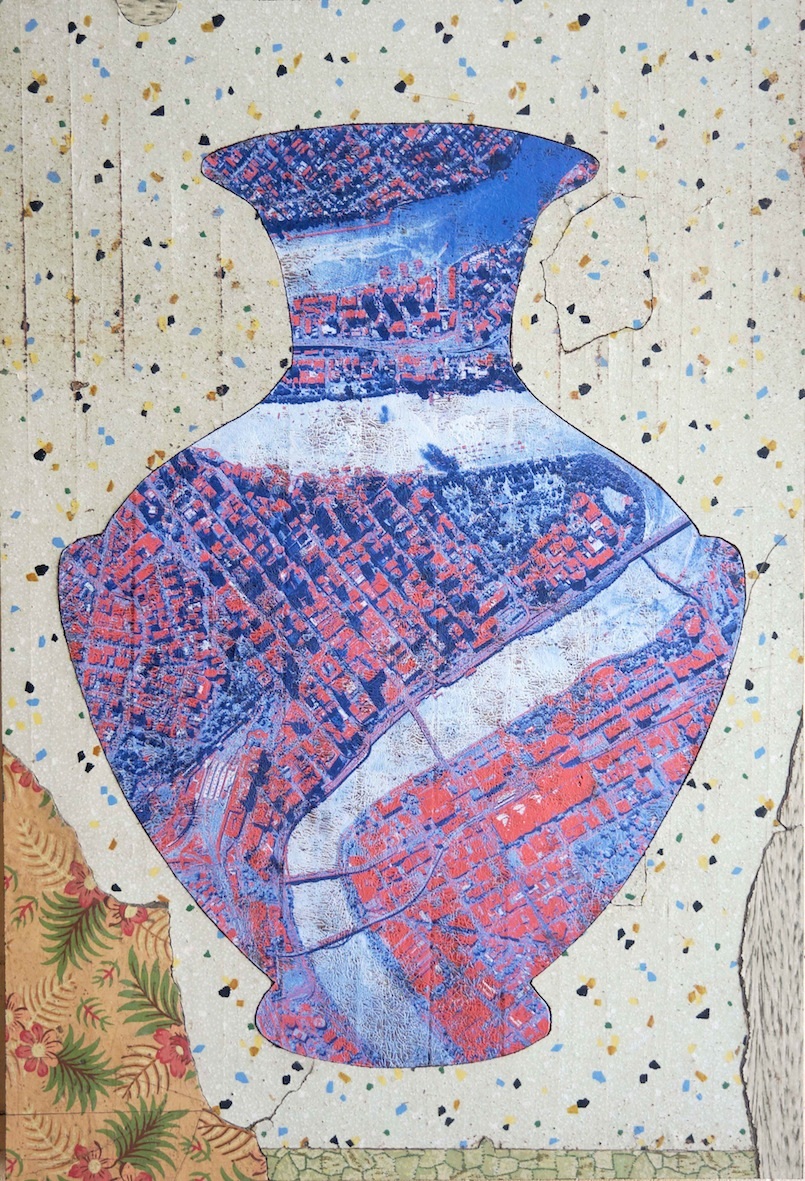
Malouf grew up in Brisbane and identified deeply with the city. In his collection of essays, The First Place (2014), Malouf paints a remarkable picture of Australia. One of the repeated insistences in that volume is that Australia is not as similar or uniform throughout as is often assumed but is marked by important—if latent—local differences. He points to the distinct differences in topography between Australian cities, and he makes the interesting claim that the hilly features of Brisbane and its meandering river shape, in some elemental way, a distinctive manner of thinking about the world.
Like Malouf, but a generation later, I grew up in Brisbane. I was born there. My parents moved to Rockhampton in Central Queensland when I was four, and we returned to Brisbane in 1967 when I was 11. I left for Melbourne in late 1974, where, mostly, I have lived ever since. Malouf left Brisbane for Europe, later Sydney and Tuscany, and later still returned to Queensland to live, though not in Brisbane but on the Gold Coast.
My Brisbane patriotism was never quite that of Malouf’s. Yet I have often thought about the Malouf thesis that Brisbane is a crucible out of which a distinctive mentality develops. I think there is a lot to Malouf’s theory, but (nuance alert) I also think that generational differences affect the way the “Brisbane difference” is experienced by those growing up in the city. In any event, though, that is not the end of the story. For while there are the differences within the “Brisbane difference”, and as interesting as those are, there is also a sediment of commonalities, a geological-like stratum of elusive common things between the generations of Brisbanites—or at least between two of those generations, his and mine, a layer of some ghostly common ways of looking at the world that, deep, deep down, Brisbane’s topography of mind elicits from those who grow up there.
Like all writers, Malouf discusses his childhood reading. Writers first develop as readers. The young Malouf read widely and seriously: Greek myths, Aesop’s fables, Defoe, Robert Louis Stevenson, Shakespeare, Coleridge, Tolstoy, and Turgenev, packaged up in the Queensland School Readers. But reading by itself doesn’t make a writer. Something else is always in play, something beyond words. Malouf had a remarkably insightful view about that mysterious something. It was, he thought, anchored, in the city he grew up in, in its topography (also in its houses, architecture, and music), a cluster of “X factors” that are very “Brisbanic” in nature, a mix I would also experience growing up there and that, like Malouf, left a deep imprint on me and shaped a life spent writing.
Topography is not obviously wordy or dependent in any way on words. But therein lies the mystery of writing. For words, while indispensable for a writer, don’t make a writer. That is difficult to explain to people who don’t write professionally. Isn’t writing the use of words? Aren’t professional writers clever with words? Well, yes, they are. But being propelled into a lifetime of writing requires more than an attraction to words. Malouf understood that readers are attracted to words. They enjoy words. But writing requires something else in addition to the enjoyment of words.
The professional writer who sits down every day and writes, or who constantly composes phrases or sentences in their head, crafts words, giving them form, shape, and pattern. If you have ever read a transcript of people talking, you discover that what they say is formless. The speakers use words, but, for the most part, the words are amorphous and range all over the place to the point of incoherence. Writing in the professional sense is different. It is different because it is set in motion by sources outside of language. These sources impart to the would-be writer an appetite for form or shape. That appetite or impulse will eventually underlie the endless hours—the vast, forbearing expanses of time—that writers spend composing what they write. Malouf reckoned, and I think he was right about this, that there is a distinctive spectral quality, a unique ambience, about Brisbane’s topography (along with its houses, architecture, and music) that formed his impulse to write; a Brisbanity that subtly shapes the kinds of writerly minds that Brisbane produces, not least of all, Malouf himself.
A Topography of the Mind
What makes Brisbane’s topography distinctive? The elemental fact that it is “broken up… by hills and by the endless switching back and forth upon itself of the river”. Let’s take the hills first. Unlike the flat topographies of Sydney and Melbourne, Brisbane is undulating. I spent my high school and university years there, walking up and down hills. “The first thing you notice about this city,” Malouf observes, “is the unevenness of the ground. Brisbane is hilly.” I lived in a street that began at the peak of a hill, sloped down quite steeply, and then rose again even higher. That was my daily experience for seven years: a perpetual experience of rising, falling, and then rising again.
In Malouf’s case, these hills shaped the mind. Their effect was cinematic, an experience of shifting perspectives. “Walk two hundred metres in almost any direction outside the central city… and you get a view, a new view. It is all gullies and sudden vistas, not long views to the horizon…” In the world’s flat cities, the mind looks “down endless vistas” and “is drawn to distance”. Wherever the eye turns in Brisbane, “it learns restlessness, and variety and possibility, as the body learns effort”. That topography shaped my mind. Yet my experience was not exactly that of Malouf’s. From an early age, I walked great distances. I transferred that habit from Rockhampton and promptly adapted it to Brisbane’s hills. Distance was always in my soul, and it would become both a theme and a style in my writing. I always felt inwardly that Malouf’s “effort” in my case was Odyssean in nature, long before I ever knew that word.
When I started at the University of Queensland on the St Lucia Campus in 1973, I would often walk home at midnight, a two-and-a-half-hour walk along the city’s ridges, with plenty of time to think. That thinking slowly evolved into a mind that perceived society, the thing I’d spend my life writing about, as a rhythmic entity given to rising and falling in cycles, possessed of repeating ups and downs, a wave-like phenomenon that, in no sense, was progressive. This walker was always aware that one hill simply gave way to the next hill, on and on, into the distance, until one arrived at a home perched on a hilly incline, an incline that was more or less indistinguishable from every other incline in a suburb, The Gap, that was literally a natural “gap”, a valley, located between two hill systems in Brisbane’s northwest.
Every day, I would walk down to the base of that valley for sports, school, or to do some local shopping. There, along the valley floor, the topographically prominent Enoggera Creek ran through. My creek, though, was no match for Malouf’s great Brisbane River. Our different experience of Brisbane’s fluid topographies was determined by proximity. He grew up in South Brisbane 15 minutes’ walk from the river; I lived the same 15 minutes’ walk from my creek, whose stony course I’d often follow in my many circumlocutions of The Gap, circumlocutions that had begun, beneath the surface, to quietly shape a mind that gradually became occupied with the vastness of geographic and social distance and the epic repetitions of time and space that accompanied that vastness.
Malouf thought of the Brisbane River as a cause of geographical bafflement. It winds “back and forth across Brisbane in a classic meander, making pockets and elbows with high cliffs on one side and mud-flats on the other”. Filled with “odd turns and evasions”, the river “cuts in and out of every suburb”, creating spatial perplexities, disrupting the locals’ sense of geographic orientation, and unsettling their perception of the relation between suburbs. Space in Brisbane, he concluded, is “unreadable”. Maybe the years that I spent traversing this topologically discomposed city pointed my mind to matters of space rather than time. I never felt the same fascination with history that most of my academic acquaintances did. For sure, I liked history, and I never abjured questions of time. However, I always saw time and historical narratives through the lens of geography. Unglamorous geography, an old-fashioned subject, resistant to glossy narratives, a mix of physical and social facts that are indifferent to human desire and will.
That indifference echoes through everyday life in Brisbane. Broken up by hills and the river, Brisbane’s physical geography plays havoc with the mind’s intuitions. Malouf observed how the city’s guardians laid radial public transport systems over the city’s broken topography. The city center, the CBD, is the hub of the wheel. The termini of the transport routes into the suburbs function as the limits of Brisbane’s transport systems. In 1968, at twelve years old, I started a regular habit that lasted for years, of travelling back and forth by bus into the CBD hub along the Waterworks Road spoke. Later, long after I had left Brisbane for Melbourne, the antinomy “center-and-limit” impressed itself on me as a key part of my metaphysics. But, as Malouf noted, the wheel shape of the city’s transport systems is obscured by its geography. Brisbane is double-coded, caught uneasily between its physical geography and its transport geometry. The relationship of geography and geometry is as good a description as any of what I spent a lifetime figuring out on a world scale.
From the River to the Ocean
When I read Malouf’s assessment of Brisbane, I was amazed by the depth of his intuition. Nevertheless, my own experience did not map perfectly onto his. Growing up deep in the Brisbane suburbs, 10 kilometers from its great river, I had not much cause to think a lot about that river except when it flooded. One of the early pieces of journalism I wrote was a lengthy article on the massive January 1974 Brisbane River floods. However, floods are the exception, not the rule, of that river. So mostly, whenever I thought about fluid topography beyond the scope of my little creek, those musing were directed much further afield: 100 kilometers south to Surfers Paradise or 145 kilometers north to Noosa Heads, where the beach, coast, and ocean beckoned. With this, the generational difference within the “Brisbane difference” begins to show itself.
The Malouf family spent “most weekends” down at “the Bay”. South Brisbane to Moreton Bay is 40 kilometers, much closer than motoring to “the coast”. The physical closeness of the bay to the inner city echoed something of an English seaside metaphysic but with an American coloring. “At Redcliffe, a mile away by road,” Malouf recalled, there was an English-style pier catering to English-style pastimes cohabitating with a Golden Age of Hollywood picture theatre. This was the way Brisbane relaxed in the 1940s. Fast forward to the 1960s, I can’t even recall going to “the Bay”, though I suppose I did. But I have intense memories of the Gold Coast and the Sunshine Coast. We would holiday at both places. Neither were English in their style, nor did they pivot around a Hollywood dream theatre. Surfers Paradise, where I spent many summer holidays in the 1960s, was segueing from weatherboard summer rentals into a Floridian-style future of coast-hugging apartment towers. The “surfers paradise” gradually replaced the older 1940s Australian pastiche of “dream theatre” meets quaint seaside town. Along the coast, three and four-storey accommodations with swimming pools began to elbow out the older Queenslander-style guest house and beach cottage rentals. The walk-up holiday flats of the 1960s are the ones that color the ambient memories of my high school years. Little of the style of the 1940s settled into the apertures of my imaginary life.
In his late teens Malouf caught a faint whiff of this generational transition. “Modern times”, he recalled, “began for us with the end of the War.” The signature of this change was “The Surf”. It signaled a metaphysical shift, one that brought with it “an awareness of ocean rather than bay”. This was a profound, if barely noticed, shift not just in the Brisbanic mind but more generally in the wider Australian mind. “The Surf” heralded the deep demotic subliminal consciousness of “the Pacific and its culture of Casben swim-shorts for men and bikinis for women, sun-tan oils, thick-shakes, beer gardens, drive-ins”. Malouf’s description rather perfectly captures the everyday world of the 1960s that I grew up in, down to that strange curiosity of the movie-going “drive-in”, which, for a blip in time, sought to compete with the dream theatres. Even as a child I found these outdoor picture car-parks very strange. What I found compelling, on the other hand, was the Brisbanic transmutation of a Floridian “modernity” into a distinctively Australian urbanity, one that is encapsulated today in the Brisbane–Gold Coast–Sunshine Coast Corridor, a consuming urban vastness that has wiped away all traces of the quaint “old still-water sea-side world of the English watering-place”. So much so that, for me, the experience of visiting the English seaside today is totally alien. “Where are the vast sandy beaches of Australia”, I ask myself in quiet desperation. Where, oh where, is the exquisite sandy topography with its “long views to the horizon”? The topography that provided me as a teenager—and, today, still provides me—with the opportunity and the excuse to engage in a yet another little Odyssean ramble, squelching sand underfoot, sunken into endless musings, and contemplating the long strip lying ahead me, pinched between land and ocean.
Whereas the shaping of Malouf’s mind began with the experience of the river and the bay, mine began with the creek and the ocean. The differences within the Brisbane difference emerged between generations. The formative ambience of the 1940s—the years Malouf and my father spent in school—was not the same as the one I absorbed in the 1960s. Nevertheless, the difference yielded in the end a remarkable similarity, as if Brisbane’s topography had a hidden teleology, a prompt or a nudge pointing us both in the same direction, to the same place. As Malouf concluded in 1998, “the idea of ocean has been essential to how we define where we are and who it is we are most closely related to”. I concluded the same thing around the same time. In Australia’s case, Malouf decided, it was as if “the island continent were mystically married to its surrounding ocean as Venice was to the Adriatic. As the off-shoot of a great naval power we felt at home with the sea.” So, it turned out, in the end, the ocean trumped the river and the bay.
Two boys from Brisbane. One became a literary writer; the other a social theorist who merged social science with philosophy. Worlds apart, and yet oddly close in spirit. Both reworking the idea of the classic Homeric epic mind-set, recasting it in brutally modern terms: stripped, transformed, and retained. In my case, the series Civic Justice (2001), Stranger Cities (2023), and Rim World (opus in fieri) cast an epic glance over five thousand years of maritime civilization. Malouf’s The Great World (1990) spans decades of journey, ordeal and return, bridging Australian and Asian geographies. His, like mine, is a de-mythologized epic. Lives are shaped by forces beyond their control, fate is replaced by history, chance, and circumstance, and the ocean is the structural medium of passage between distant lands and states of being. It is difficult to imagine genres so utterly different, and motivations and life stories so unlike. Yet the two boys from Brisbane ended up in curiously parallel places.
No small part of this coincidence was due to the topography of the mind. Each of the numerous cities and towns scattered along Australia’s 40,000 kilometers coast has its own version of the mystic marriage to the ocean. In Brisbane’s case, it’s a matrimony where the spouses must live apart for practical convenience and yet their mystical bonds are deep ones and the siren call of the ocean and coast is compelling. Malouf answered the call, and, as if to make the point clear, later in life he settled in a high-rise apartment in Surfers Paradise. The literati were confused by this. Yet, in fact, nothing could be clearer. This was mundane life mirroring the imaginary life.
Peter Murphy, a former editor of Thesis Eleven, is the author of twenty books and edited collections. His latest is Stranger Cities: Australian Creation and the Ambidextrous Mind, a Profile of Portal Modernity (2023).


Hi Peter Persuasive comparis
LikeLike