by Alonso Casanueva Baptista (Monash University)
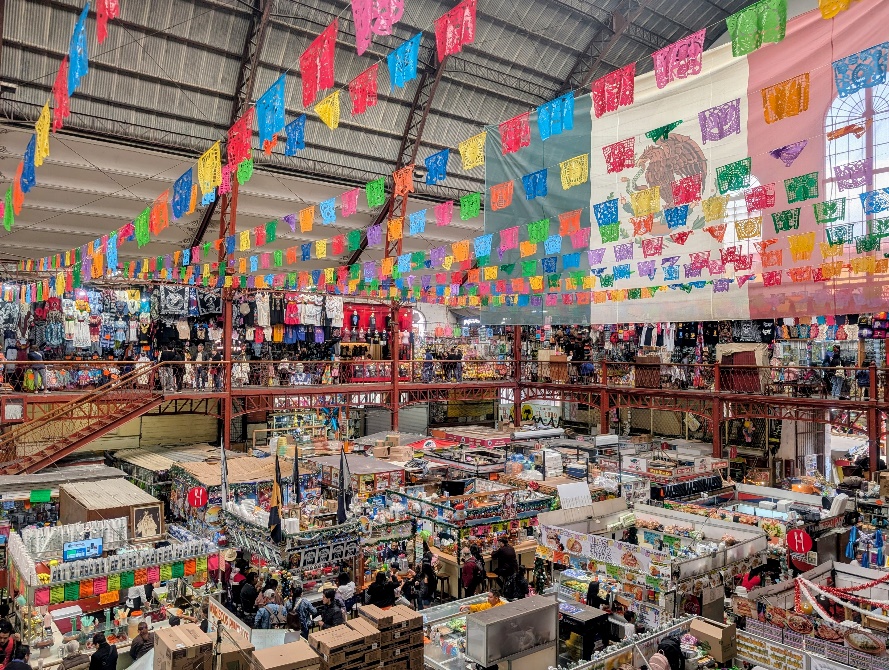
That day I was feeling particularly uninspired to buy souvenirs. It had nothing to do with the quality of the market: in fact, wherever I shifted my gaze, my eyes could set upon colourful displays of ingenuity and humour. After all, this was Mexico. If I had to say anything, it may have been due to an excess of choice. I felt panic about not being able to identify the best quality items (especially in a country where the higher price does not mean a longer-lasting warranty or a nicer experience), about having spent too much time living overseas and having my senses dulled in that touristic way in which everything feels a bit too bright, flashy.
It happened at a crafts market in the city of Guanajuato, located inside the bones of an old train station that never was. Two floors full of stands offering everything from leather wallets and bags to some cute pairs of earrings depicting modern versions of the Mexican skeleton dame, la Catrina. The products were in themselves worth browsing through, but they were brought to life through the explanations of the sellers who spoke of the finest craftsman in the state or the indigenous people whose wisdom saw imprinted the various forms one had at hand. Every object an artifact, every item a story, every artifact a context that mattered for some reason.
We were halfway through our trip when I told J that I wanted to write about crafts for the next postcard. There was something in the association of the tangible and the representational that felt powerful in a context where the big picture conversations revolve around the capacity of First World countries to reintroduce manufacturing in their territories and the encroachment of Big Tech on everyday life. The relation between a singular physical object and its deep symbolic richness felt ‘more meaningful’ than the idea of mass-producing stuff through an alienating process of composition. My embodied experience in that market stood at odds with what I read in Australian newspapers and the bit-sized broadcasts of Trumpian complaints plaguing my social media, as I held yet another beautiful alebrije in my hand and remembered the story about its origin. I was holding a heart, precious enough for me to pay attention.
Before Guanajuato, we had been to Oaxaca, the place in everybody’s bucket list: We’ve heard such great things about the food! Apparently, the beaches nearby are amazing! It’s supposed to be safer than other spots in the country! Indeed, Oaxaca city is all of these things, and more. Gastronomy may be enough of a reason to visit, and surfers will already know about the massive waves in Zicatela and the surrounds. But in closer detail, one will find oneself walking a sort of citadel filled with shops exhibiting some of the best craftwork in the country.
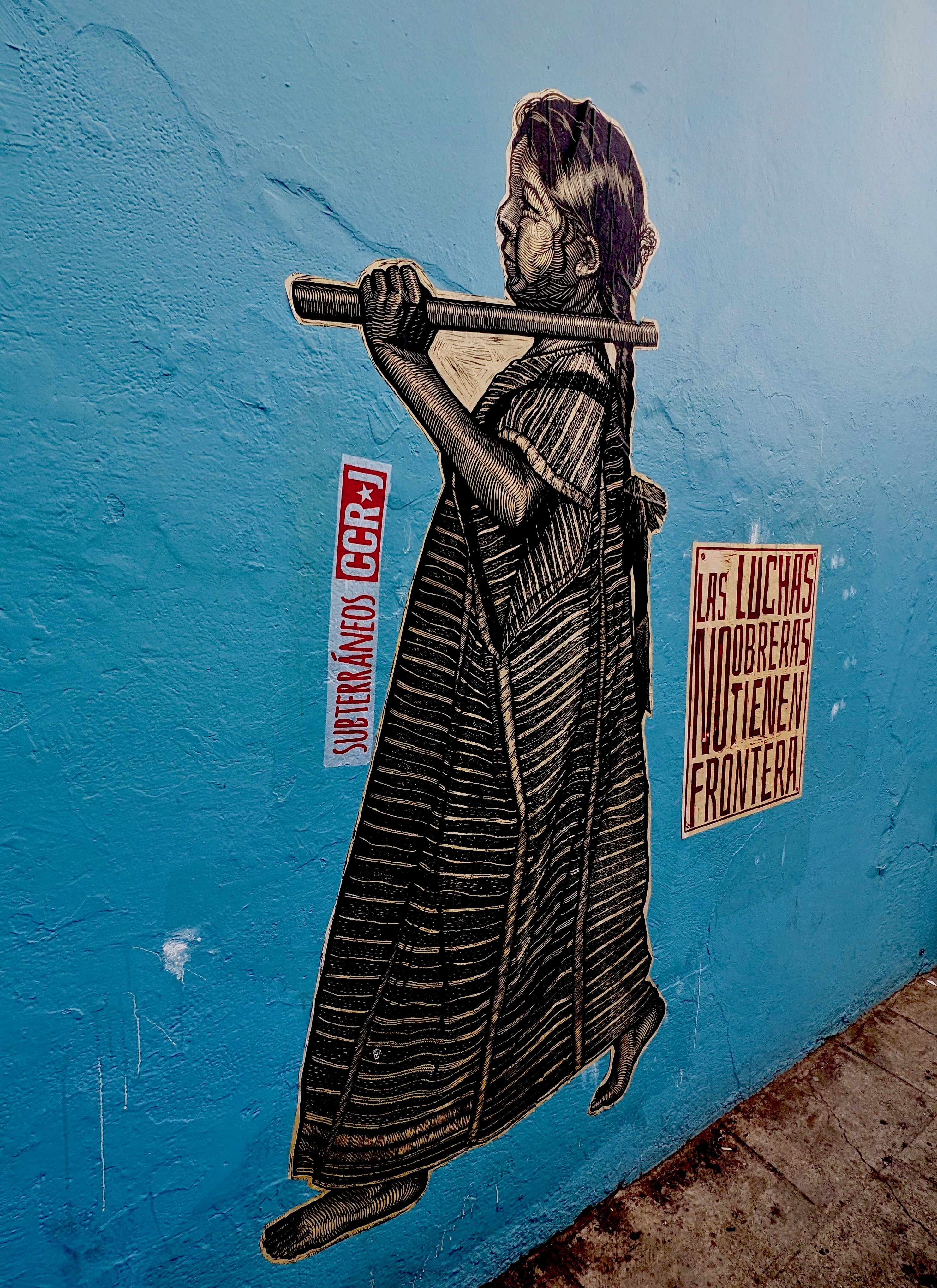
The groundwork laid by painters like Rufino Tamayo and Francisco Toledo have opened the floodgates for an indiscriminate market of high-quality graphic arts, which often spill out onto the curb and hit the walls of buildings with stencils showing Zapotec and Mixtec women carrying symbols of fertility and resistance. In street stalls and in the public library, one will bump into craftswomen advertising an endless array of woollen rugs, bags, shawls for cheap, all weaved through using techniques from bygone eras. Black clay ceramics from San Bartolo Coyotepec, mezcal spirits from Santiago Matatlán, clay jaguar flutes by the townspeople at the skirts of Monte Albán… Oaxaca is a market of the unexpected, handmade over generations.
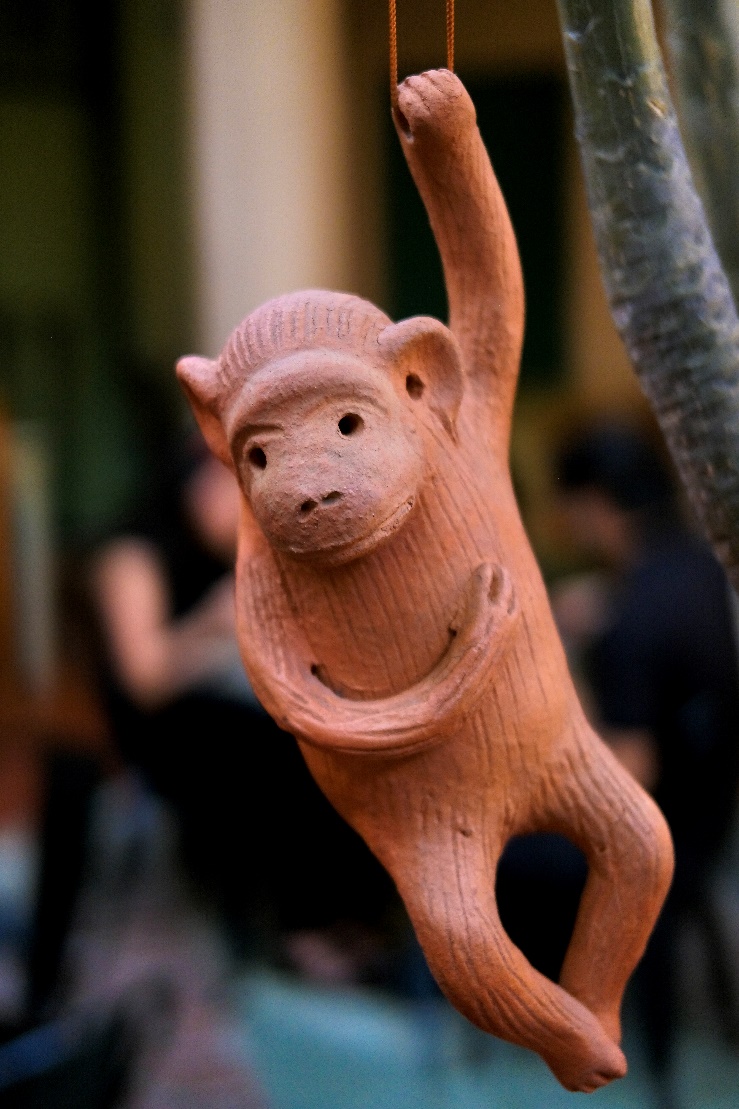
Particularly striking is the fact that this barrage of artisanal creations is precisely done at an industrial scale. Contra the assembly line, each object is handmade to imperfection, subject to the level of mastery of the maker and the level of naivety of the buyer. The maker lives conscious of the fact that repetition kills, the buyer lives the dream that they are buying something exactly special, difference in sameness. The maker makes the unique, the buyer buys the special.
While in Oaxaca, we organised a tour bus that would take us around the vicinity to many important localities, including Teotitlán del Valle. We arrived there after sundown, already worn out from hiking, eating, and sipping on mezcal. As the driver made his way to what looked like a small textile workshop, some in the van started to complain, mentioning they would rather head straight to the market or all opportunities for souvenirs would be lost. J and I knew that something special awaited us at that workshop, so we meekly attempted to stop the growth of the collective frown. Well, no one will buy anything now… Surely the market will be closed by the time we leave this place… It took approximately five minutes for the dissenting voices to turn into something else, a chorus of wow! and ah! as Dalila, our guide and senior artisan, gave us access to roomfuls of beautiful rugs of all sizes. One could spend days looking at each rug and would continue to find oneself mesmerised at the sight of them.
Dalila proceeded to demonstrate the ways in which the artisan collective sources, spins, dyes and weaves the wool. Craftspeople from Teotitlán pride themselves of using all natural pigments to dye the wool, by using local herbs, parasites that grow on cacti, and stone that can be ground. So, we were shown the chemistry involved in the process, from using the root amole as soap to clean the wool, to the crushing of the grana cochinilla to draw from it an intense red tone that could almost magically deepen into shades of purple when mixed with limestone. How she and her peers handled the raw materials constituted a mystery to the audience unfamiliar with the reality of the local ecology; it was as if we were witnessing an illusionist playing visual tricks on us. Also, there was a sense of alienness, of grasping the idea that someone is able to (and does) go and do all of this with an adept understanding of the cosmos. Dalila’s twenty-minute masterclass eventually drew us to appreciate her dexterity and knowledge.
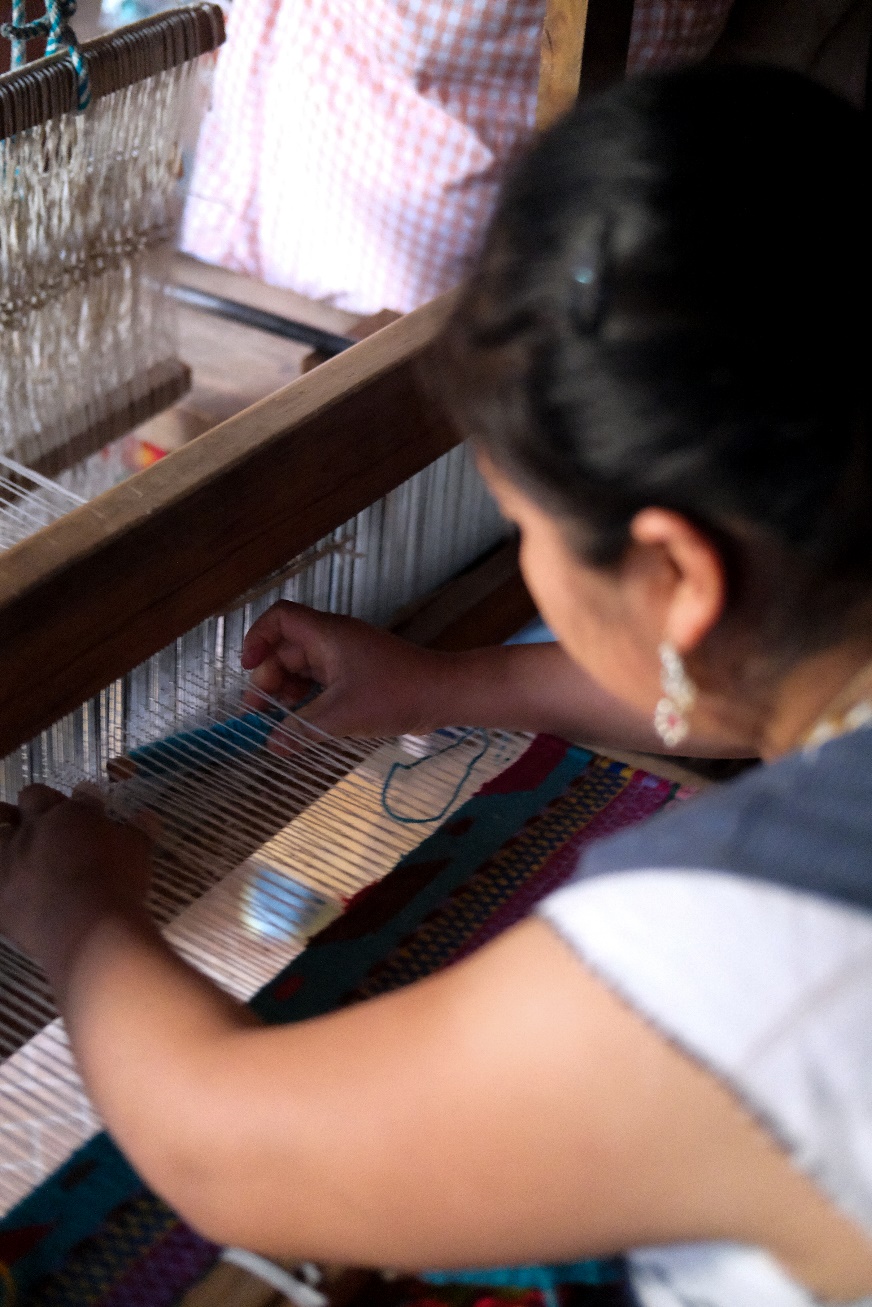
‘Dalila en el telar’, photograph by Isaúl Berenguer
Each rug is crafted by a single artisan who works on the loom for weeks or months, eight hours a day, every day[1]. Dalila seemed particularly happy about this fact, underscoring how her sense of autonomy and creativity in composing the theme, motifs, colour scheme… would make up the final creation, one that cannot be replicated. Whether the design follows traditional rule or adapts to a recent trend, it is the artisan who will pour their personal inspiration onto the loom. Even when the piece is requested by commission, like an architect, Dalila will leave room for her own style to mix with the threads.
J and I decided to buy a rug. Again, the devil of choice was present, but this time made easier by the negotiation among partners, the keen eye of certain family members, and the encyclopaedic memory of a craftswoman who can locate the right fabric in the right spot for the right clientele. ‘Satisfaction’ might be the word to describe the feeling attached to a situation when every element in the moment seems to fit and later becomes memorable. Taking a rug was perhaps like taking a picture, a trade between that which is fleeting and the instant to be recalled.
Our trip would eventually come to an end in Mexico City, not without offering more opportunities to wonder about crafts and their makers. In that Kafkian knot of a metropolis, the most unsuspected places are perfect for finding imperfect works. One day, as we walked the concrete slab that constitutes the central plaza, el Zócalo, we noticed that its edges were rife with informal stalls of street vendors who traded in mass-produced faux designer clothes (Luis Vuitrón bags and Rey Ban shades), flower-embroidered bows to adorn the long hair of girls and women in folklore, Easter candles with printed pictures of Pedro Pascal and Bad Bunny dressed as Catholic saints, and miniature plastic figurines of luchadores in their popular ready-to-attack position. We struggled to walk through these corridors of salespeople, all of whom had the particular talent of engaging you after noticing your furtive look, the one with which you plead ‘do not pay me any attention, please’. – You like the bows? I’ll sell them to you for a cheap price. – How much? – The small ones a hundred pesos, the bigger ones two hundred. – And the candles? – Eighty, or three for one fifty – Can you do one twenty? – Sorry, güerito, gotta feed a family, no can do…
Just as we reached the end of the plaza, next to some tarps was a window showcasing craftwork. We decided to enter the shop. Contrary to the quilt that filled the Zócalo with patches full of stuff, the store featured each item separately, with spaces in between, like artworks in a gallery. The soft music and warm light inside the place also contrasted with the traditional sound of the organillos and the painfully glaring heat of that January sun. This was not a market, it was boutique!
There was something unsettling about it, unrelated to the flea market that made the day’s public sphere. Rather, the store stood at odds with what I now knew about the remote communities where craftswomen weave their threads, showing an evident displacement of the artifacts to a space where connection is diluted into a written explanation on the backside of the price tags. There, the price meant to resemble the appropriate (‘ethical’) value of the piece to be bought – a cushion cover costing thousands of pesos – felt tainted in its significance by the concept of status. The fretwork stitched together by the artisan was no longer the only mark of authenticity that guaranteed discreet access to long-lived traditions; now, there was the seal of an oath that consumption of the craft in this particular space guaranteed a better future for the production of other related works. The power of the craft was concealed by the class-based ethics of consumption. With it, the conversation shifted away from the maker and questions like ‘what does it mean?’ and ‘how was it made?’ to the focus on the buyer who would ask ‘is it meant to look like this?’ and ‘are there any of the same left?’.
Two months have passed since. I am back in Australia now, joking with J about how our home is starting to look like Little Mexico with everything we managed to fit in the suitcases (including many books in Spanish). The shot glasses sit next to the alebrijes framing an altar to a special bottle of mezcal. A small tin mirror depicting two hummingbirds flying over ravines of flowers hangs next to the balcony door, just over a sacred heart with the face of Frida Kahlo at the center. A band of mariachi skeletons with glossy suits stands still ready to play their instruments behind a glass door. The rug is now our piece de resistance; I step on it barefoot almost every day, as if establishing the boundaries of an autonomous territory that belongs to the faraway land I came from, a channel of history drawn by countless hands, the tapestry of a shared imaginary.
[1] After reflecting on this fact, I am left with the question of how the collective operates to allow for such dedication. We did bump into other more senior artisans walking around the place and learnt that Dalila’s children are also learning the art of the loom as a familial rite of passage. What is truly an enigma is the work that sustains this trade, care work as well as farm work, trading and everything in between.


