
Book Review: A World of Empires
The Oxford World History of Empire (Oxford University Press, 2021)
Reviewed by Krishan Kumar
The Oxford World History of Empire (Oxford University Press, 2021)
Reviewed by Krishan Kumar

by Philippa Mein Smith
Over the past two decades Peter Beilharz, Thesis Eleven’s Founding Editor, has inspired me and clarified my thinking and direction on two themes that have infused my work ever since we met: first, the concept of the Antipodes; and second, the idea of cultural traffic. I am grateful to know ‘Peter B’, an internationally celebrated critical cultural theorist and one of Australia’s leading public intellectuals, as a collaborator and friend. It is a comfort, too, to find that friendship and collaboration continues effortlessly as it evolves through time due to Peter B’s continued engagement both with me, and with my former students and colleagues from the University of Canterbury (UC) in Christchurch, New Zealand.

Matthew C. MacWilliams, On fascism: 12 lessons from American history (St Martin’s Publishing Group, 2020)
Reviewed by Zak Kizer (Iowa Lakes Community College)
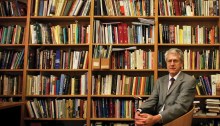
Stuart Macintyre was an eminent figure within the world of Australian history scholarship for 45 years. This collection of essays and responses revisits and extends this extraordinary life of achievement and engagement. Leading scholars write here of Macintyre’s contribution to understanding radicalism and communism, postwar reconstruction, education and civics, universities, liberalism, historiography and the history wars. They also tell us about collegiality and friendship.
by Howard Prosser
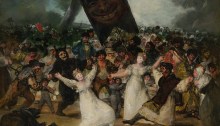
“Carnivals in History” (1981) is the only article Emmanuel Le Roy Ladurie published in Thesis Eleven. The piece’s appearance, then and now, arguably says more about the journal than it does the esteemed historian. Having him appear in its early pages was a coup for the new publication. Other big names followed. And, mercifully, some lesser ones. To include his piece in the Top 40 offers a marker of the journal’s prestige as well as the persistence of critical thought among its many pages.

scholars to look outside the universities for their field of writing/publication/action; they define radical history and discuss the work of some of its past and present practitioners; they show that labour history grew out of intellectuals within the labour movement, and argue that labour history should re-invent itself as working class history; and they provide examples of their recent ‘radical history’ work

History of the Present describes the emergence of this ‘contemporary’ historical consciousness across a wide spectrum of cultural phenomena ranging from historiography to heritage and museum studies, and from the globalization of the novel to the rise of science fiction.

by Donald Sassoon
Consuming culture in almost complete isolation has been possible for years but under the conditions of the current pandemic we are encouraged and even obliged to do so.
by Dilip M Menon
Covid-19 has made us reflect on the human condition, the connection with unknown others, in our own societies as much as elsewhere. From Wuhan to Washington, from Johannisholm to Johannesburg, the virus laughs at national borders and travels through human hosts. Virality is however, trumped by nationality as nations put into place more and more restrictions on travel and movement and the body remains marked as ever by colour, class and caste.
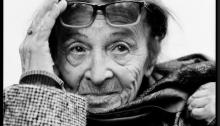
I remember it clearly, as if it was yesterday, the day I first met Ágnes Heller. It was early in 1980 on the ground floor of La Trobe University’s Social Sciences building. I had an appointment with her. I had come to ask her if she would supervise my PhD. I had read an article she had published in Telos journal on ethics, and I felt a strong affinity with it. I brought with me my Honours thesis on Hegel’s Philosophy of Right. As I got to her office she appeared—both of us characteristically on time. My first impression: a short woman with penetrating deeply intelligent eyes. My lasting impression: she appeared with slightly damp hair and a towel around her shoulders. She’d been swimming in the university pool, one of her life-long favourite activities.
 thesis eleven