Book Review: Zygmunt Bauman and the West
Jack Palmer, Zygmunt Bauman and the West: a sociology of intellectual exile (McGill-Queen’s University Press, 2023)
Reviewed by Eric Ferris
Jack Palmer, Zygmunt Bauman and the West: a sociology of intellectual exile (McGill-Queen’s University Press, 2023)
Reviewed by Eric Ferris
Jean-Francois Cote, Jeffrey Alexander and Cultural Sociology (Polity, 2023)
Reviewed by Peter Beilharz
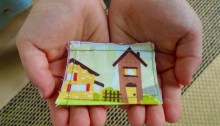
This special issue revisits the Thesis Eleven online project: Living and Thinking Crisis. The original project published close to fifty contributions; a multimedia presentation that included postcards, words, poems and music responding to the pandemic in the real-time of its making. This issue of the journal brings a selection of these to publication and reflects on this moment of global upheaval and transformation.
Contributors: Virgilio Rivas, Jon Stratton, Chris Barker, Amos Netzer, Peter Beilharz, Stuart Macintyre, Keith Tribe, Andrew Feenberg, Ian H. Angus, Joshua M Makalintal, John Lechte and Dániel Havrancsik

Contributors: Peter Lenco, Raffaela Puggioni, Mark T. Hewson, Will Atkinson, Bregham Dalgliesh, Kateřina Nedbálková and Wojciech Zomerski

Contributors: Peter Wagner, Frédéric Vandenberghe, Florence Chiew, Domonkos Sik, Nicholas Holm, Tyson E. Lewis, Todd Madigan, Brad West, Jon Piccini, Claire Colebrook and Brooke Wilmsen

Reviewed by Christine Magerski (University of Zagreb)
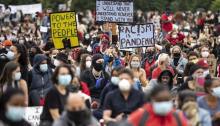
This special section is the result of a online workshop called ‘Living in Crisis’ hosted by the TASA Social Theory thematic group and Thesis Eleven in 2020. Attendees were invited to think about the relationship between social theory and crisis in two ways. First, how can social theory be utilised to unpack what is happening in the world today? Second, do social theorists offer legitimate ways of understanding and responding to this crisis?

Jonathan Pickle and John Rundell (eds.), Critical Theories and the Budapest School: Politics, Culture, and Modernity (Routledge, 2018)
Reviewed by J.F. Dorahy
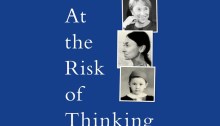
Alice Jardine, At the Risk of Thinking: An Intellectual Biography of Julia Kristeva (Bloomsbury Academic, 2020)
Reviewed by John Lechte, Macquarie University, Australia
 thesis eleven