Thesis Eleven Annual Lecture, 2026
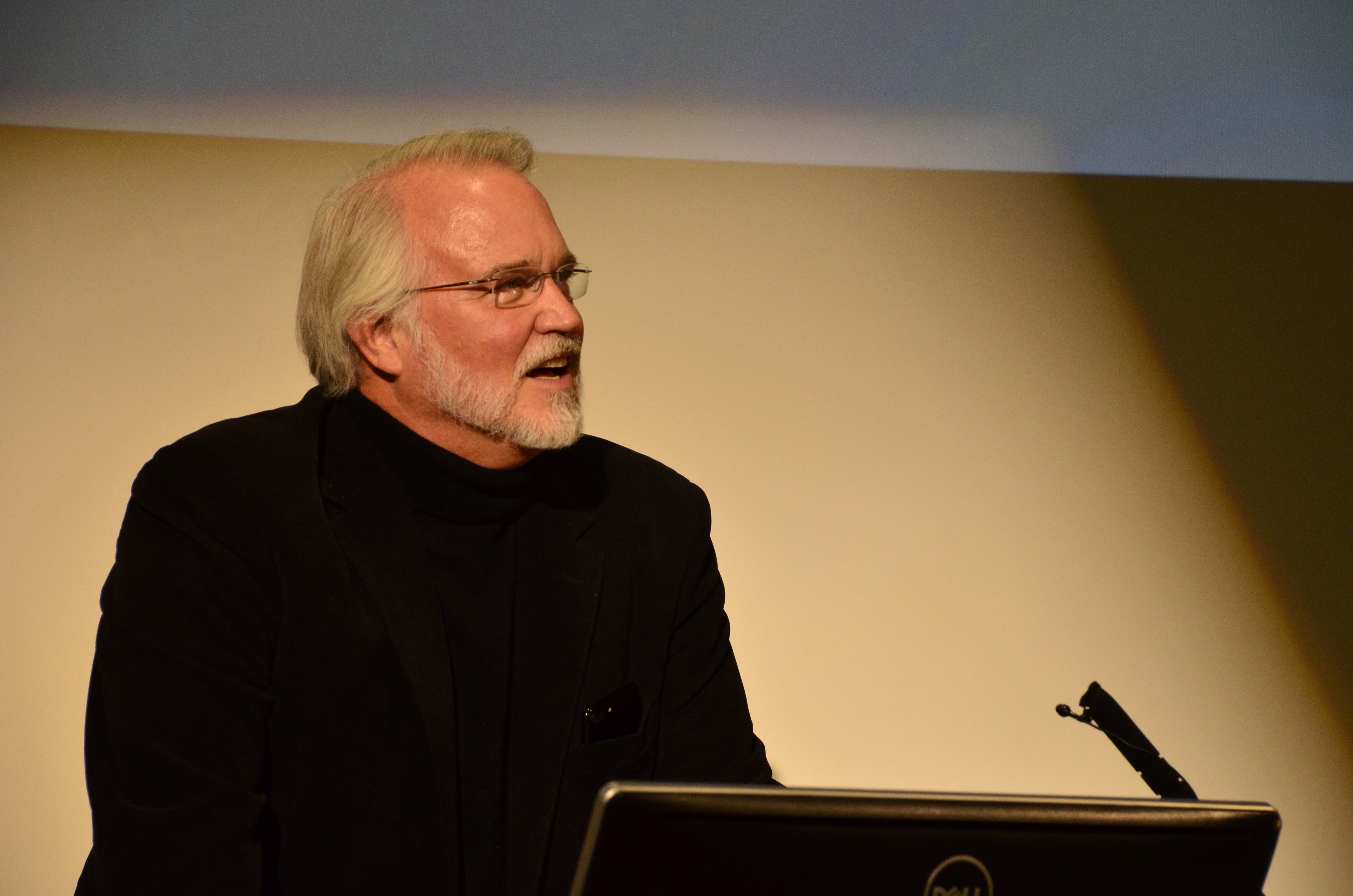
You are warmly invited to the 2026 Thesis Eleven Annual Lecture. This year Professor Craig Calhoun (Arizona State University and Princeton University) joins us to reflect on the future of liberal democracy amid the Western world’s crises, institutional decline, and the resurgence of authoritarianism in a dialogue with Peter Beilharz. This event is hosted by Thesis Eleven Journal and sponsored by the Greek Centre for Contemporary Culture.
5:30-7:30pm, 25 August, 2026
At the Greek Centre for Contemporary Culture (Mezzanine)
Refreshments from 5pm, lecture at 5:30pm
All welcome.
Register here
Facing the Decline of the West (again)?: Craig Calhoun, in conversation with Peter Beilharz
In the early 20th century, intellectuals on the Right decried the decline of Western Civilization. Many were on the path to fascism; others played at its edges; and still others like Spengler, Ortega and Junger hoped that elitist conservatism would save the West from both fascism and democracy. It did not. Nor did fascism save the West, not least because the fascists lost the war they insisted on waging as they succumbed to the temptations of geopolitical overreach.
Victorious Western allies pursued the marriage of democracy with capitalism, the welfare state, and rules-based order both at home and abroad; they proclaimed there would be no more wars (save, of course, for the resistance to decolonization folded into a Cold War that allowed the West to minimize its internal contradictions by focusing on Communist threats). This worked uneasily for decades, transforming the meaning of ‘the West’.
The Left spoke not so much of the decline of the West as of the hope its limits could be transcended. Movements pushed for radical social transformation; ironically, Communism’s partial victories reined them in. The 1960s again brought challenge from within, radical hopes to redeem the democratic, egalitarian, and Romantic promises of Western Civilization. Movements became memories, replaced by mere moments of protest. This made room for the cynicism of neoliberalism and substitution of personal greed for social transformation. In the early 21st century, pessimism grew amid a concatenation of crises, the return of geopolitics and wars of choice, escalations of state violence, and the rise of a New Right arguing once again that the West was failing.
Today we face what Calhoun and his colleagues have called Degenerations of Democracy. External attacks do damage, but loss of faith, internal cohesion and weak response are as basic. Core institutions that have sustained liberal democracy despite rapacious capitalism – not least universities – are deeply challenged by recurrent culture wars and losing their sense of purpose amid endless expansion. Populist sentiments that could be pressing democratic demands is instead widely harnessed by authoritarianism, illiberalism, and media manipulation.
A friend of Thesis Eleven for decades, Craig will look back at the denunciations of decline and critique of possibly false hopes of progress before looking forward in dialog with Peter Beilharz. What hope is realistic? What challenges must be confronted? What are the roles for intellectual critique and cultural creativity, self-understanding and attention to wider terrains of power and conflict? Can history give us resources to reach beyond the fraught present and shape a better future?
Craig Calhoun teaches social theory and historical sociology at Arizona State University and Princeton, with a focus on social solidarity, nationalism, geopolitics, and social movements. He is the former Director and President of the London School of Economics and the Social Science Research Council. He created the Institute for Public Knowledge at NYU and was variously a Dean, Institute Director, and Chair as well as more basically a professor at other American universities including UNC-Chapel Hill and Columbia and in Oslo, Khartoum, Asmara, and Beijing. His books include The Question of Class Struggle: Popular Protest in Industrializing England; Neither Gods Nor Emperors: Students and the Struggle for Democracy in China; Critical Social Theory: Culture, History and the Challenge of Difference; and Nations Matter; and The Roots of Radicalism as well as prominent edited collections like Habermas and the Public Sphere and Sociology in America. He is a Fellow of the British Academy, the AAAS, the American Philosophical Society, and the International CORE Academy of Science and Humanities, and is the recipient of prizes and honorary doctorates, not least from La Trobe University.
The Thesis Eleven Annual Lectures commenced in 2002. Lecturers have included Bernard Smith, George Markus, Tessa Morris-Suzuki, Joanna Bourke, Maria Pia Lara, Stuart Macintyre, Alastair Davidson, Philippa Mein Smith, George Steinmetz, Ron Jacobs and Eleanor Townsley, Peter Thomas, Krishan Kumar, Keith Tester, Nikos Papastergiadis, Chiara Bottici, Noeleen Murray, Emilia Palonen, Michael Peters, Peter Beilharz, Susan L Robertson, Jeff Alexander, Ira Raja, and Mark Davis. In 2020 there was no lecture, but the Covid Crisis Series online instead.


 thesis eleven