
Book Review: The sociological Interpretation of Dreams
Bernard Lahire (trans. Helen Morrison), The Sociological Interpretation of Dreams (Wiley, 2020)
Reviewed by John Lechte (Macquarie University)
Bernard Lahire (trans. Helen Morrison), The Sociological Interpretation of Dreams (Wiley, 2020)
Reviewed by John Lechte (Macquarie University)

by Alison Young
With the news of Ross Gibson’s death on Thursday March 2nd 2023, some of the light has gone out of our ‘starburst world’ (2012).

Contributors: Peter Wagner, Frédéric Vandenberghe, Florence Chiew, Domonkos Sik, Nicholas Holm, Tyson E. Lewis, Todd Madigan, Brad West, Jon Piccini, Claire Colebrook and Brooke Wilmsen

by Christopher G. Robbins
In response to the 17th mass shooting in only 14 days of February 2023, or the 71st mass shooting in 45 days of 2023 in the U.S, this time at Michigan State University, my friend who lives a world away in Australia wrote a short, caring message, “You all ok? Re Lansing?” I live approximately 60 miles away from Lansing and have colleagues who work there and close friends whose children attend school there.
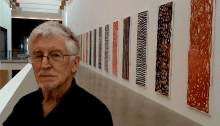
by Tim Rowse
Jeremy Beckett died in Sydney 8 December 2022. Thesis Eleven is proud to honour his memory with this appreciation of Jeremy and his work, revised by Tim Rowse from an earlier version published in Encounters with Indigeneity: Writing about Aboriginal and Torres Strait Islander Peoples. We are grateful to both Tim Rowse and Aboriginal Studies Press for the opportunity to republish this work in celebration of Jeremy’s life and work

Reviewed by Christine Magerski (University of Zagreb)

Contributors: Emre Amasyalı, John A. Hall, Mohammed Sulaiman, Kalli Drousioti, Marianna Papastephanou, María Esperanza Casullo, Rodolfo E. Colalongo, Loïc Wacquant, Michael Wayne, Elizabeth S. Goodstein, Austin Harrington, Thomas Kemple, Nicola Marcucci, Christine Magerski, Angie Sassano, J.F. Dorahy

This special issue explores the dynamic and double-sided nature of thinking place. The articles highlight, in varying degrees, the importance of ‘materiality’, ‘atmospheres’ and ‘spaces of belonging’ to the shaping of place and the social relations experienced via place.

Guest Editors: Fu Qilin and Peter Beilharz
Contributors: J.F. Dorahy, Galin Tihanov, Liu Can, Ziyi Fan, Marko Hočevar, Jiayang Qin

by Iván Szelényi
Riaz Hassan passed away in Melbourne on June 8, 2022 after a long illness. His is a great loss to the Australian social sciences and to the social sciences in general. Riaz was a great scholar, a wonderful colleague, a good friend and an excellent teacher. He was the mentor of a whole generation of social scientists. His death is an especially great loss to me personally.
 thesis eleven