
Issue 171, August 2022 – East European Marxism: Legacies and Entanglements
Guest Editors: Fu Qilin and Peter Beilharz
Contributors: J.F. Dorahy, Galin Tihanov, Liu Can, Ziyi Fan, Marko Hočevar, Jiayang Qin
Guest Editors: Fu Qilin and Peter Beilharz
Contributors: J.F. Dorahy, Galin Tihanov, Liu Can, Ziyi Fan, Marko Hočevar, Jiayang Qin
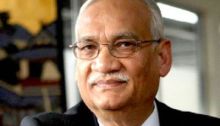
by Iván Szelényi
Riaz Hassan passed away in Melbourne on June 8, 2022 after a long illness. His is a great loss to the Australian social sciences and to the social sciences in general. Riaz was a great scholar, a wonderful colleague, a good friend and an excellent teacher. He was the mentor of a whole generation of social scientists. His death is an especially great loss to me personally.

by Jill Redner
For Harry, philosophy was a vocation in Weber’s sense. But pursuing this ideal in today’s technocratic multiversity can seem almost quixotic, because specialist knowledge and technical expertise are cultivated, rather than a general intellectual grasp of problems affecting humanity. Generalists still exist but are increasingly likely to find themselves dismissed as mere “intellectuals”. Harry accepted this situation with good humour: “Though my academic sins be scarlet”, he quipped recently, “let my books be read”.

by Harry Redner
Section I. The origin of the natural sciences in music and painting.
Western achievements in the arts and sciences began with the Greeks. During the great age of Classical civilization, that of the glory of Greece and the grandeur of Rome, the basis was laid for all the later achievements in the development of the arts and sciences in the West…

by Harry Redner
The history of Theorybabble is now well-known to everyone and is an often-told story that need not preoccupy us unduly. It arose in the hothouse atmosphere of the avant gardist intellectual circles of the Paris of the 1960s and 70s. But it only really flourished in the American elite universities of the 1980s and 90s. Since then, it has become much more widespread, though not in Paris itself, where it has more or less petered out.

by Harry Redner
We are now undergoing a historic transformation in the destiny of mankind that is in many ways as decisive as any of those in the historic past, perhaps as far back as the Neolithic Revolution. For the very first time in history mankind has come together in a global society that some have called a technological civilization.

This is the first part of a lecture delivered by Agnes Heller at the 2018 International Conference on Marxist Critical Theory in Eastern Europe hosted by Sichuan University and co-sponsored by Thesis Eleven. Heller discusses the life and work of her mentor and teacher György Lukács.

This special section is the result of a online workshop called ‘Living in Crisis’ hosted by the TASA Social Theory thematic group and Thesis Eleven in 2020. Attendees were invited to think about the relationship between social theory and crisis in two ways. First, how can social theory be utilised to unpack what is happening in the world today? Second, do social theorists offer legitimate ways of understanding and responding to this crisis?
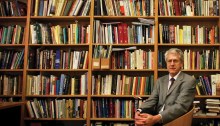
Stuart Macintyre was an eminent figure within the world of Australian history scholarship for 45 years. This collection of essays and responses revisits and extends this extraordinary life of achievement and engagement. Leading scholars write here of Macintyre’s contribution to understanding radicalism and communism, postwar reconstruction, education and civics, universities, liberalism, historiography and the history wars. They also tell us about collegiality and friendship.

The essays in this thematic issue reflect on late 20th- and 21st-century figurations of ‘upheaval’ to measure the affective and emotional dimensions of some of the most complex challenges of our times. In exploring the discursive potency of the term ‘upheaval’ itself they attend collectively to an ‘optics’ of upheaval – that is, to the ways in which upheaval’s forms are rendered visible or invisible in a variety of contexts.

